Indonesian Celebrities Allege Multi-Billion Rupiah Unpaid Fees from Private Television Station, Sparking Industry-Wide Debate

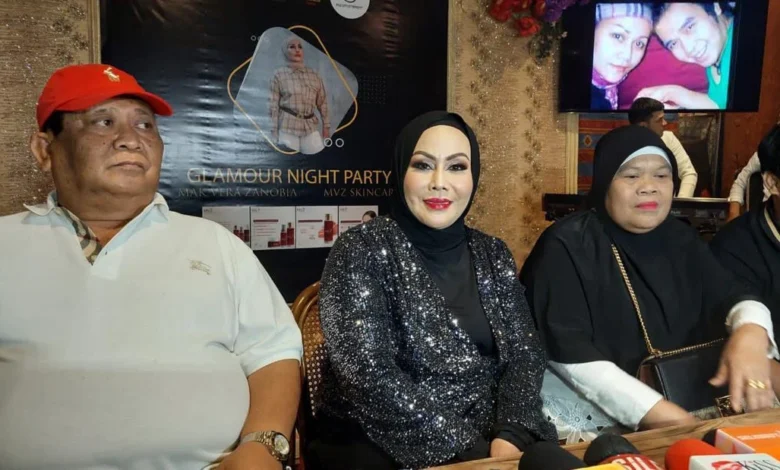
A significant controversy has erupted within Indonesia’s entertainment industry, as a growing number of prominent celebrities have publicly claimed that a private television station owes them substantial fees, collectively amounting to billions of rupiah. The issue, initially brought to light by Mak Vera, the former manager of the late beloved comedian Olga Syahputra, quickly gained traction when superstar dangdut singer Inul Daratista corroborated the allegations, revealing that she herself is owed a considerable sum. This cascade of public complaints has ignited a broader discussion about payment practices within the media sector, the financial security of artists, and the ethical responsibilities of broadcasters.
The controversy began to unfold recently when Mak Vera publicly disclosed that a private television station had outstanding payments to her, totaling approximately Rp 1 billion (around USD 61,000, based on current exchange rates). Mak Vera, known for her long-standing involvement in the entertainment world, particularly through her association with Olga Syahputra, articulated her frustration over the prolonged delay in receiving these funds. Her statement served as a catalyst, prompting other artists to come forward with similar grievances, indicating a systemic issue rather than isolated incidents.
Inul Daratista’s Powerful Endorsement and Subsequent Response
The narrative gained significant momentum when Inul Daratista, one of Indonesia’s most iconic and influential dangdut divas, added her voice to the chorus of complaints. Through her personal Instagram feed on Friday, July 24, 2024, Inul confessed to also being owed a substantial amount, echoing Mak Vera’s sentiment of long-standing unpaid dues. She explicitly stated, "Still billions unpaid, but the owner is still walking around nonchalantly. Who should I collect from… from days ago I wanted to bring this bill to the public, but kept holding back. Now that someone has started, I’ll join in. Don’t tell me they’re also not paying state taxes…" Her post not only highlighted the financial magnitude of the problem but also raised a critical question about potential tax evasion, adding another layer of concern to the unfolding situation.
Inul further elaborated on her frustration, playfully yet pointedly adding, "Hehehe, I’ll join in, maybe because they’re embarrassed, they’ll suddenly pay. Who knows… it’s a pity, a waste, rek [Javanese for ‘friend’]." Her public statement, coming from an artist of her stature, immediately garnered widespread attention across social media platforms and traditional news outlets. The sheer scale of the alleged unpaid "billions" underscored the severe financial implications for the artists involved.
In a swift development following her initial outcry, Inul Daratista later updated her followers, revealing that she had received a response from the television station’s company representatives. In her subsequent post, Inul indicated that the station had expressed willingness to resolve her outstanding honorarium, specifically mentioning payments dating back to 2022. She expressed a measure of relief, acknowledging the often unpredictable nature of work for performing artists. "Understandably, artists’ work is uncertain; the nominal value of our sweat is very meaningful and precious. Coincidentally, in that program, Mas Adam [her husband] and I worked together. Apologies for the commotion," Inul wrote, signaling a potential breakthrough in her personal case, yet leaving the broader issue of other artists’ unpaid fees unresolved.
A Chorus of Unpaid Voices: Other Celebrities Join In
The public confessions from Mak Vera and Inul Daratista opened the floodgates, encouraging other celebrities to share their similar predicaments. The collective voice underscored a systemic challenge within the industry regarding timely and fair compensation.
Baim Wong, a prominent actor, presenter, and YouTube personality, quickly weighed in on the issue. Observing the burgeoning discussion, he posted on his Instagram, "Everyone is voicing being unpaid by TV stations, ahem.. ahem.. my hands are itching, brothers and sisters. Should I write this or not?" He then succinctly added, "Pls pay," clearly indicating his shared experience with delayed payments. Upon learning of Inul Daratista’s progress, Baim Wong publicly questioned the status of his own outstanding fees, highlighting the disparity and seeking similar attention to his case.
Rizky Billar, another well-known actor and entrepreneur, also expressed his hope for resolution. He commented on the unfolding situation, stating, "Hopefully, the production program of @leslar_entertainment [his production company with wife Lesti Kejora] will also be settled soon. Since 2021, hihihi." His comment not only revealed a significant delay in payment but also indicated that the issue extended to production houses, not just individual artists.
Veteran comedian and musician Andre Taulany offered a more philosophical and supportive stance, emphasizing the moral imperative of timely payment. He posted, "NAHHHH, IT TURNS OUT THERE ARE MANY [OF THESE CASES].. THIS IS A LESSON FOR ALL MEDIA, ESPECIALLY TV. REMEMBER THE PROPHET’S MESSAGE ‘PAY SOMEONE’S RIGHTS BEFORE THEIR SWEAT DRIES.’ SPIRIT FOR ALL ENTERTAINERS AND ART FIGHTERS." Andre’s statement invoked a powerful ethical principle, advocating for the fundamental rights of those who contribute their talent and labor to the industry.
The issue also brought to light more distressing experiences. Wika Salim, a popular dangdut singer and presenter, shared a particularly frustrating anecdote. She revealed, "I once WA [WhatsApp] one of the finance managers, and they replied angrily." This account points to a potentially dismissive or even hostile attitude from some station personnel when artists attempt to claim their rightful earnings, exacerbating the already stressful situation.
Crystal Oceanie, a presenter, recounted an even more severe scenario, claiming outright non-payment due to alleged bankruptcy. She stated, "I also haven’t been paid for a program that aired late at night until early morning. The reason given was bankruptcy. So, does that mean work that has already been done in the past won’t be paid?" This raises serious legal and ethical questions about the responsibilities of media companies, even in the face of financial difficulties, particularly concerning labor already rendered.
The Broader Context: Payment Practices in the Indonesian Entertainment Industry
The allegations brought forth by these celebrities are not entirely unprecedented within the Indonesian entertainment landscape. The creative industry, particularly for freelance artists and project-based talent, often grapples with irregular payment cycles. Contracts, while legally binding, sometimes contain clauses that allow for extended payment terms, or in practice, these terms are simply not adhered to. Artists, often operating as independent contractors rather than salaried employees, rely heavily on timely honorariums for their livelihoods, to pay their teams, and to manage their personal finances.
The Indonesian entertainment industry is a significant contributor to the nation’s creative economy, generating substantial revenue and employing a vast workforce, from on-screen talent to behind-the-scenes crews. Television, despite the rise of digital platforms, remains a dominant medium for celebrity exposure and income generation. The financial models of private television stations heavily rely on advertising revenue, which can fluctuate with economic conditions and audience ratings. During periods of economic downturn or intense competition, cash flow issues can emerge, potentially leading to delayed payments to external contractors and talent.
Economic Landscape of Indonesian Television
Indonesia’s television landscape is characterized by a competitive array of private broadcasters, each vying for advertising revenue and audience share. These stations play a crucial role in shaping public discourse, popular culture, and the careers of countless artists. Their operational costs are substantial, encompassing production, broadcasting infrastructure, talent fees, and marketing. While many stations are part of larger media conglomerates, financial pressures can still lead to difficult decisions regarding expenditure. The current allegations suggest that in some instances, cost-saving measures or financial mismanagement might be disproportionately impacting the talent who are central to their programming. The "billions" mentioned by Inul Daratista and the "Rp 1 billion" by Mak Vera are not trivial sums, representing significant income for the individuals and their teams, as well as potential liabilities for the broadcasting entities.
Legal and Ethical Dimensions of Delayed Payments
From a legal standpoint, contracts between artists and television stations typically stipulate payment terms, including deadlines and amounts. Failure to adhere to these terms constitutes a breach of contract, which can empower artists to seek legal recourse. However, pursuing legal action can be a costly, time-consuming, and potentially career-damaging endeavor for individual artists, especially when challenging powerful media conglomerates. Many artists may hesitate to take legal steps for fear of being blacklisted or jeopardizing future opportunities.
Ethically, the principle of fair compensation for work rendered is fundamental. Andre Taulany’s reference to the Prophet’s message about paying workers before their sweat dries underscores a universal moral tenet regarding labor rights. Delayed payments can lead to severe financial hardship for artists, affecting their ability to support themselves and their families, pay their staff, and invest in their careers. For younger or less established artists, such delays can be crippling, potentially forcing them out of the industry. The claim of "bankruptcy" cited by Crystal Oceanie, if true, raises questions about the legal obligations of companies to their creditors, including talent, and the transparency required in such situations.
Industry Reactions and Potential Regulatory Oversight
The public outcry from high-profile celebrities is likely to prompt reactions from various industry stakeholders. Artist associations and guilds, if they exist or are strengthened, could leverage this moment to advocate for stricter contract enforcement, standardized payment terms, and mechanisms for dispute resolution. The Ministry of Manpower or other government bodies overseeing the creative economy might also be compelled to investigate these allegations and potentially introduce stronger regulations or guidelines to protect artists’ rights.
Industry observers suggest that this public shaming, while unconventional, can be an effective tool in situations where traditional legal or contractual avenues are perceived as inadequate or intimidating. The immediate response received by Inul Daratista after her public post indicates that the pressure of public opinion can indeed expedite action from the television station. However, relying solely on public outcry is not a sustainable or systematic solution to a widespread problem.
The Ripple Effect: Beyond the Stars
The impact of unpaid fees extends far beyond the individual celebrities. Each artist typically works with a team: managers, agents, assistants, stylists, makeup artists, security personnel, and production crew. When the main talent is not paid, this often creates a ripple effect, delaying or denying payments to their entire support system. This can destabilize the livelihoods of numerous individuals who form the backbone of the entertainment industry. Furthermore, the credibility and reputation of the television station in question, and by extension, the broader media industry, could suffer. Artists might become more cautious about accepting projects, demand stricter payment guarantees, or even shift their focus to platforms with more reliable payment records, such as streaming services. This could ultimately impact the quality and diversity of programming available on traditional television.
Moving Forward: Calls for Transparency and Accountability
The unfolding controversy highlights an urgent need for greater transparency and accountability within the Indonesian entertainment industry. This includes clearer contractual terms, more robust enforcement mechanisms, and perhaps the establishment of an independent body or ombudsman to mediate payment disputes. While Inul Daratista’s individual case appears to be moving towards resolution, the collective voice of other celebrities signals a deeper, systemic issue that demands comprehensive attention.
The public nature of these allegations provides an opportunity for the industry to collectively re-evaluate its practices, strengthen ethical standards, and ensure that all contributors, from the most famous stars to the essential support staff, are fairly and promptly compensated for their work. Only through such concerted efforts can trust be restored, and a healthier, more equitable environment be fostered for all participants in Indonesia’s vibrant creative economy. The hope remains that these public disclosures will lead not just to individual settlements, but to lasting, positive changes that benefit the entire artistic community.