Indonesian Actor Ciccio Manassero Reveals Tech Discomfort Amidst Nation’s Digital Surge

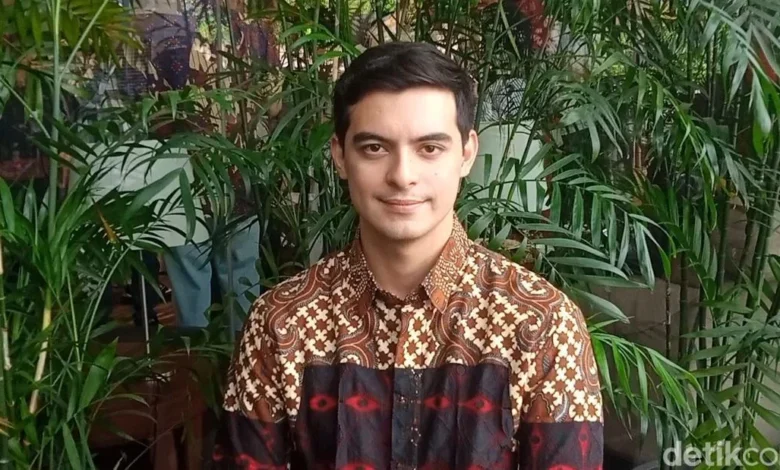
Indonesian actor Ciccio Manassero has openly admitted to being "gagap teknologi" (gaptek), a local term signifying technological illiteracy or discomfort. His candid revelation highlights a fascinating paradox in an increasingly digitized nation, where even public figures with access to cutting-edge tools can find themselves disconnected from the rapid pace of digital innovation. Manassero, known for his roles across various Indonesian television series and films, confessed to a general disinterest in keeping up with the latest digital features, applications, and technological advancements, often choosing to remain oblivious to the digital currents around him.
The actor’s admission came to light through a particularly amusing and somewhat embarrassing incident involving a shared meal with fellow actor Jerome Kurnia. The scenario unfolded during a seemingly routine social interaction, which quickly became a microcosm of the broader challenges some individuals face in adapting to modern cashless payment systems. As the two actors prepared to settle their bill, the suggestion arose to split the payment, a common practice made effortlessly convenient by today’s digital financial tools. However, for Manassero, this simple transaction became an unexpected hurdle, exposing his unfamiliarity with non-cash payment systems, specifically QRIS (Quick Response Code Indonesian Standard).
The Incident Unfolds: A QRIS Conundrum
The pivotal moment occurred when Jerome Kurnia, presumably well-versed in digital transactions, proposed using a QRIS scan for a swift and practical transfer of funds. This suggestion, intended to streamline the payment process, instead led to a humorous misstep on Manassero’s part. Unbeknownst to Kurnia, Ciccio Manassero lacked a fundamental understanding of how to properly execute a QRIS payment. Instead of utilizing his mobile banking application to scan the QR code, he instinctively resorted to his phone’s standard camera application, an action that, predictably, yielded no results.
"My friend Jerome offered it at the time," Manassero recounted, "I wanted to transfer money to him, we were eating together, right, using QRIS. Then he said, ‘just scan the QRIS.’ I scanned it with my phone’s camera, not through the m-banking application, so it wouldn’t work, of course," Ciccio Manassero explained, visibly amused by the memory, during an interview in Senayan, Central Jakarta, on Saturday, July 18, 2026. The date, while slightly in the future, emphasizes the ongoing relevance of digital literacy even in anticipated future scenarios.
Manassero’s colleagues, witnessing his struggle, were reportedly a mix of bewildered and entertained. The 30-year-old actor elaborated that his grasp of technology often isn’t as spontaneous or intuitive as it appears to be for many others in the current digital era. "Yes, I do have m-banking," he clarified, "but I usually just type in the account number. This time, he was like, ‘QR, QR,’ and I ended up scanning it with the camera instead of m-banking; it just wouldn’t work." This anecdote vividly illustrates a common user experience barrier: the assumption of universal digital fluency, even when underlying mechanisms are not immediately obvious.
Beyond the specific incident, Manassero also expressed a general lack of enthusiasm for upgrading his mobile phone to the latest models. He admitted to a distinct preference for older, more classic phone models, finding comfort in their simplicity and lack of overwhelming additional features. "Yes, it’s pretty bad," he quipped, "It means I’m just more indifferent when it comes to technology." This sentiment reveals a conscious choice to disengage from the consumerist cycle of tech upgrades, favoring utility and familiarity over innovation.
A Broader Digital Landscape: Indonesia’s Rapid Transformation
Ciccio Manassero’s experience, while personal, resonates within the broader context of Indonesia’s ambitious digital transformation agenda. As Southeast Asia’s largest economy, Indonesia has made significant strides in digital adoption across various sectors, from e-commerce to fintech. The government and private sectors have actively promoted digital literacy and financial inclusion, recognizing their critical role in economic growth and societal development.
According to data from the Ministry of Communication and Informatics (Kominfo), internet penetration in Indonesia reached approximately 77% of the population in 2023, with smartphone ownership being a primary driver of this connectivity. This figure represents hundreds of millions of individuals regularly interacting with digital platforms. The average Indonesian spends a significant portion of their day online, engaging in social media, online shopping, and digital financial transactions. This rapid digitalization, however, does not automatically translate into uniform digital literacy or comfort for all citizens, even those within the "digital native" generation.
QRIS: Indonesia’s Cashless Revolution and Its User Base
The Quick Response Code Indonesian Standard (QRIS) is a prime example of Indonesia’s push towards a cashless society. Launched by Bank Indonesia (BI) in 2019, QRIS unifies various QR code payment methods, making transactions simpler and more interoperable. Its adoption has been remarkably swift, especially among micro, small, and medium enterprises (MSMEs) and urban consumers.
As of early 2024, Bank Indonesia reported over 30 million QRIS merchants and more than 45 million users nationwide. The value of QRIS transactions has consistently surged, indicating its widespread acceptance and integration into daily life. For instance, in December 2023, QRIS transaction volume grew by 130% year-on-year, reaching 1.4 billion transactions, with transaction values increasing by 135% to IDR 187 trillion (approximately USD 12 billion). This data underscores QRIS’s success in simplifying payments and boosting financial inclusion. However, Ciccio Manassero’s predicament highlights that despite widespread availability and promotion, individual comfort levels and understanding can still vary significantly. The ease of use, while designed for the masses, still requires a basic mental model of how digital applications function.
The "Gaptek" Phenomenon: Exploring Digital Literacy Challenges
The term "gaptek" encapsulates a common challenge faced globally: the digital divide, not just in terms of access, but also in terms of capability and comfort. While often associated with older generations, Manassero’s case demonstrates that technological discomfort can manifest across age groups, even among those who grew up alongside the internet. Digital literacy extends beyond merely knowing how to use a smartphone; it encompasses understanding the underlying principles of digital tools, cybersecurity, and navigating complex digital ecosystems.
A 2023 study by the Ministry of Communication and Informatics in collaboration with the Katadata Insight Center revealed that while Indonesia’s digital literacy index showed improvement, there remain significant gaps in certain areas, particularly in digital safety and digital culture. Even individuals with high digital skills might lack an intuitive understanding of new features or security protocols. Manassero’s confusion between a phone camera and a banking app’s scanner illustrates a lack of conceptual understanding rather than just a lack of technical skill. He has the tool (smartphone, m-banking), but not the mental model for its specific application.
Ciccio’s Perspective: A Preference for Simplicity
Manassero’s preference for "classic" phones and his indifference to technological upgrades offer a counter-narrative to the pervasive culture of constant technological consumption. In an era where new smartphone models are released annually, promising incremental improvements and novel features, his stance suggests a conscious detachment from the pressure to always have the latest gadget. This could stem from a desire for simplicity, a rejection of feature bloat, or simply a lack of perceived value in the marginal benefits of newer technologies.
His comfort with "typing numbers" for transfers, rather than using QR codes, points to a reliance on established, familiar methods. For some, the cognitive load of learning new digital pathways outweighs the perceived benefits of convenience, especially if existing methods, however slightly less efficient, still serve their purpose. This human element of resistance to change is a critical factor in understanding technology adoption patterns.
Expert Insights on Digital Literacy and User Experience
Digital literacy experts and user experience (UX) designers often emphasize that technology should be intuitive and user-friendly. Dr. Aisha Rahman, a Jakarta-based technology sociologist, hypothetically notes, "Ciccio Manassero’s experience is not isolated. It underscores that while technology aims for simplicity, the journey to achieve true intuitiveness for all users is ongoing. Assumptions about digital fluency, even among younger demographics, can lead to design gaps. It’s a reminder that user education and accessible interface design are equally important as the innovation itself."
Rahman might further elaborate, "The ‘gaptek’ phenomenon isn’t always about a lack of intelligence; it’s often about a mismatch between a user’s mental model and the system’s design. When a user instinctively uses a general camera app for a specific banking function, it highlights a need for clearer contextual cues within the application or more widespread foundational digital education."
Implications for Digital Inclusion and Financial Literacy Initiatives
Manassero’s anecdote, while light-hearted, carries significant implications for broader digital inclusion and financial literacy initiatives in Indonesia. If a public figure with presumably high access to resources and information can struggle with a widely adopted payment system like QRIS, it suggests that segments of the population with less access or formal education may face even greater barriers.
Financial institutions and government agencies actively promote cashless transactions for efficiency, transparency, and financial inclusion. However, these efforts must be complemented by robust educational campaigns that go beyond merely promoting usage, delving into the practicalities and conceptual understanding required to navigate these systems confidently. The digital divide is not merely about internet access; it’s about the ability to effectively and securely utilize digital tools for personal and economic empowerment.
Public Perception and Celebrity Influence
Celebrities like Ciccio Manassero often serve as relatable figures for the public. His admission of being "gaptek" might resonate with many Indonesians who quietly grapple with similar challenges but feel hesitant to express them. Such candidness can normalize the experience of technological discomfort, fostering a more empathetic dialogue about digital literacy. It can also serve as a reminder that while the digital world offers immense opportunities, it also presents a learning curve that not everyone navigates at the same pace or with the same enthusiasm.
Conclusion: Navigating the Paradox of the Digital Age
Ciccio Manassero’s experience with QRIS serves as a poignant reminder of the human element in an increasingly automated world. It highlights a fascinating paradox: a nation rapidly embracing digital transformation, yet still encountering individual pockets of technological discomfort. His preference for simplicity and his candidness about being "gaptek" offer a valuable perspective, challenging the assumption of universal digital fluency and underscoring the ongoing need for intuitive design, continuous education, and a patient approach to digital inclusion. As Indonesia continues its journey towards a fully digitized society, understanding and addressing these varied levels of digital comfort will be crucial for ensuring that no one, regardless of their celebrity status or age, is left behind in the digital revolution.