Indonesia and the European Union Officially Sign Comprehensive Economic Partnership Agreement Marking a New Era of Bilateral Trade

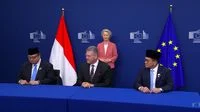
Indonesia and the European Union officially signed the Indonesia-European Union Comprehensive Economic Partnership Agreement (IEU CEPA) at the European Commission headquarters in Brussels, Belgium, on Friday, November 21, 2026. This landmark event, accompanied by the signing of an Investment Protection Agreement (IPA), signifies the conclusion of a decade-long diplomatic and economic marathon that began in 2016. The agreement is poised to reshape the trade architecture between Southeast Asia’s largest economy and the 27-member European bloc, establishing a framework designed to stimulate growth, modernize industries, and enhance market accessibility in an increasingly volatile global economic landscape.
A Decade in the Making: The Chronology of IEU CEPA
The road to the IEU CEPA was far from straightforward, characterized by intense negotiations, shifting geopolitical priorities, and complex regulatory alignment. The official journey commenced in June 2016, when both parties first gathered to outline the scope of a comprehensive trade deal. For the next nine years, negotiators navigated intricate hurdles involving sustainability standards, tariff barriers, and regulatory harmonization.
A critical milestone was achieved on September 23, 2025, when the principal terms of the agreement were finalized. However, the period between late 2025 and late 2026 was dedicated to the painstaking process of "legal scrubbing"—a technical necessity to ensure that the treaty’s language was airtight and compliant with the legal frameworks of both the Indonesian government and the European Union. With the signature now secured, the agreement transitions from the negotiation phase to the implementation phase, with a hard deadline for full operational status set for January 1, 2027.
Economic Stakes and Trade Volume
The significance of this partnership cannot be overstated. Currently, the annual bilateral trade between Indonesia and the European Union hovers around US$30 billion. For Indonesia, the EU serves as a vital strategic partner, representing the third-largest destination for its exports, trailing only China and the United States. Conversely, the European Union has been a prolific investor in the Indonesian archipelago, injecting approximately US$25 billion in foreign direct investment (FDI) over the past five years.
The agreement arrives at a juncture where Indonesia is looking to diversify its export destinations and reduce dependency on traditional regional markets. By securing preferential access to the EU market, Jakarta aims to insulate its domestic industries against the headwinds of global protectionism and the intensifying competition within the Asia-Pacific region.
Breaking Down the Tariff and Market Access Provisions
The core of the IEU CEPA lies in its ambitious tariff reduction schedule. Upon the agreement’s entry into force, 90.4% of all tariff lines for Indonesian products exported to the EU will be eliminated, effectively dropping to 0% duty. The remaining 8.37% of tariff lines are slated for a phased reduction, spread over a transition period of three to 15 years through a Tariff Rate Quota (TRQ) mechanism. This gradual approach is designed to allow both markets to adjust to the influx of new goods while protecting sensitive sectors.
For Indonesia’s commodity-heavy export profile, the "red carpet" treatment for specific sectors is a major victory. The agreement includes specific provisions for:
- Palm Oil and Derivatives: In a move that addresses a long-standing friction point, the EU has granted Indonesia a duty-free quota for 1.9 million tons of crude palm oil (CPO) and 140,000 tons of processed palm oil, with provisions for volume increases over the first nine years.
- Textiles and Footwear: Indonesian manufacturers of garmen, high-quality fabrics, accessories, and sports footwear—including sneakers—will gain immediate competitive advantages through tariff-free access.
- Indicated Goods (IG): The agreement mandates the legal protection of 72 Indonesian products under the Indicated Goods status. This includes 32 varieties of premium coffee, such as the renowned Kopi Gayo and Toraja, and 12 types of spices, notably Indonesian nutmeg. This protection ensures that the origin and quality of these goods are legally recognized in European markets, allowing producers to command higher premium prices.
Empowering the Backbone of the Economy: UMKM
A distinct feature of this agreement is its focus on Small, Medium, and Micro Enterprises (UMKMs). Recognizing that bureaucratic hurdles often prevent smaller businesses from accessing global markets, the IEU CEPA introduces a simplified "Self-Certification" mechanism. Under this system, UMKM exporters can issue their own Statement of Origin, replacing the more cumbersome traditional documentation processes.
To further support these enterprises, the government is establishing a digital portal that integrates a database of tariff information based on the Harmonized System (HS) codes. This transparency initiative is intended to demystify European trade regulations, allowing small-scale Indonesian entrepreneurs to navigate the complexities of European customs with greater ease and confidence.
Investment Protection and Technological Synergy
The Investment Protection Agreement (IPA) signed alongside the CEPA acts as a cornerstone for building investor confidence. The IPA provides a stable and predictable legal environment for European firms looking to expand into Indonesia. The agreement is specifically targeted at high-value sectors, including chemical manufacturing, pharmaceutical research, renewable energy, and modern food processing.
Beyond inward investment, the deal serves as a gateway for Indonesian industry to modernize. By lowering import duties on machinery, specialized tools, and high-tech capital goods from Europe, Indonesian manufacturers can upgrade their production facilities at a lower cost. This technological infusion is expected to improve the quality of Indonesian output, making it more competitive on the global stage.
Strategic Transition: The End of GSP and the Road to 2027
The timing of this agreement is strategic. Indonesia currently benefits from the European Union’s Generalised Scheme of Preferences (GSP), which offers unilateral trade concessions. However, this scheme is scheduled to expire on December 31, 2026. The IEU CEPA acts as a seamless successor, preventing a potential trade cliff that could have resulted in higher duties for Indonesian exporters.
Coordinating Minister for Economic Affairs Airlangga Hartarto emphasized the necessity of the agreement for national economic security. "The signing marks the end of a decade-long effort to secure our market access in an increasingly competitive global environment," Hartarto stated. He noted that the urgency now shifts to the legislative bodies. The European Parliament is scheduled to initiate formal discussions regarding the ratification of the agreement on Monday, November 23, 2026.
The Indonesian government is simultaneously mobilizing its own legislative processes to ensure that all domestic requirements are met in time for the January 1, 2027 deadline. Failure to ratify by this date could result in a temporary period of trade uncertainty, a scenario the government is keen to avoid.
Analysis: Implications for Global Trade
The IEU CEPA represents a broader trend of "minilateralism," where major economies move to secure bilateral or regional trade deals to hedge against the stagnation of multilateral platforms like the World Trade Organization (WTO). For Indonesia, this deal is a signal that the nation is ready to adhere to higher international standards of trade, labor, and environmental compliance, which are often embedded within EU trade agreements.
While the immediate benefits are clear—tariff elimination and increased investment—the long-term success of the agreement will depend on the implementation of the "non-trade" provisions. The EU, in particular, places a heavy emphasis on sustainability and ESG (Environmental, Social, and Governance) criteria. Indonesian exporters will need to ensure that their production processes align with these evolving requirements to maintain their status under the CEPA.
Furthermore, the deal serves as a blueprint for other potential trade agreements. By successfully concluding a deal with one of the world’s most stringent regulatory blocs, Indonesia demonstrates a newfound capacity for complex international negotiation. This will likely bolster investor sentiment, signaling that Indonesia is a predictable, rule-based destination for long-term capital.
As the world watches the ratification process, the IEU CEPA stands as a testament to the power of persistent diplomacy. For the businesses of Indonesia and Europe, the promise of lower costs, increased market volume, and enhanced legal protections offers a clear path toward mutual prosperity. Whether this translates into the projected growth figures will ultimately depend on the agility of the private sector in both regions to leverage these new rules, but the framework for a new, deeper economic relationship is now firmly in place.
Related posts: