Exploring the Hallyu Wave: Top Travel Destinations in South Korea That Bring K-Dramas to Life

South Korea has firmly established itself as one of the premier global tourism hotspots, drawing millions of international visitors annually, with a particularly strong surge in travelers from Southeast Asia, including Indonesia. This tourism boom is heavily propelled by the global phenomenon of the Hallyu wave—the Korean Wave—which encompasses the widespread popularity of South Korean dramas, music, and cinema. For years, fans around the world have immersed themselves in the vibrant urban landscapes, serene countryside, and cultural landmarks depicted on their screens. Consequently, visiting these cinematic locations has shifted from a niche hobby for die-hard fans to a mainstream travel trend. Beyond their visual appeal, these locations offer a tangible connection to the cultural narratives that have captivated global audiences. To help travelers navigate this vibrant East Asian nation, several standout destinations combine stunning aesthetics with the authentic atmosphere of a television drama set, offering a well-rounded itinerary for both first-time visitors and seasoned explorers.
The Rise of Screen Tourism in East Asia
The intersection of television production and the tourism industry in South Korea is not a recent accident; it is the result of strategic cultural policies implemented by the South Korean government since the late 1990s. Recognizing the economic potential of cultural exports, Seoul heavily invested in creative industries, fostering an environment where storytelling and urban development intersect. As Korean dramas (K-dramas) gained international distribution through streaming platforms like Netflix, Viki, and Viu, specific neighborhoods, cafes, libraries, and streetscapes transformed into pilgrimage sites for global fans.
According to data from the Korea Tourism Organization (KTO), inbound tourism grew exponentially over the past decade prior to global travel disruptions, with Hallyu-themed itineraries cited as a primary motivator for over 60 percent of foreign tourists. This form of screen tourism benefits not only the national economy but also revitalizes local businesses, small-scale artisan shops, and neighborhood commercial districts that might otherwise be overshadowed by massive corporate conglomerates.
Geonbae: Experiencing the Vibrant Seoul Metropole
For travelers seeking to immerse themselves in the high-energy, fast-paced atmosphere of contemporary Korean metropolitan life, Geonbae offers an quintessential urban experience. Situated in one of Seoul’s bustling districts, Geonbae is characterized by its dynamic streetscape lined with a diverse array of modern bars, chic watering holes, and vibrant nightlife venues. The area visually stands out due to its striking neon-infused aesthetics, sleek architectural designs, and the constant hum of social activity that defines the South Korean capital after dark.
Unlike historical palaces or tranquil Buddhist temples, Geonbae represents the modern, youthful heartbeat of Seoul. It is a frequent backdrop for contemporary romance and slice-of-life dramas that depict young professionals navigating the complexities of urban careers and relationships. The destination is accessible year-round and remains perpetually lively, frequented by a dynamic mix of local residents unwinding after a long workday and international tourists eager to experience authentic Korean nightlife culture. Urban planners note that such districts play a crucial role in Seoul’s 24-hour economy, generating substantial revenue and fostering a vibrant social fabric that blends traditional hospitality with modern entertainment.

Daehakro: The Cultural and Artistic Epicenter
Moving from the commercial nightlife of the metropolis into the realm of high culture and artistic expression, Daehakro stands as a premier destination for lovers of the performing arts. Stretching approximately 1.6 kilometers, Daehakro—whose name literally translates to "University Street"—earned its moniker due to its historical proximity to the former campus of Seoul National University. Today, it functions as South Korea’s equivalent to New York City’s Broadway or London’s West End.
The corridor is densely packed with over 150 theaters, intimate performance spaces, art galleries, and open-air plazas where independent musicians, theatrical troupes, and avant-garde performers showcase their craft. Throughout the year, Daehakro hosts numerous street festivals, musical performances, and theatrical runs that attract a culturally inclined demographic. For visitors, walking down Daehakro provides a stark contrast to the towering corporate skyscrapers of other districts; instead, the streetscape is defined by low-rise brick buildings, vintage theater marquees, and creative murals. The area frequently appears in youth-oriented K-dramas, symbolizing the struggles and triumphs of young artists pursuing their passions in a competitive society. Cultural economists emphasize that districts like Daehakro are vital for preserving South Korea’s grassroots arts ecosystem amidst rapid commercial modernization.
Starfield Library: Architectural Grandeur Meets Intellectual Haven
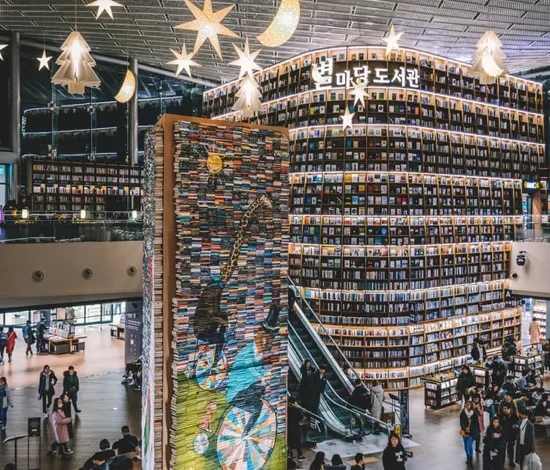
For a destination that seamlessly marries architectural innovation with quiet contemplation, the Starfield Library in Gangnam, Seoul, has rapidly become an unmissable landmark. Located in the heart of the COEX Mall, this expansive public cultural space redefines the traditional concept of a library by placing it in the middle of a bustling commercial center.
The most striking feature of the Starfield Library is its massive, soaring bookshelves that reach an impressive height of 13 meters. Housing tens of thousands of books, journals, and international multimedia materials, the towering shelves create a visual amphitheater of literature that commands immediate awe from visitors. Natural light floods the interior through a vast glass skylight ceiling, illuminating the open-plan reading areas, digital kiosks, and stepped seating where locals and tourists gather to read, study, or simply admire the design.
The library has also become a cultural hub, regularly hosting poetry readings, book-talk concerts, and lectures by prominent authors and intellectuals. In the age of digital consumption, the Starfield Library demonstrates how physical public spaces can be revitalized to encourage community engagement and intellectual curiosity. For travelers, it offers a tranquil oasis amidst the high-speed energy of Seoul, as well as one of the most photographed architectural interiors in the country.
Broader Economic and Social Implications of South Korean Tourism

The sustained global interest in South Korean travel destinations extends far beyond mere leisure; it serves as a major driver of soft power and economic resilience for the nation. Industry analysts point out that tourism linked to cultural exports creates a multiplier effect across multiple sectors, including hospitality, aviation, retail, and gastronomy. When international visitors travel to locations popularized by dramas—such as Geonbae, Daehakro, and the Starfield Library—they also patronize local restaurants, street food vendors, and traditional markets, ensuring that economic benefits trickle down to small business owners.
Furthermore, municipal governments across South Korea have increasingly collaborated with television production studios to develop designated tourism zones, ensuring that infrastructure can comfortably accommodate the influx of international visitors without disrupting the daily lives of local residents. This collaborative approach highlights a sophisticated understanding of sustainable tourism management, balancing the demands of a booming global industry with community preservation.
Culinary Exploration and Practical Travel Tips
No journey to South Korea is complete without a deep dive into its world-renowned culinary landscape. The nation’s cuisine has evolved into a global phenomenon in its own right, characterized by a delicate balance of bold flavors, fermented ingredients, and communal dining traditions. Visitors exploring urban districts like Geonbae can sample an array of modern pub fare—such as anju (food served with alcohol)—alongside traditional staples like tteokbokki (spicy rice cakes), Korean fried chicken, and samgyeopsal (grilled pork belly). Meanwhile, areas surrounding cultural hubs like Daehakro offer eclectic dining options ranging from cozy indie cafes to historic neighborhood eateries that have served generations of students and artists.
For travelers planning a trip to South Korea, experts recommend utilizing the country’s highly efficient public transportation system, particularly the Seoul Subway and high-speed KTX trains, which connect the capital to regional provinces seamlessly. Equipping oneself with a T-money transit card and reliable translation applications can significantly enhance the independence and ease of navigation.
Conclusion
South Korea’s ability to weave its contemporary culture, cinematic history, and urban architecture into accessible travel experiences has cemented its status as a top-tier global destination. Whether one is seeking the energetic nightlife of Geonbae, the artistic soul of Daehakro, or the architectural majesty of the Starfield Library, the nation offers an endless array of discoveries. By blending the fantasy of television dramas with the rich reality of everyday Korean life, these destinations provide travelers with an unforgettable journey that resonates long after the flight home.