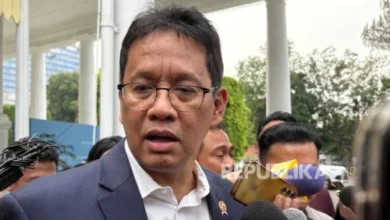
Sikapi Putusan MA soal Suket Ijazah SMA Gibran Tak Sah, Sekjen NasDem: Tunggu Setelah DPR Ngantor Lagi


The political landscape in Indonesia faces a period of heightened scrutiny following a landmark decision by the Supreme Court (Mahkamah Agung/MA) regarding the validity of the high school diploma equivalency certificate held by Vice President Gibran Rakabuming Raka. As legal and political observers await the repercussions of this ruling, the NasDem Party has announced that it will finalize its official position on the matter only after the House of Representatives (DPR) concludes its current recess period.
This development follows the Supreme Court’s decision to grant the cassation petition filed by HM Subhan Palal, which challenged the legal standing of the equivalency certificate used to authenticate the Vice President’s secondary education credentials. The ruling has sparked intense debate regarding the administrative integrity of high-ranking public officials and has prompted questions about the potential for legislative or constitutional consequences.
The Supreme Court Ruling: Legal Context and Implications
The Supreme Court’s decision represents the culmination of a protracted legal challenge initiated by HM Subhan Palal. The lawsuit focused specifically on the "suket" (surat keterangan)—a certificate of equivalency—issued to substantiate Gibran Rakabuming Raka’s SMA (Senior High School) education credentials. In the Indonesian legal context, such certificates are often issued by the Ministry of Education and Culture for individuals who have completed schooling abroad or through non-traditional educational pathways to ensure their qualifications meet the national standard required for public office.
By granting the cassation, the Supreme Court has effectively invalidated the existing legal recognition of the certificate. While the administrative details of the ruling are still being reviewed by legal experts, the decision has immediate implications for the discourse surrounding the eligibility requirements for the Vice Presidency as stipulated by the Election Law. Under Indonesian law, a candidate for President or Vice President must hold at least a high school diploma or its equivalent. The invalidation of this document creates a point of friction that opposition groups and legal critics are currently leveraging to question the procedural compliance of the Vice President’s past election candidacy.
NasDem’s Measured Response and Strategic Silence
In response to the growing public demand for a definitive stance, the Secretary-General of the NasDem Party, Hermawi Taslim, has urged the public to exercise patience. Speaking to the media on Monday, October 2, 2026, Taslim confirmed that the party leadership is currently evaluating the legal implications of the ruling but will not issue a formal declaration until the House of Representatives resumes its legislative duties following the current recess.
"Wait for NasDem’s stance after the DPR recess," Taslim stated, emphasizing that the party intends to coordinate its position within the formal legislative framework. When pressed on the timeline, he reiterated, "After the DPR returns to the office."
This cautious approach suggests that NasDem is seeking to avoid premature political posturing. By aligning its response with the resumption of the legislative session, the party is likely positioning itself to handle the matter through official DPR channels—potentially through the relevant commissions responsible for monitoring legal and governmental affairs—rather than through isolated political statements. This strategy allows the party to consult with its legal advisors and coalition partners, ensuring that any subsequent actions are based on a thorough understanding of the court’s written decision.
Timeline of the Legal Challenge
The controversy surrounding the Vice President’s education credentials is not new; it has been a recurring theme throughout his tenure. The following chronology outlines the development of the case:
- Initial Challenges: During the election campaign phase, several civil society groups raised questions regarding the authenticity of the Vice President’s educational documents. These initial inquiries were largely dismissed by the General Elections Commission (KPU) at the time, which declared all candidates eligible based on the verification of submitted documents.
- The Filing of the Lawsuit: HM Subhan Palal escalated the matter by filing a lawsuit in the administrative and civil courts, specifically targeting the validity of the Ministry of Education’s equivalency certificate.
- Lower Court Rulings: The case underwent several iterations in lower courts, with various rulings providing conflicting interpretations of the validity of the administrative documents.
- Supreme Court Intervention: The case reached the Supreme Court via a cassation appeal. The Court’s decision to grant the appeal effectively overturned previous interpretations that had favored the state’s position on the document’s validity.
- Current Status: The ruling has been finalized by the Supreme Court, and the political establishment is now tasked with interpreting how this judicial decision interacts with the established eligibility of the sitting Vice President.
Broader Political Repercussions: The Question of Impeachment
The significance of the Supreme Court ruling has been amplified by public statements from prominent legal figures, including former Constitutional Court Chief Justice Jimly Asshiddiqie. In response to the ruling, Jimly has commented on the potential for constitutional escalation, including the possibility of impeachment proceedings.
Under the Indonesian Constitution, the impeachment of a President or Vice President is a rigorous political and legal process that requires the involvement of the Constitutional Court, the House of Representatives, and the People’s Consultative Assembly (MPR). For impeachment to proceed, there must be a proven violation of the law or a failure to meet the requirements for office as stipulated by the Constitution.
While the Supreme Court’s ruling invalidates an administrative document, legal scholars are divided on whether this constitutes a sufficient "legal violation" to warrant the removal of an elected official. Some argue that the certificate was merely a procedural formality for a candidate whose educational background was otherwise verified by the KPU, while others contend that the invalidation renders the entire candidacy process fraudulent. The NasDem party’s decision to wait until the DPR is in session is seen as a recognition that any movement toward such a high-stakes constitutional confrontation must be handled with extreme legislative caution.
Analysis: The Intersection of Law and Politics
The situation highlights the complex tension between judicial outcomes and executive stability in Indonesia. The Supreme Court is the final arbiter of legal disputes, and its decisions are binding. However, the application of such rulings to sitting officials who were confirmed by the KPU and subsequently sworn into office creates a unique administrative dilemma.
From a political analysis perspective, the involvement of major political parties like NasDem is critical. If the party decides to align itself with those calling for a review of the Vice President’s credentials, it could signify a major shift in the governing coalition’s stability. Conversely, if the party chooses to view the ruling as a purely administrative matter that does not necessitate the removal of the Vice President, it will likely work to provide a legislative buffer for the administration.
Furthermore, the case underscores the importance of the educational verification process for public officials. The administrative hurdles encountered by the Vice President suggest a need for more robust and transparent verification standards for all future candidates. Ensuring that the records of public figures are beyond reproach is essential for maintaining public trust in the integrity of the democratic process.
Public Reaction and Future Outlook
Public sentiment remains polarized. Supporters of the government emphasize the legitimacy of the electoral process and the fact that the Vice President was duly elected by the people, arguing that legal technicalities regarding a single certificate should not override the mandate of the ballot box. On the other hand, critics argue that the rule of law must be applied uniformly, regardless of the official’s position.
As the nation waits for the DPR to reconvene, the focus will remain on the legal analysis of the Supreme Court’s judgment. Experts anticipate that the parliamentary response will involve a mix of hearings, invitations to the Ministry of Education to explain the issuance of the now-invalidated certificate, and potential debates over whether a new, corrected, or alternative certificate can be issued to rectify the administrative flaw.
Ultimately, the resolution of this issue will serve as a litmus test for the independence of the judiciary and the responsiveness of the legislative branch to legal developments. The delay in the NasDem Party’s response is not merely a tactical maneuver; it is an indicator of the gravity with which the political elite views this specific judicial intervention. Whether this leads to a period of political turbulence or a managed resolution remains to be seen, but the coming weeks in the House of Representatives are expected to be among the most consequential of the current legislative term.
The public, the media, and international observers continue to monitor the situation, as the implications of this case extend beyond the immediate question of a single certificate. They touch upon the core principles of institutional transparency, the finality of judicial rulings, and the mechanisms of accountability that govern the highest offices in the Republic of Indonesia. For now, the narrative remains in a state of suspended animation, waiting for the formal processes of the DPR to provide the next chapter in this ongoing constitutional drama.