The intersection of luxury vehicle ownership, administrative compliance, and data privacy vulnerabilities in Indonesia has once again surfaced in a startling case involving a mechanic in Tangerang, Banten. What began as a routine tax collection sweep by local revenue authorities transformed into an administrative labyrinth exposing potential identity theft, fraudulent leasing practices, and systemic loopholes in vehicle registration protocols.
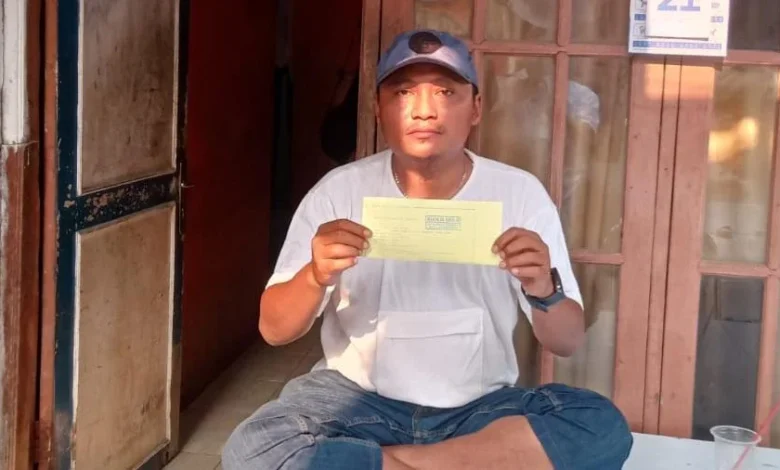
Yudariansyah, a local mechanic colloquially known as Yuda, residing in Kampung Sawah Dalam, Panunggangan Utara, Pinang, Tangerang City, found himself facing an astronomical financial liability for a supercar he had never seen, let alone owned. Tax officials arrived at his modest residence demanding payment for an outstanding Motor Vehicle Tax (PKB) totaling IDR 137,441,000 linked to a high-performance sports car manufactured by McLaren.
The incident sheds light on the broader vulnerabilities within vehicle registration systems, where unsuspecting citizens can unwittingly become targets of tax evasion schemes orchestrated through illicit document duplication or predatory lending networks. As regional revenue offices intensify efforts to recover billions of rupiah in unpaid luxury vehicle taxes, cases like Yuda’s highlight the urgent need for heightened regulatory oversight across automotive financing and registration sectors.
The Discrepancy Unveiled by Samsat Ciledug
The case came to light when the Ciledug One-Stop Administration Office, commonly known as Samsat Ciledug, initiated a targeted operation to trace and collect delinquent vehicle taxes from owners of high-end automobiles. According to administrative records accessed by authorities, the McLaren in question had accumulated a two-year tax arrears amounting to more than IDR 137 million.
Upon cross-referencing the vehicle identification number and registration documents with the national database, officials noted that the luxury sports car was officially registered under the name and address of Yudariansyah in Tangerang. Acting Chief of Samsat Ciledug, Idam Kholid, immediately recognized severe geographical and socioeconomic discrepancies upon reviewing the physical file. The designated address pointed not to a secure luxury estate, upscale suburban housing complex, or commercial hub, but rather to a dense, working-class village settlement.
Driven by professional skepticism, a field team from Samsat Ciledug decided to conduct an in-person visit to verify the information. On Friday, October 23, 2026, officers arrived at Yuda’s residence to confront him about the luxury asset. The encounter confirmed what officials had suspected: the reality on the ground bore no resemblance to the profile of a McLaren owner.
The Physical Realities of Kampung Sawah Dalam
The environment surrounding Yuda’s home starkly contrasted with the logistical requirements of operating, storing, or maintaining a multimillion-rupiah British supercar. Kampung Sawah Dalam features narrow neighborhood alleys surfaced primarily with deteriorating paving blocks, locally referred to as konblok.
The width of the alleyways barely accommodates a single standard passenger vehicle, and the rough surface condition makes traversing the lane treacherous for low-slung performance automobiles with minimal ground clearance. Operating a vehicle like a McLaren in such an environment is practically impossible without sustaining catastrophic damage to the carbon-fiber chassis, suspension, and body panels.
Furthermore, the domestic setting of the taxpayer contradicted the official registration profile. Yuda lived in a modest house shared with his elderly parents and other family members, surrounded by ordinary commuter motorcycles rather than exotic automotive machinery. When confronted by tax collection officers bearing a notice for a six-digit tax bill, Yuda expressed profound shock, noting the sheer impossibility of his association with the vehicle. The discrepancy prompted immediate administrative intervention to protect the citizen from unwarranted financial liability and potential legal repercussions.
Immediate Administrative Remediation and Data Protection
Recognizing the high risk of identity exploitation, Samsat Ciledug took swift defensive action to safeguard Yuda. The agency officially blocked the registration data associated with the McLaren, ensuring that no further administrative transactions, ownership transfers, or tax liabilities could be processed under his name.
Idam Kholid emphasized that the immediate freezing of the database entry was necessary to prevent cumulative penalties and to shield the mechanic from the fallout of potential tax evasion committed by the actual beneficiary of the vehicle. Authorities noted that leaving the registration active under an innocent party’s credentials exposes them to severe legal vulnerabilities, including asset seizure and travel restrictions. By severing the official link between Yuda and the luxury vehicle, Samsat Ciledug neutralized the immediate threat while initiating deeper investigative procedures into how the data breach occurred.
Suspected Illicit Practices Within Automotive Leasing and Showrooms
As the investigation progressed, authorities began exploring the mechanics of how a working-class mechanic’s identity became attached to an elite sports car. Interviews with Yuda confirmed that he had never loaned, surrendered, or otherwise disclosed his National Identity Card (KTP), family registry, or personal documents to any third party, financial institution, or automotive showroom.
Samsat Ciledug officials formulated a working hypothesis pointing toward foul play within the automotive financing sector. Investigators suspect that unscrupulous actors operating within third-party leasing agencies or luxury car showrooms may have illicitly acquired, duplicated, or utilized Yuda’s personal identification data to facilitate the purchase, registration, or tax avoidance maneuvers for the McLaren.
In Indonesia, the misuse of stolen or harvested identity documents—often referred to locally as KTP gantung or identity cloning—remains a persistent challenge in financial and vehicular transactions. Syndicates frequently exploit the personal data of low-income individuals to register high-value assets, effectively creating a buffer that shields the true beneficial owners from tax obligations, asset tracing, and law enforcement scrutiny. The precise mechanism of how Yuda’s data was compromised remains under active internal review by regional revenue authorities in coordination with law enforcement partners.
Broader Patterns of Luxury Tax Evasion
The case involving the McLaren is not an isolated administrative hurdle for Samsat Ciledug, but rather part of a wider enforcement challenge regarding luxury vehicle taxation in the Greater Jakarta area. During the same enforcement sweep, regional tax authorities uncovered a separate, much larger tax evasion scheme involving a corporate entity allegedly operating as a shell company.
According to Samsat records, a portfolio of eight to ten luxury vehicles—including high-end models from Lexus, Jeep, and BMW—had accumulated tax arrears approaching IDR 1 billion. When tax collection officers attempted to audit the registered corporate owner, they discovered that the company existed only on paper.
The address listed in the official corporate registration documents pointed to a modest parcel of land situated within the Kavling DPR area in Cipondoh. Upon physical inspection, officers found no corporate office, operational staff, or commercial activity associated with the registered entity. Instead, the property consisted of vacant land and a basic building structure that had been subleased to a third-party logistics and courier service.
Tax authorities classified the entity as a "phantom company" designed specifically to obfuscate asset ownership and evade progressive luxury vehicle taxes. The sophisticated use of virtual corporate addresses combined with third-party subleasing highlights the lengths to which tax delinquents go to frustrate revenue collection efforts.
Systemic Implications for Tax Administration and Data Security
The simultaneous exposure of identity exploitation in the mechanic’s case and corporate obfuscation in the shell company case underscores systemic vulnerabilities in Indonesia’s vehicle registration and taxation architecture. The reliance on paper-based identity verification at various stages of automotive transactions creates openings for fraudulent actors to manipulate official databases.
For individual citizens, the incident serves as an alarming reminder of the risks associated with data privacy leaks. Even individuals who take rigorous precautions to protect their personal documents can find themselves entangled in complex legal and financial liabilities due to systemic data compromises within commercial or administrative pipelines.
For regional governments, these cases demonstrate the critical importance of proactive field verification and inter-agency data sharing. As regional tax authorities increasingly leverage digital integration to track non-compliant taxpayers, the discovery of anomalies such as mismatched socioeconomic profiles and ghost corporations provides vital intelligence for tightening regulatory frameworks.
Moving forward, revenue offices and motor vehicle registration directorates face mounting pressure to implement multi-factor authentication, biometric verification, and stricter digital audit trails for luxury asset acquisitions. By closing the loopholes that permit identity cloning and corporate shell registrations, authorities aim to ensure that tax burdens are borne equitably by the actual beneficiaries of high-value luxury assets rather than vulnerable bystanders caught in the crossfire of administrative fraud.