Pentagon launches urgent recovery operation for sensitive F-35 stealth jet components seized by Chinese authorities in Hong Kong

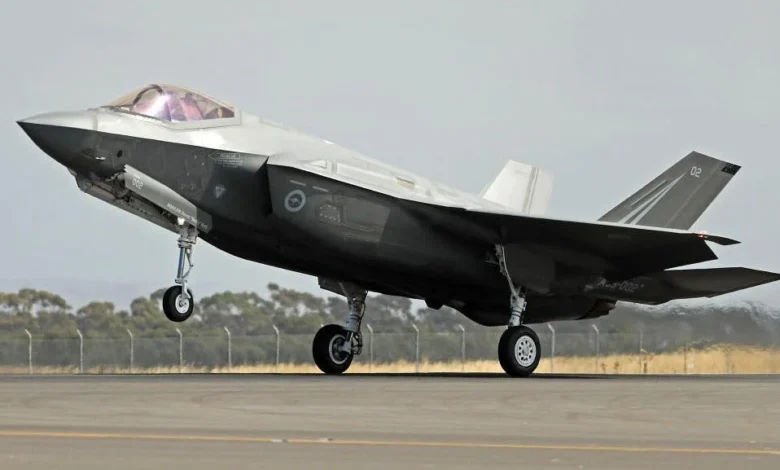
The United States Department of Defense has initiated a high-stakes recovery operation following the unauthorized seizure of sensitive F-35 Lightning II jet components by Chinese authorities in Hong Kong earlier this year. The incident, which has sent shockwaves through the American defense establishment, involves critical hardware including cockpit canopy and weapons bay door sections. These components, which are essential to the F-35’s stealth profile due to their specialized radar-absorbent coatings, were intercepted after a logistical misrouting redirected a commercial shipment intended for the United States into the territory of Hong Kong.
As Washington navigates the delicate geopolitical landscape of U.S.-China relations, this breach of security has raised profound questions regarding the integrity of the military supply chain. The Pentagon’s F-35 Joint Program Office (JPO) confirmed that it is actively coordinating with domestic authorities and industry partners to secure the return of the hardware, which originally belonged to the Royal Australian Air Force (RAAF) and was en route to the United States for maintenance and eventual decommissioning.
Chronology of a Logistics Breach
The incident began in May, during a routine logistical operation involving the transport of decommissioned F-35 parts from Australia to a U.S. facility. The shipment, handled by global logistics provider UPS, was intended to travel from Australia directly to the United States. However, according to reports, the transport aircraft made an unexpected stopover in South Korea before being diverted to Hong Kong.
Upon landing in the Special Administrative Region (SAR), the cargo was flagged and subsequently seized by local authorities, who are under the purview of Beijing. The diversion—whether the result of a clerical error, a mechanical routing failure, or a deliberate act of interference—remains the subject of an ongoing federal investigation. The transition of these components from a secure Western military supply chain to the custody of the Chinese state has created a significant intelligence vulnerability, as the hardware in question is not merely scrap metal but a repository of classified engineering data.
The Strategic Value of F-35 Technology
The F-35 Lightning II is widely considered the crown jewel of modern American aerospace engineering. Developed by Lockheed Martin, the platform relies on advanced "low-observable" (stealth) technology, which allows it to evade detection by sophisticated enemy radar systems. The components seized by China—the canopy and weapons bay doors—are particularly sensitive.
The canopy is manufactured with complex, multi-layered materials designed to balance structural integrity with radar-attenuating properties. Similarly, the weapons bay doors must maintain a seamless aerodynamic seal to ensure the aircraft remains "invisible" to hostile sensors. If Chinese intelligence or engineering units are able to reverse-engineer the chemical composition of the radar-absorbent material (RAM) or study the structural tolerances of these components, it could potentially undermine the effectiveness of the entire F-35 fleet currently deployed across the Pacific theater.
Official Pentagon Response and Industry Accountability
In a formal statement, the Department of Defense acknowledged the security lapse, confirming that the components involved were designated as "beyond economic repair." Despite their status as non-operational parts, the Pentagon emphasized that the materials contain technology that remains highly sensitive.
"The F-35 Joint Program Office and the Department of Defense are aware of the shipment issue involving non-functional F-35 Lightning II components," the Pentagon stated. "We are coordinating with U.S. authorities and our industry partners to secure these components, investigate the circumstances of the incident, and establish rigorous preventive measures to ensure such a logistical failure does not occur again."
The mention of "industry partners" points to the heavy reliance on commercial logistics providers like UPS for the transport of military-grade hardware. This incident has prompted a broader review of the military’s supply chain security protocols. Experts argue that transporting parts of this classification level through commercial channels carries inherent risks that must now be mitigated through stricter oversight and "secure-chain" shipping requirements, which mandate constant tracking and direct routing for sensitive defense equipment.
Political Fallout and Congressional Concern
The revelation of the seizure comes at a politically sensitive time, coinciding with high-level diplomatic exchanges between Washington and Beijing. The timing has drawn sharp criticism from members of Congress, who argue that the incident underscores the inherent risks of treating China as a partner while it simultaneously engages in persistent intelligence gathering against the U.S. military.
Senator Elissa Slotkin, a prominent voice on national security matters, expressed deep frustration over the optics of the situation. "The contrast is stark," Slotkin noted. "We are seeing China hold some of our most sensitive technology, and yet we continue to engage in high-level diplomatic theater. When it comes to military intelligence, there is no ambiguity: China is an adversary constantly looking for an edge."
The Senator’s remarks echo a growing bipartisan consensus in Washington that the U.S. must adopt a more hardened stance regarding the protection of its intellectual property. The fact that the incident remained out of the public eye for months has also fueled speculation about the effectiveness of current disclosure protocols regarding breaches of military supply lines.
Broader Implications for Global Security
The implications of this incident extend far beyond the recovery of a few aircraft parts. If China successfully gains access to the structural data of these F-35 components, it could accelerate their own stealth aircraft development programs, such as the Chengdu J-20. By analyzing the radar-absorbent materials and the geometric design of the canopy, Chinese researchers could identify specific vulnerabilities in the F-35’s stealth profile, allowing for the development of counter-measures or more effective radar detection algorithms.
Furthermore, the incident highlights the vulnerabilities inherent in the globalized nature of the F-35 program. With several international partners—including Australia, the UK, Japan, and Israel—operating the aircraft, the global logistics web is vast and complex. Maintaining a secure "custody chain" for every part, from the smallest bolt to major structural components, is a massive undertaking.
Analysis: A Call for Supply Chain Reform
Military analysts suggest that the Pentagon’s investigation will likely focus on two fronts: the technical failure of the routing software and the human element. If the diversion was indeed a deliberate act of sabotage, it would signify a new phase in the "gray zone" warfare being conducted by global powers to undermine U.S. technological supremacy.
To prevent a recurrence, the Department of Defense is expected to implement several structural changes:
- Mandatory Military Escort: For components containing classified radar-absorbent materials, the Pentagon may shift away from commercial couriers toward dedicated military transport aircraft, even for smaller parts.
- Enhanced Tracking Technologies: Real-time, satellite-linked tracking devices that trigger alerts if a shipment deviates from a pre-approved flight path by even a small margin.
- End-to-End Verification: Implementing a "two-person rule" or similar audit verification for any shipments that touch down in third-party countries, particularly those with strained relations with the United States.
As the recovery efforts continue, the Department of Defense faces the daunting task of diplomatic negotiation. Reclaiming the components from Chinese authorities will require a delicate balance of pressure and back-channel communication, as Beijing is unlikely to return the hardware without leverage of its own.
The saga of the misplaced F-35 parts serves as a sobering reminder of the realities of modern warfare, where a single logistical error can become a major national security crisis. As the Pentagon works to secure its hardware, the incident remains a catalyst for a much-needed re-evaluation of how the United States manages its most precious technological assets in an increasingly contested world. The coming months will likely see a hardening of supply chain regulations, as the U.S. attempts to ensure that its next-generation aircraft remain beyond the reach of its strategic rivals.
Related posts: