Viral Video Captures Citilink Passenger Escorted Off Flight After Smoking in Aircraft Lavatory Mid-Air

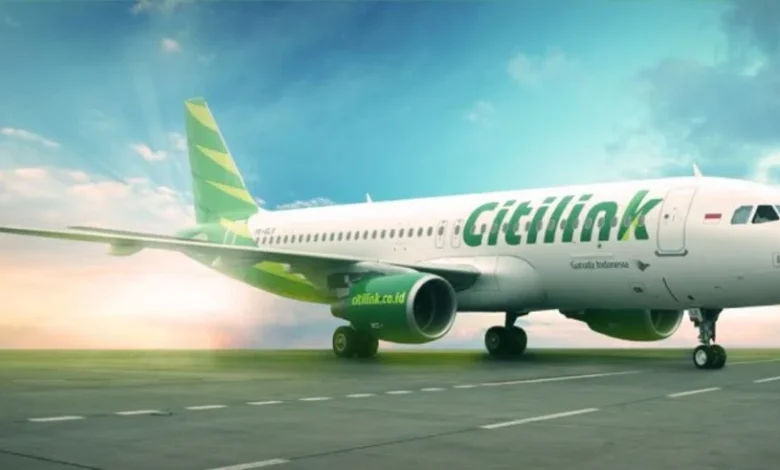
Air travel continues to be one of the most efficient, reliable, and widely utilized modes of mass transit globally, connecting distant cities and remote islands within a matter of hours. Millions of passengers step onto commercial aircraft daily, placing their absolute trust in the rigorous safety protocols maintained by international aviation authorities and domestic airlines alike. This high level of trust relies on a mutual commitment between the airline operator and the passengers: the airline promises safe, comfortable transport, while passengers pledge strict adherence to established safety guidelines and federal regulations. However, this delicate balance of safety and compliance was recently disrupted when a reckless passenger decided to disregard the most fundamental rules of aviation, sparking widespread public outrage and highlighting persistent challenges regarding passenger discipline in commercial airspace.
The incident, which quickly escalated into a viral social media sensation across various digital platforms in Indonesia, took place on a scheduled Citilink flight operating from Batam to Surabaya. While commercial flights are generally routine and uneventful, this particular journey turned extraordinary when cabin crew members discovered that a male passenger had covertly violated the absolute prohibition against smoking inside an aircraft. The audacity of the violation—committed inside the confined space of an airplane restroom at cruising altitude—has reignited intense discussions among aviation experts, legal authorities, and the general public regarding air travel safety, passenger accountability, and the severe legal ramifications of defying federal aviation laws.
The Viral Incident on Citilink Flight QG 949
The sequence of events began to unfold on Saturday, November 18, aboard Citilink flight QG 949, which was traveling from Hang Nadim Airport in Batam to Juanda International Airport in Surabaya, East Java. According to official flight details and subsequent airline confirmations, the passenger managed to bypass standard security vigilance on the ground, carrying either conventional tobacco products or an electronic smoking device onto the aircraft. Sometime during the multi-hour journey, while the aircraft was cruising thousands of feet above the ground, the individual retreated to the aircraft lavatory to smoke.
The act of smoking inside an enclosed airplane cabin is not merely a nuisance or an unpleasant experience for fellow travelers; it poses an immediate and catastrophic fire hazard. Despite the ubiquitous, illuminated "No Smoking" signs and mandatory pre-flight safety demonstrations explicitly outlining the ban on all smoking materials—including e-cigarettes and vapes—throughout the duration of the flight, the passenger chose to ignore these critical warnings.
The violation came to light when the distinctive odor of smoke was detected, prompting immediate vigilance from the cabin crew. Flight attendants are trained to identify and neutralize safety threats instantly, and the presence of smoke inside a pressurized cabin cabin demands swift, decisive action to prevent a potential onboard fire—one of the most feared emergencies in aviation. Upon landing at Juanda International Airport in Surabaya, the aircraft was met on the tarmac by airport security personnel.

Social Media Exposure and Public Reaction
The incident gained massive public traction after a video documenting the aftermath of the violation was uploaded to the social media platform X (formerly Twitter) by user @Pai_C1. The short video clip rapidly circulated across the internet, accumulating thousands of views, reposts, and comments within hours.
The footage featured a man dressed in a dark shirt walking down the aircraft aisle, flanked and escorted by aviation security officers. Passengers seated along the aisle could be heard expressing disbelief and astonishment at the unfolding scene. One audible voice captured in the video remarked in Javanese, "Mosok penerbangan ono sing ngerokok?" which translates to, "Is it possible that someone was smoking during a flight?"
The visual of a passenger being escorted off a commercial aircraft by security authorities struck a chord with netizens, many of whom voiced absolute bafflement regarding the individual’s inability to control his nicotine cravings for the duration of a domestic flight. Commenters across various platforms questioned the psychological compulsion that would drive someone to risk a federal arrest, massive financial penalties, and a potential lifetime airline ban simply to smoke a cigarette or vape mid-flight. The widespread dissemination of the video served as a catalyst for a broader societal conversation regarding personal responsibility, air rage, and the enforcement of behavioral standards in public spaces.
Official Confirmation and Airline Response
Following the rapid spread of the video across digital networks, Citilink management issued an official statement confirming the veracity of the incident. Representatives from the airline verified that the passenger in question had indeed violated strict anti-smoking regulations while on board flight QG 949 on November 18.
According to the airline’s protocol, once the cabin crew identified the breach, they coordinated with ground operations and airport security to ensure the offender was apprehended immediately upon arrival. As soon as the aircraft touched down at Juanda International Airport and came to a complete stop at the designated gate, aviation security personnel boarded the plane and took the offender into custody.
During initial questioning by airport authorities, the passenger readily admitted to the infraction, acknowledging that he had smoked inside the aircraft lavatory. Citilink reiterated its zero-tolerance policy regarding any behavior that compromises flight safety, passenger comfort, or regulatory compliance. The airline emphasized that the safety of all individuals on board remains its utmost priority, and any actions that threaten this standard will be met with immediate intervention and handover to legal authorities for prosecution.

The Severe Dangers of Smoking in Commercial Airspace
To understand why airline officials and aviation regulators react with such severity to passengers smoking on planes, one must examine the profound safety implications involved. Modern commercial aircraft are marvels of engineering, designed to operate in highly controlled, pressurized environments at high altitudes. However, this environment also makes them uniquely vulnerable to fire.
An airplane cabin is a confined space with a closed-loop air circulation system. While modern airliners are equipped with advanced High-Efficiency Particulate Air (HEPA) filters that continuously clean the air, smoke from a cigarette, cigar, or electronic nicotine delivery system (vape) spreads rapidly through the cabin and flight deck. This can obscure visibility, trigger sensitive smoke detectors, and cause severe respiratory distress among passengers, particularly those with pre-existing medical conditions such as asthma or chronic obstructive pulmonary disease (COPD).
More critically, the introduction of an open flame or a heating element—such as those found in lighters, matches, or the lithium-ion batteries of electronic cigarettes—creates an extreme fire risk. An in-flight fire is widely considered by aviation professionals to be one of the most perilous emergencies a crew can face. Unlike a fire on the ground, where firefighters can arrive within minutes and evacuees can simply step outside onto solid earth, an airborne aircraft cannot pull over. The crew must rely entirely on onboard fire suppression equipment, specialized training, and quick coordination to extinguish the blaze while keeping the aircraft stable.
Furthermore, airplane lavatories are equipped with waste bins containing paper towels and other combustible materials. Discarding a lit cigarette butt or a malfunctioning vaping device into a lavatory trash receptacle can easily ignite a trash fire, which has historically led to catastrophic disasters in aviation history. It was precisely these grim historical precedents that prompted international regulatory bodies, including the International Civil Aviation Organization (ICAO) and national civil aviation authorities worldwide, to implement absolute, unyielding bans on smoking aboard all commercial flights.
Legal Frameworks and Financial Penalties
Violating the prohibition against smoking on a commercial aircraft is not merely a breach of airline etiquette; it constitutes a serious criminal offense under national and international aviation laws. In Indonesia, aviation security and safety are governed by stringent statutory frameworks designed to protect the public and maintain order in the skies.
Under Indonesian aviation regulations, performing acts that endanger flight safety—including smoking conventional cigarettes or electronic vaping devices inside an aircraft cabin or lavatory—violates the Aviation Law. Individuals found guilty of such infractions face severe legal consequences. Depending on the severity of the endangerment and the specific findings of the investigation, offenders can be subjected to criminal prosecution leading to imprisonment, substantial financial penalties, or both.

Legal experts note that penalties for violating in-flight smoking bans can scale up to hundreds of millions of rupiah, with maximum fines reaching up to Rp500 million in cases where the action is deemed to have severely endangered the safety of the flight and its occupants. In addition to criminal charges and heavy fines, airlines frequently exercise their right to place disruptive or non-compliant passengers on a permanent "no-fly" blacklist, effectively barring them from utilizing the airline’s services in the future. This administrative sanction serves as an additional deterrent against unruly behavior, ensuring that offenders face long-term consequences that extend far beyond the immediate courtroom ruling.
Broader Implications and Passenger Accountability
The Citilink smoking incident serves as a stark reminder of the ongoing challenges airlines face regarding passenger discipline and compliance. In the post-pandemic era of commercial aviation, flight crews have reported a noticeable uptick in disruptive passenger behavior, ranging from refusal to follow seatbelt instructions to aggressive altercations and regulatory violations like unauthorized smoking.
Aviation psychologists and behavioral analysts point out that air travel inherently induces stress for many individuals, caused by tight spaces, delays, security screenings, and the anxiety of flying. For nicotine-dependent individuals, long-haul or even short-haul domestic flights can exacerbate irritability. However, experts emphasize that personal addiction or discomfort does not excuse illegal actions that jeopardize the lives of hundreds of fellow travelers.
Airlines, airports, and regulatory bodies continuously work to reinforce safety education through pre-flight briefings, prominent signage, and public awareness campaigns. Yet, incidents like the one on Flight QG 949 demonstrate that continuous vigilance and strict enforcement remain essential. When passengers choose to defy the rules, swift intervention by cabin crew and security personnel—followed by transparent public accountability—sends a clear message that safety non-compliance will not be tolerated.
As the aviation industry continues to recover and grow, maintaining the absolute integrity of safety protocols rests on the cooperation of every single individual who steps onto an aircraft. The swift apprehension and impending legal reckoning of the passenger on the Batam-Surabaya flight stand as a definitive testament to the fact that the skies are bound by strict laws designed to protect all who travel within them, leaving zero tolerance for recklessness at 35,000 feet.
Related posts: