10 Most Popular Palm Tree Types to Transform Your Home Decor and Indoor Air Quality

The integration of botanical elements into residential and commercial spaces has undergone a significant resurgence, driven by a growing urban desire to reconnect with natural environments. Among the myriad choices available to interior designers and homeowners alike, palm trees have consistently remained a premier selection for establishing a serene, tropical atmosphere. Characterized by their elegant arching fronds and resilient structural trunks, palms offer a harmonious blend of aesthetic sophistication and practical environmental benefits. Recent horticultural trends highlight an increasing consumer preference for low-maintenance greenery that simultaneously addresses urban environmental challenges, such as indoor air pollution and climate-controlled dryness. As modern architecture increasingly incorporates biophilic design principles—which aim to integrate occupants more closely with nature—understanding the specific varieties, ecological advantages, and maintenance requirements of indoor and outdoor palms has become increasingly essential for contemporary property owners.
A Comprehensive Historical and Horticultural Context of Palms in Architecture

The domestication and ornamental cultivation of palm trees date back centuries, originating in ancient tropical and subtropical civilizations where these versatile plants provided not only shade and structural materials but also profound spiritual and aesthetic value. Historically, palm fronds symbolized victory, peace, and eternal life across various Mediterranean and Middle Eastern cultures. By the Victorian era, the cultivation of palms in European conservatories and parlors became a definitive status symbol, reflecting global exploration and a burgeoning interest in exotic botany.
In the contemporary architectural landscape, the resurgence of palms is deeply intertwined with the evolution of biophilic design. Urbanization and the proliferation of airtight, energy-efficient buildings have frequently resulted in diminished indoor air quality and elevated stress levels among occupants. Horticultural researchers and environmental scientists have increasingly turned to botanical interventions to mitigate these modern architectural shortcomings. Palms have emerged as subjects of intense botanical study due to their unique physiological adaptations, including specialized stomata and robust root systems capable of filtering volatile organic compounds (VOCs) and regulating relative humidity. This historical shift from purely ornamental landscaping to functional, health-promoting interior architecture underscores the enduring scientific and aesthetic relevance of the palm family (Arecaceae).
Detailed Taxonomy and Varieties of Popular Ornamental Palms

The family Arecaceae encompasses thousands of distinct species, each adapted to specific microclimates ranging from arid deserts to dense tropical rainforests. Selecting the appropriate variety requires a careful assessment of spatial limitations, lighting conditions, and maintenance capacity. Below is an exhaustive breakdown of the ten most popular palm species utilized in modern interior and exterior design.
-
Red Palm (Cyrtostachys renda)
Distinguished by its striking, vibrant scarlet crownshaft and leaf sheaths, the Red Palm is widely regarded as one of the most visually arresting tropical plants. Originating from the peat swamp forests of Southeast Asia, this species can achieve heights of up to 16 meters in its native habitat. Beyond its striking aesthetic contribution to tropical landscapes, the Red Palm holds significant cultural value in various Asian traditions, where it is frequently associated with prosperity and positive energy according to traditional spatial design principles like Feng Shui. It thrives best in high-humidity environments with consistently moist, acidic soil. -
Yellow Palm (Dypsis lutescens)
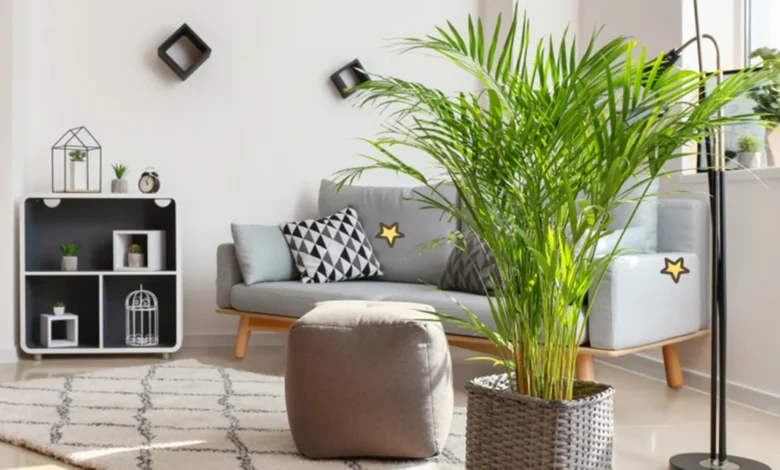
Often referred to as the Areca Palm or Butterfly Palm, the Yellow Palm is characterized by its golden-yellow stems and feathery, yellowish-green fronds. Growing in dense, multi-stemmed clumps rather than a single dominant trunk, this species is exceptionally well-suited for container gardening in large indoor spaces. Its manageable size and graceful, arching silhouette make it a favorite for filling empty architectural corners while simultaneously serving as a high-efficiency bio-filter for indoor pollutants.
-
Bamboo Palm (Chamaedorea seifrizii)
The Bamboo Palm is a staple of commercial office spaces and residential interiors due to its slender, reed-like canes and dark green, palmately divided leaves. Exhibiting remarkable tolerance for low-light conditions and minimal direct sunlight, this species adapts seamlessly to the controlled microclimates of modern office buildings. Its compact growth habit and resistance to common indoor pests solidify its status as a premier choice for indoor horticulture. -
Royal Palm (Roystonea regia)
Exhibiting an imposing and majestic stature, the Royal Palm is characterized by a smooth, cement-gray columnar trunk that can soar to heights between 25 and 30 meters. Featuring a vibrant green crownshaft and long, pinnate fronds, this monumental tree is predominantly utilized in expansive landscape designs, grand entryways, and public thoroughfares. Due to its massive scale, it is generally unsuited for indoor applications and requires substantial vertical clearance in outdoor settings. -
Bali Bamboo/Pandan Bali Palm
Recognized by its long, rigid, sword-like green leaves radiating from a central stem, the Bali Bamboo Palm provides a distinct architectural profile that merges the aesthetic traits of pandanus and traditional palms. In addition to its ornamental utility in tropical resort-style landscaping, this hardy species exhibits a high particulate-capture capacity, effectively trapping atmospheric dust and airborne pollutants in surrounding microclimates.
-
Japanese Palm / Rhapis excelsa (Broadleaf Lady Palm)
Often locally termed the Japanese Palm or green palm, this multi-stemmed fan palm features deeply segmented, glossy dark green leaves. Renowned for its exceptional resilience, the Japanese Palm can endure periods of drought and irregular watering schedules without significant foliage degradation. Its slow growth rate and upright habit make it an ideal, low-maintenance candidate for minimalist interior design schemes. -
Ponytail Palm (Beaucarnea recurvata)
Despite its common moniker, the Ponytail Palm is technically a succulent belonging to the Asparagaceae family, though its growth habit and visual presentation closely mimic true palms. It is instantly identifiable by its swollen, bulbous trunk base (caudex)—which serves as an evolutionary water-storage reservoir—topped by a cascading cascade of long, thin, curly leaves resembling a horse’s tail. This structural adaptation renders the plant exceptionally drought-tolerant, making it virtually foolproof for novice plant owners. -
Triangle Palm (Dypsis decaryi)
The Triangle Palm derives its descriptive common name from the distinct triangular arrangement of its leaf bases, which emerge from three distinct points along the trunk. Displaying striking blue-green to grayish-green fronds, this Madagascar native thrives in container cultivation, where its unique geometric form can be preserved and highlighted as a focal sculptural element in contemporary landscapes.
-
Umbrella Palm / Footstool Palm (Livistona rotundifolia)
Hailing originally from the rainforests of Southeast Asia and Oceania, the Umbrella Palm features large, glossy, circular fan-shaped leaves with deeply ribbed margins. Growing to moderate heights of approximately two meters in cultivated settings, its umbrella-like canopy creates dense, structured shade and adds a distinct textural contrast to mixed garden borders or spacious interior atriums. -
Paris Palm / Rattan Palm Family
Associated with the broader climbing and trailing varieties within the sprawling palm and rattan family, the Paris Palm exhibits unique climbing habits native to regional understory forests. Historically utilized not only for its distinct trailing foliage but also referenced in traditional ethnobotanical pharmacopeias for medicinal properties, this specialized variety offers a departure from traditional upright arboriculture.
Physiological Mechanisms and Scientific Benefits of Indoor Palms

The integration of palms into human habitats yields quantifiable scientific advantages, substantiated by decades of horticultural and environmental research, most notably the landmark Clean Air Study conducted by the National Aeronautics and Space Administration (NASA).
Air Purification and VOC Mitigation
Indoor environments frequently harbor complex mixtures of volatile organic compounds, including formaldehyde, benzene, and trichloroethylene, emitted by synthetic building materials, carpets, and cleaning agents. Palms function as natural bio-filters; their extensive root systems and associated soil microorganisms metabolize these gaseous toxins, converting them into benign organic compounds. Furthermore, species such as the Areca and Bamboo palms demonstrate high transpiration rates, releasing significant quantities of water vapor into the air. This natural humidification process mitigates dry-air syndromes associated with climate-controlled indoor spaces, effectively reducing the incidence of dry skin, respiratory irritation, and mucosal inflammation among occupants.
Psychological and Cognitive Impacts of Biophilic Integration
Beyond tangible physiological parameters, the visual presence of vegetation exerts measurable effects on human neurobiology. Environmental psychology studies consistently indicate that exposure to indoor plants—specifically verdant, organic forms such as palms—reduces systemic cortisol levels, lowers blood pressure, and mitigates symptoms of mental fatigue and chronic stress. The presence of natural green foliage stimulates parasympathetic nervous system activity, fostering an environment conducive to sustained cognitive focus, elevated workplace productivity, and enhanced psychological well-being.

Safety and Energetic Alignment
From a domestic safety perspective, the vast majority of popular ornamental palms are explicitly non-toxic to common household pets, including domestic cats and dogs, alleviating a primary concern for pet owners implementing indoor greening strategies. Simultaneously, within traditional spatial philosophies such as Feng Shui, upright and thriving palms are regarded as catalysts for ascending Chi (energy), symbolizing vitality, resilience, and steady upward growth while obstructing stagnant or negative environmental currents.
Horticultural Best Practices: Cultivation and Maintenance Protocols
While palms are celebrated for their resilience, ensuring their long-term vitality requires adherence to specific arboricultural guidelines tailored to their tropical origins.

Light and Placement Requirements
Most indoor palms thrive in bright, indirect sunlight. Direct, unfiltered southern or western sun exposure can scorch delicate fronds, leading to irreversible tip browning. Conversely, low-light tolerant varieties like the Bamboo Palm can persist in dimmer environments, though growth rates will naturally decelerate.
Hydration and Soil Composition
Over-watering remains the primary cause of mortality in cultivated palms. The ideal soil substrate must be exceptionally well-draining, typically comprising a balanced mixture of organic compost, perlite, and coarse sand to prevent root rot. Watering frequency should be determined by assessing the top two to three inches of soil; hydration should be applied thoroughly only when this superficial layer is dry to the touch. Species equipped with specialized water-storage organs, such as the Ponytail Palm, require significantly extended drying intervals between waterings.
Nutritional Management and Pruning
During active growing seasons (spring and summer), palms benefit from regular applications of specialized, slow-release palm fertilizers rich in essential micronutrients, particularly magnesium, potassium, and iron, which prevent common deficiency symptoms such as interveinal chlorosis. Pruning should be restricted strictly to the removal of fully dead or diseased fronds; cutting green or partially yellowing fronds deprives the plant of vital stored nutrients and weakens its overall structural integrity.

Implications for Modern Urban Living
The widespread adoption of ornamental palms in residential and commercial architecture represents a synthesis of historical botanical appreciation and modern environmental science. As urban populations continue to spend an unprecedented proportion of interior hours within enclosed structures, the implementation of resilient, high-utility plants like the Arecaceae family offers an accessible, scientifically validated method for enhancing indoor environmental quality. By bridging the gap between natural ecosystems and human habitations, palm trees remain an enduring cornerstone of sustainable, health-conscious architectural design.