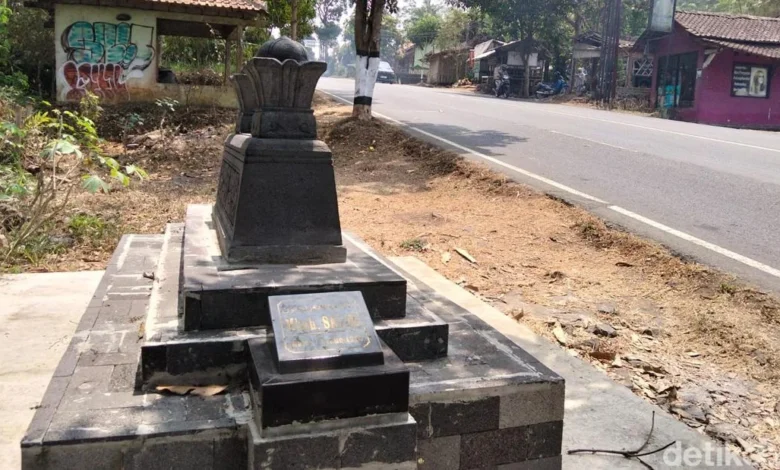
Located along the bustling arterial route connecting Magelang and Purworejo, specifically within the Dusun Sabrang area of Margoyoso Village, Salaman, Central Java, lies a modest burial site that has captured the imagination of thousands of motorists. Known locally as the grave of "Ki Angkong," this site has become the center of a persistent, long-standing folk belief: travelers who pass by the location must throw coins or currency onto the site to ensure safety throughout their journey. While the practice is rooted in superstition, it has evolved into a localized tradition that blends cultural heritage with community-based social welfare.
The Origin and Identity of the Buried Figures
The name "Ki Angkong" does not actually refer to a single historical figure buried at the site. Rather, it serves as a colloquial moniker for the location itself. According to local residents and village officials, the site serves as the final resting place for several individuals who have held significant roles in the history of the local community.
Among the figures identified are Kiai Basiron and Kiai Ahwak, both of whom were considered elders in the region. Their graves are situated near a banyan tree, a feature often associated with sacred or historic sites in Javanese culture. Miswati, a local resident who operates a food stall nearby, explains that these graves have historically been well-maintained, noting that, curiously, grass rarely grows over the resting places of these two figures.
In contrast, the clearly visible headstone at the site bears the name "Mbah Salim," with a recorded year of death in 1960. Oral history suggests that Mbah Salim was originally from Manado who settled in the Margoyoso area. During his lifetime, he was known for working as a toll collector at a local market. Following his passing, the community took responsibility for his interment and the ongoing maintenance of his grave, as he had no surviving family members in the region.
The Evolution of a Roadside Tradition
The act of throwing money at the site—ranging from small coins to significant amounts of cash—is framed by commuters as a form of "sedekah" (alms). The underlying belief is that this offering acts as a spiritual insurance policy against accidents or supernatural interference on the hazardous stretch of the Magelang-Purworejo road.
The practice has seen various levels of intensity over the decades. During the height of its perceived necessity, it was common for passing vehicles, including tourist buses, to toss entire plastic bags filled with currency toward the gravesite. This behavior is linked to the historical reputation of the road segment, which was once notorious for frequent traffic accidents.
Zarkoni, the Head of Tlogosari Hamlet, notes that the belief system predates the modern era, dating back to the colonial period. "The suggestion among the community remains that by giving alms there, one is granted safety. Conversely, if one forgets or neglects this, there is a fear of misfortune," he explains. From a socio-economic perspective, this practice has inadvertently provided a modest income stream for local residents. The money collected from the site is often utilized by families in the vicinity, particularly to support the educational needs of their children. Local leaders maintain that since the money is collected from "offerings" rather than through solicitation or extortion, the community views it as a form of communal resource.
Chronology and Physical Transformation of the Site
The physical state of the burial site has undergone several transformations, driven by both natural events and human intervention. Historically, the graves of Kiai Basiron and Kiai Ahwak were situated closer to the roadside. However, due to past landslides, the terrain shifted, making these original graves less accessible and less visible to passing traffic.
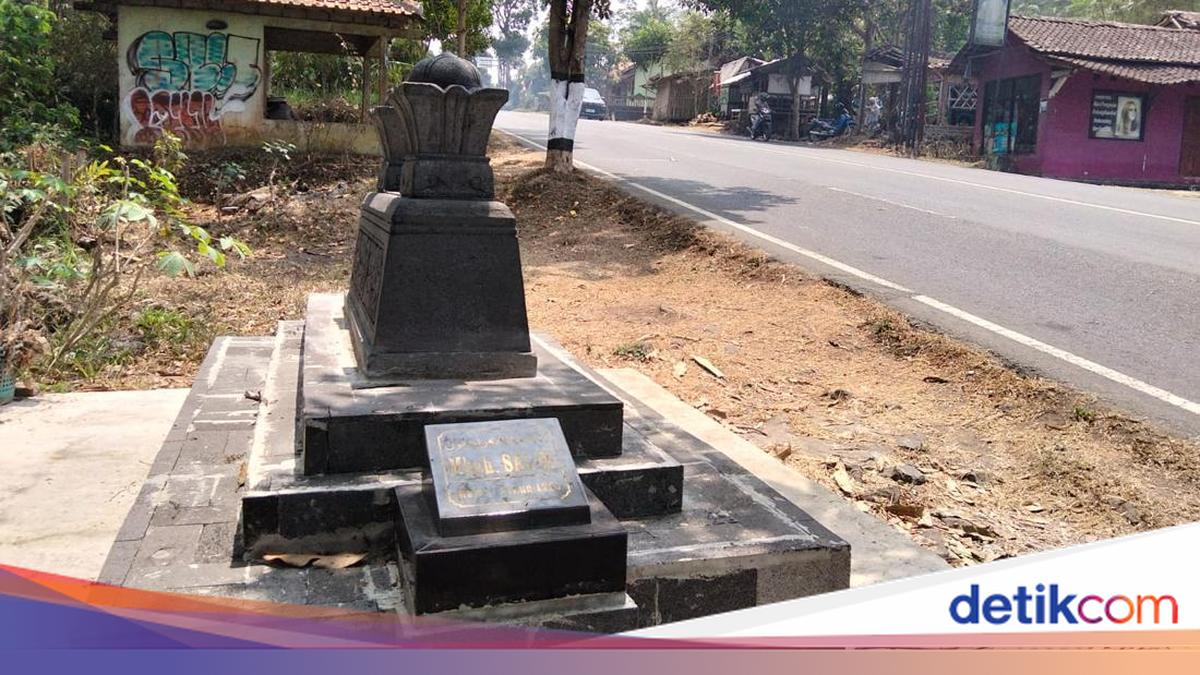
The site received a significant renovation in 2025, largely funded by an anonymous donor from Cilacap who, according to local accounts, was a regular traveler who felt compelled to improve the condition of the grave after observing its state. This donation allowed for the repair of the headstone and the formalization of the site’s appearance.
The maintenance of the area is not entirely left to chance. Local residents have established a system where the site is monitored, particularly during the night, to ensure order. While anyone—including travelers and local residents—is technically free to collect the money left at the site, the community ensures that the area remains under a degree of supervision to maintain the sanctity of the location.
Official Perspectives and Societal Implications
The local government of Margoyoso acknowledges the existence of these traditions but emphasizes the importance of keeping them within the context of cultural heritage rather than blind superstition. Adi Daya Perdana, the Village Head of Margoyoso, notes that while there is a pervasive myth—including claims that the road ahead may "branch off" or become treacherous if one does not provide an offering—the underlying value lies in the act of giving.
"Ultimately, the point is a prayer for safety during one’s journey. If one has the fortune to share, it is a positive act, especially if that wealth reaches those in the community who are in need," says Perdana. He also highlights that the village community is committed to nguri-uri budaya (preserving culture), which involves collective cleaning of the gravesite during the nyadran tradition held twice annually. This practice ensures that regardless of the myths surrounding the site, the graves are respected and maintained as part of the village’s collective history.
Fact-Based Analysis: Safety and Modern Infrastructure
A critical analysis of the "safety" claims associated with the site suggests a correlation between improved infrastructure and a reduction in accidents, rather than supernatural intervention. In the past, the Magelang-Purworejo route was characterized by poor lighting, uneven road surfaces, and high accident rates.
Statistical trends show a marked decrease in traffic accidents along this stretch of road in recent years. Transportation experts and local officials attribute this decline to several tangible factors:
- Infrastructure Upgrades: The road has been widened and resurfaced, providing better traction and handling for vehicles.
- Improved Lighting: The installation of modern street lighting has significantly enhanced visibility for night-time drivers.
- Better Signage: Enhanced traffic signs and safety warnings have alerted drivers to the sharp turns and potential hazards of the route.
While the "myth of safety" persists as a cultural anchor for many local motorists, the objective reality is that the physical environment of the road has become objectively safer. The tradition of throwing money, therefore, serves as a psychological ritual that provides comfort to drivers traversing a historically challenging path, while simultaneously providing a form of informal social security for the local community.
Conclusion: A Synthesis of Belief and Reality
The phenomenon of the Ki Angkong grave is a compelling example of how traditional beliefs can persist in a modernizing society. It represents a synthesis of historical reverence for local elders, the psychological need for reassurance during travel, and the practicalities of communal survival.
As the road continues to be a vital artery for the region, the site will likely remain a focal point for travelers. Whether one views the practice of throwing money as a sincere act of charity, a cultural curiosity, or a superstition, its impact on the local community of Margoyoso is undeniable. It serves as a reminder of the enduring power of local narratives and the way in which communities adapt their heritage to the shifting realities of the modern world. For the villagers of Margoyoso, the site is not merely a place of myth, but a part of their identity—a place that is cleaned, respected, and deeply woven into the fabric of their daily lives.