Hansi Flick Lauds Cesc Fabregas and Impressive Como Following Stunning Champions League Debut

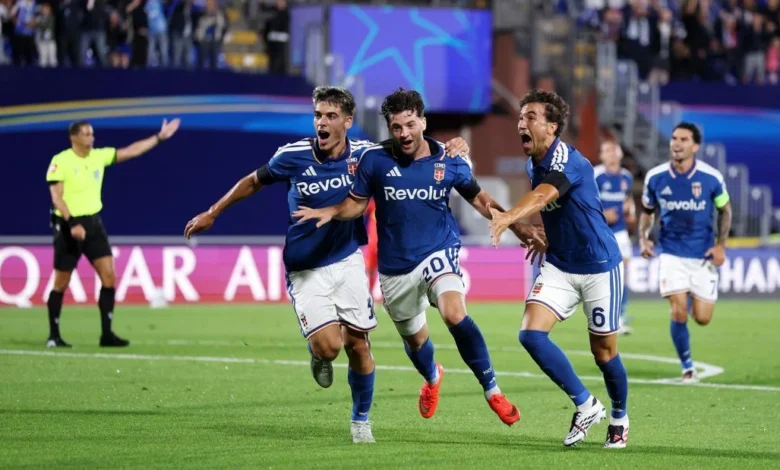
The landscape of European football is witnessing an intriguing tactical evolution, and seasoned managers are beginning to take notice of the ambitious project unfolding in Italy. Barcelona head coach Hansi Flick has recently offered high praise for Como, the rising Italian club currently managed by former Spain and Barcelona midfielder Cesc Fabregas. Following a stunning and dominant performance in Europe’s premier club competition, Como has captured the attention of heavyweights across the continent, signaling that the modest Lombardy club is no longer just a romantic underdog story, but a legitimate force on the rise.
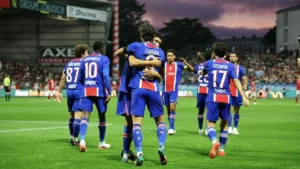
The catalyst for this widespread acclaim was Como’s remarkable opening fixture in the UEFA Champions League, where the Italian side dismantled German outfit RB Leipzig with a commanding 4-1 victory. Playing with a tactical maturity, structural discipline, and attacking verve that belied their status as debutants in the tournament, Como thoroughly outclassed their more established Bundesliga opponents. This statement win reverberated throughout European football circles, eventually reaching the desk of Barcelona’s coaching staff in Catalonia.
Hansi Flick, whose Blaugrana side is perpetually locked in the upper echelons of continental football, admitted that he watched the match with great interest. The German tactician was left visibly impressed by the tactical blueprint implemented by Fabregas, whose transition from a legendary playing career to the managerial dugout has been marked by rapid progression and modern tactical concepts.
Flick’s High Praise for Fabregas and the Como Project
Speaking in an interview that has drawn considerable attention across European sports media, Hansi Flick did not hold back in his assessment of the Italian club’s current trajectory. The former Bayern Munich and Germany manager acknowledged the unique identity that Fabregas is instilling in his squad, blending technical proficiency with high-intensity transitions.
"I am truly impressed with Como and the way they are being managed by Cesc," Flick stated, as quoted by football publication Tribuna. "I watched their recent Champions League encounter against Leipzig, and the way they controlled the tempo, space, and momentum of the game was exceptional. They played very well, showing a level of cohesion that is rare for a team newly introduced to this grand stage."
Flick’s endorsement carries substantial weight within the football community. As a manager who prioritizes intense pressing, positional flexibility, and rapid vertical progression, Flick recognizes the distinct stylistic hallmarks that Fabregas has brought to Como. The synergy between the young Spanish coach and his players has created a dynamic unit capable of punishing defensive lapses and dictating the rhythm against technically proficient opponents.
The Cesc Fabregas Factor: A Deep-Rooted Barcelona Connection
The impending European fixture between Barcelona and Como carries deep sentimental and professional subtext, largely centered around Cesc Fabregas. The 37-year-old manager is deeply tied to the DNA of the Catalan club, having spent his formative years in the legendary La Masia academy before returning to Camp Nou later in his illustrious playing career.
Fabregas’s journey into management has been closely monitored in Spain. After hanging up his boots, he transitioned immediately into coaching roles, initially working within the Como setup before taking the reins of the senior team. His understanding of the game, cultivated under legendary managers such as Pep Guardiola, Arsene Wenger, and Vicente del Bosque, has clearly translated into his managerial philosophy.
For Barcelona supporters and staff, watching Fabregas succeed in the dugout offers a sense of pride, but it also introduces a fascinating tactical chess match. When Barcelona and Como lock horns in the UEFA Champions League later this season, it will not merely be a match between two clubs; it will represent a clash of footballing philosophies deeply intertwined with the Barcelona school of thought, interpreted through the lens of a new generation of coaching minds.
Chronology and Context of Como’s Meteoric Rise
To fully appreciate the magnitude of Como’s current standing, one must examine the rapid chronology of events that has transformed the club from a lower-tier Italian side into a Champions League contender.
Years of financial instability and lower-league obscurity defined the club’s recent history until significant investment brought renewed ambition, stability, and a clear long-term vision. The arrival of high-profile ownership, coupled with footballing expertise from figures such as former Chelsea and Arsenal midfielder Dennis Wise and subsequently Cesc Fabregas, laid the groundwork for sustainable growth.
The 2023–2024 season served as the definitive turning point. Under the technical guidance of Fabregas, Como secured promotion through the fiercely competitive ranks of Italian football, earning a historic return to the upper tier of Serie A. Their domestic campaigns showcased an attractive, possession-based style of play that surprised traditional pundits and delighted purists.
Securing qualification for the UEFA Champions League was the ultimate validation of this project. Placed among the elite of European football, skeptics wondered whether the club’s fairytale would falter against the physical and tactical demands of continental heavyweights. However, the resounding 4-1 victory over RB Leipzig answered those doubts emphatically, proving that Como’s ambitions extend far beyond merely participating in the tournament.
Barcelona’s Measured Stance and Long-Term Outlook
Despite the excitement surrounding the impending fixture between Barcelona and Como, Hansi Flick and his coaching staff are maintaining a disciplined, step-by-step approach. The two clubs are scheduled to face each other in the league phase of the UEFA Champions League on January 28, 2027, a date that is already circled on the calendar by football enthusiasts worldwide.
However, Flick emphasized that his squad is not looking too far ahead into the future. With a grueling domestic calendar in La Liga, Copa del Rey commitments, and a demanding European schedule, the Barcelona manager stressed the importance of remaining grounded.
"We are not preparing anything specific for Como right now because that fixture is still a long way off," Flick explained. "In a season like this, you have to remain completely focused on what is directly in front of you. We must take it one match at a time. The competition is exceptionally long, and the landscape can change drastically over the coming months."
This pragmatic approach reflects Flick’s vast experience in managing high-profile clubs where the margin for error is razor-thin. While the media and fans are already hyping up the tactical duel between Flick and Fabregas, the Barcelona boss understands that maintaining consistency in domestic and European fixtures requires immediate, undivided attention on the next opponent on the schedule.
Tactical Analysis: How Fabregas Has Transformed Como
The praise from a manager of Hansi Flick’s caliber is not granted lightly; it is earned through tangible tactical improvements on the pitch. Under Fabregas, Como has adopted a sophisticated tactical framework that maximizes the technical qualities of its squad while remaining resilient under defensive pressure.
One of the defining features of Fabregas’s Como is the fluidity of their positional play in the midfield. Drawing from his own world-class experience as a central midfielder who could dictate the tempo of a match, Fabregas demands high technical security from his players. The team builds out from the back with confidence, utilizing short, sharp passing combinations to draw opponents out of their defensive blocks before exploiting the space behind them with incisive vertical passes.
Against RB Leipzig, this approach was executed to near-perfection. Leipzig, known for their aggressive, high-energy gegenpressing, found themselves repeatedly dismantled as Como bypassed their initial pressure waves through quick triangulation and intelligent movement off the ball. The wing-backs provided width while inverted midfielders overloaded central zones, creating numerical superiorities that Leipzig’s defensive structure struggled to contain.
Furthermore, Como’s defensive organization has seen significant strides. While the club is known for its attacking ambitions, Fabregas has instilled a collective defensive responsibility. The team defends in a compact, coordinated block, minimizing the spaces between defensive and midfield lines to prevent opponents from finding pockets of creativity in dangerous areas.
Implications for the UEFA Champions League Campaign
As the league phase of the UEFA Champions League progresses, Como’s stunning opening victory alters the competitive dynamics of the tournament. No longer viewed merely as pleasant participants who added regional diversity to the competition, the Italian side has established itself as a dangerous dark horse capable of upsetting tournament favorites.
For established giants like Barcelona, Real Madrid, Manchester City, and Bayern Munich, scouting reports on Como will undoubtedly be updated with a new level of respect and caution. The January 28 clash at Camp Nou will serve as a ultimate litmus test for Fabregas’s project, offering a direct comparison between an established European powerhouse and an ascending tactical challenger.
For Barcelona, the fixture will not only test their tactical adaptability against a well-drilled opponent but will also serve as a tactical reunion with one of their own favorite sons. As Hansi Flick noted, the competition is long, and much will change between now and the winter of 2027. Yet, the foundations have been laid for a captivating narrative—one where the wisdom of an experienced German master tactician meets the youthful, innovative ambition of a rising Spanish managerial star on Europe’s grandest stage.
Related posts: