Foldable Smartphone Market Poised for Significant Growth in 2026, Driven by Apple’s Entry and Samsung’s Innovation Amidst Chip Scarcity


The global foldable smartphone market is projected to experience a robust expansion of 21% in the first half of 2026 compared to the same period last year, defying ongoing challenges in the global memory chip supply chain. This remarkable surge is attributed to a confluence of factors, including escalating demand for premium book-style foldable devices, intensifying competition among manufacturers, and the highly anticipated entry of Apple into the foldable segment with its rumored "iPhone Ultra." While Samsung is expected to maintain its leadership position, the landscape is set to transform dramatically with Apple’s imminent arrival.
Samsung’s Reign Challenged by Apple’s Entry
Samsung, the undisputed pioneer and market leader in foldable technology, is poised to launch its latest iterations: the Galaxy Z Flip8, Galaxy Z Fold8, and the premium Galaxy Z Fold8 Ultra. These devices represent Samsung’s continued commitment to innovation and its strategy to solidify its dominance in the burgeoning foldable sector. However, recent reports from leading market research firm Counterpoint Research indicate that Samsung’s long-held supremacy is facing its most significant challenge yet.
Counterpoint’s latest "Foldable Smartphone Market Forecast" report forecasts a substantial year-over-year increase in global foldable smartphone shipments. This growth trajectory is fueled by several key drivers. Firstly, consumer appetite for premium, book-style foldable smartphones continues to surge, as users increasingly appreciate the larger screen real estate and enhanced multitasking capabilities these devices offer. Secondly, the competitive landscape is intensifying, with more manufacturers entering the fray and pushing the boundaries of design and functionality. Most critically, the long-rumored entry of Apple into the foldable market with its anticipated "iPhone Ultra" is expected to significantly reshape market dynamics.
Market Share Projections and Competitive Dynamics
Despite the increased competition, Samsung is projected to retain its market leadership in 2026, with an estimated market share of 32%. This continued dominance is a testament to its early mover advantage, extensive research and development, established supply chains, and a loyal customer base. Samsung has spent years refining its foldable technology, building a robust ecosystem of software and hardware optimized for flexible displays, and cultivating strong distribution channels.
However, Counterpoint’s analysis reveals a significantly altered competitive panorama. Apple’s entry into the foldable market is predicted to capture a substantial 25% of the global market share in 2026. This aggressive market penetration is a characteristic of Apple’s strategy when entering new product categories. The Cupertino-based tech giant’s reputation for innovation, design excellence, and its vast global reach are expected to translate into significant adoption rates for its foldable offering.
Liz Lee, Associate Director at Counterpoint Research, highlighted the profound impact of Apple’s entry. "The arrival of the iPhone Ultra is expected to significantly boost consumer awareness and education around the foldable category, while simultaneously raising the bar for premium foldable smartphones," Lee stated. "While Samsung maintains a clear advantage in product maturity, channel reach, and established foldable user experience, Apple’s entry will undoubtedly catalyze innovation and competition across the entire segment."
Following Samsung and Apple, Huawei is projected to secure the third position with a 24% market share. Huawei’s strength remains predominantly in the Chinese market, where it continues to be a formidable player in the foldable smartphone arena. Motorola is anticipated to hold approximately 8% of the global foldable market, with Honor trailing at 3%. The remaining market share will be contested by a multitude of other brands venturing into this specialized segment.
The Galaxy Z Fold8: Samsung’s Strategic Masterpiece
A key device in Samsung’s arsenal to defend its market share is the newly launched Galaxy Z Fold8. This iteration marks a significant departure from its predecessor, the Galaxy Z Fold7, which featured a more elongated form factor. The Galaxy Z Fold8 embraces a book-style design with a wider body, a strategic decision aimed at enhancing user experience.
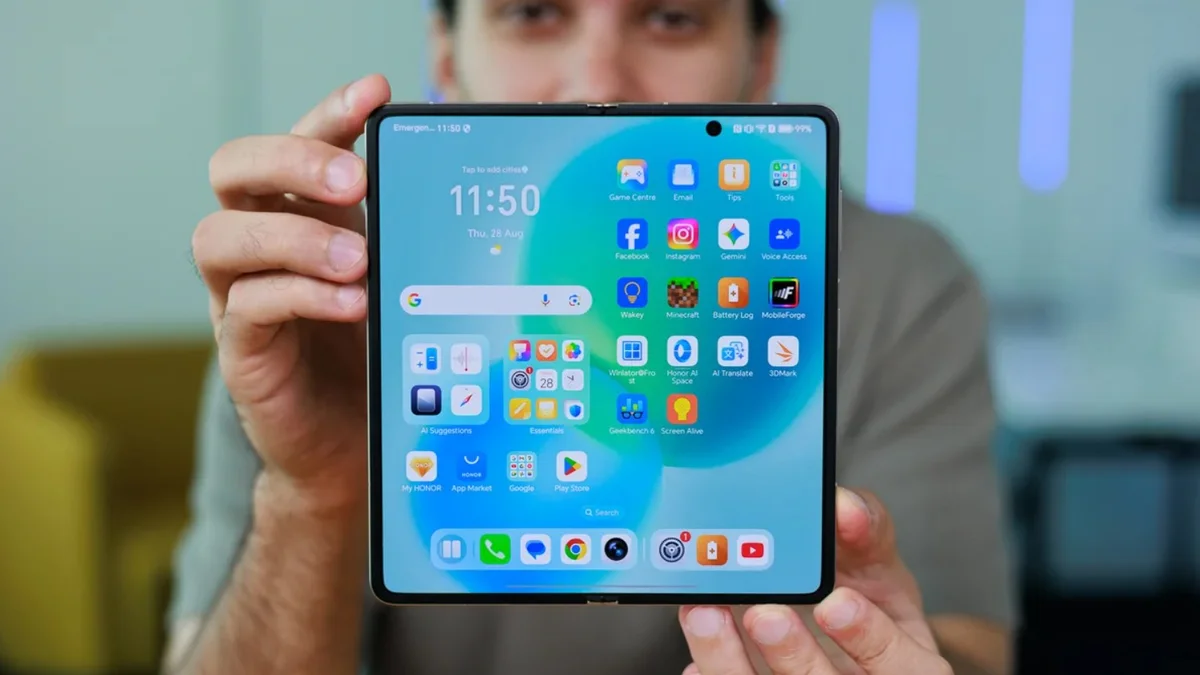
According to Counterpoint, this wider design makes the external display feel more akin to a traditional smartphone, offering a more natural and intuitive user experience for everyday tasks. When unfolded, the expansive main display provides ample real estate for enhanced multitasking, immersive content consumption, and leveraging advanced AI features.
The increased screen real estate is particularly relevant in the evolving landscape of smartphone AI. As AI capabilities expand beyond simple chatbot interactions to encompass complex tasks like document summarization, content editing, intelligent schedule management, and seamless information transfer between applications, the need for larger, more versatile displays becomes paramount. The wider design of the Galaxy Z Fold8 allows users to comfortably run multiple applications side-by-side, monitor ongoing processes, and interact with AI-powered features across various apps without feeling constrained.
"With its wider form factor, Samsung’s latest device is set to make the foldable experience feel more natural, especially for users who need to keep multiple tasks visible on a single screen, monitor progress, and utilize AI features across different applications," Lee concluded. This design philosophy directly addresses the growing demand for productivity and seamless workflow integration on mobile devices, a key differentiator in the premium smartphone market.
Background and Context: The Evolution of Foldables
The foldable smartphone market, though still relatively nascent, has witnessed rapid evolution since its inception. The initial generations of foldable devices were characterized by their experimental nature, often plagued by durability concerns and high price points. However, manufacturers like Samsung have consistently iterated, addressing early criticisms and improving both the hardware and software.
The first commercially successful foldable smartphone, the Samsung Galaxy Fold, launched in 2019, marked a significant milestone. It was followed by the Galaxy Z Flip series, which introduced a more compact, clamshell design, appealing to a different consumer segment. Over the years, these devices have seen improvements in hinge durability, screen quality, and overall performance.
The global chip shortage, which has impacted various technology sectors, has presented a unique challenge for smartphone manufacturers. The intricate components required for foldable devices, including advanced displays and sophisticated chipsets, have been subject to supply chain disruptions. Despite these headwinds, the foldable segment’s strong growth indicates that consumer demand is outpacing supply chain limitations, a testament to the technology’s growing appeal.
Broader Implications and Future Outlook
The projected growth in the foldable smartphone market in 2026 carries significant implications for the broader technology industry.
- Innovation Catalyst: Apple’s entry is expected to spur unprecedented innovation across the entire foldable ecosystem. Competitors will likely be compelled to accelerate their research and development efforts to match or surpass Apple’s offerings, leading to faster technological advancements in areas such as display technology, battery life, and hinge mechanisms.
- Market Diversification: The increased competition will likely lead to a wider range of foldable devices at various price points, making the technology more accessible to a broader consumer base. This could lead to a diversification of the market beyond the ultra-premium segment.
- Software and App Development: The proliferation of foldable devices will create a greater demand for applications optimized for flexible displays and multitasking capabilities. Developers will need to adapt their software to take full advantage of the unique form factors, leading to a richer user experience.
- Supply Chain Adjustments: The sustained demand for foldable devices will necessitate greater investment and innovation in the supply chains for components like flexible displays and specialized hinges. This could lead to the development of more resilient and efficient manufacturing processes.
- Consumer Behavior Shift: As foldable devices become more refined and integrated into daily life, they have the potential to fundamentally alter how consumers interact with their mobile devices, blurring the lines between smartphones, tablets, and even laptops.
The year 2026 is shaping up to be a pivotal moment for the foldable smartphone market. While Samsung’s continued innovation and market leadership are undeniable, the impending arrival of Apple, coupled with the sustained growth of other players, promises a dynamic and fiercely competitive landscape. The continued advancements in technology and the increasing consumer acceptance of foldable form factors suggest a bright future for this innovative category of mobile devices.