Indonesia and China Accelerate Economic Integration Through the Two Countries Twin Parks Initiative and Development of Batang Industropolis

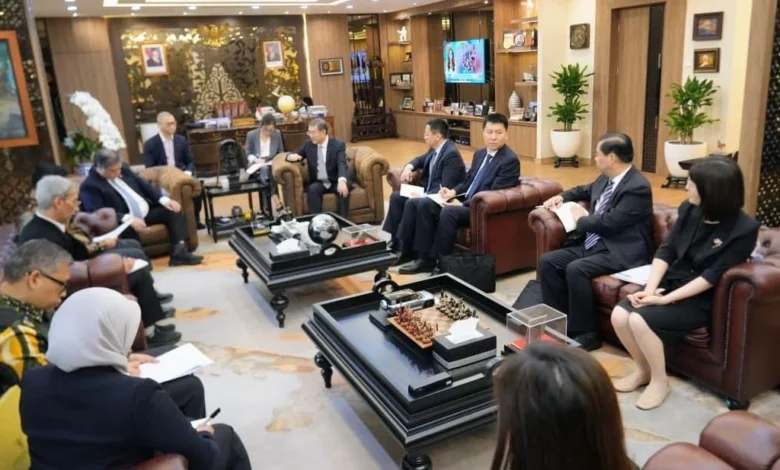
Indonesia’s Coordinating Minister for Economic Affairs, Airlangga Hartarto, convened a high-level bilateral meeting with the Vice Governor of China’s Fujian Provincial Government, Zhao Zenglian, at the Ministry’s headquarters in Jakarta. The meeting served as a strategic platform to solidify economic ties between the two nations, specifically focusing on the acceleration of the "Two Countries Twin Parks" (TCTP) program. Both leaders reached a consensus to formalize a comprehensive list of potential projects and priority sectors, establishing a roadmap for cooperation that is more concrete, outcome-oriented, and aligned with the national development goals of both Indonesia and the People’s Republic of China.
The TCTP initiative represents a sophisticated model of international industrial cooperation, designed to create a seamless economic ecosystem between Indonesia and China. By synchronizing industrial zones in both countries, the program aims to bolster trade volumes, catalyze high-value investments, and foster advanced industrial development. During the discussions, Minister Airlangga emphasized that the development of the Batang Industropolis—a key Special Economic Zone (SEZ) in Central Java—remains a cornerstone of President Prabowo Subianto’s economic vision. The Indonesian government intends for Batang to transform into the "Shenzhen of Indonesia," mirroring the rapid industrial and technological evolution of China’s premier economic hub.
The Strategic Vision for Batang Industropolis
The Batang Integrated Industrial Estate (KITB), often referred to as the Batang Industropolis, was officially inaugurated on March 20, 2025. Its designation as the "Shenzhen of Indonesia" is not merely symbolic; it reflects a rigorous strategy to implement world-class infrastructure, digitalized administrative processes, and a business-friendly environment that can attract global manufacturing giants. Minister Airlangga noted that the success of this zone is contingent upon the rapid implementation of various concrete projects under the TCTP framework.
Located strategically along the Trans-Java Toll Road and in close proximity to major ports, the Batang Industropolis offers a unique value proposition for Chinese investors looking to diversify their supply chains. The Indonesian government has committed to providing extensive fiscal and non-fiscal incentives within this SEZ, including corporate income tax holidays, VAT exemptions, and streamlined labor regulations. The synergy with Fujian Province is particularly vital, as Fujian serves as the Chinese anchor for the TCTP program, providing a direct gateway for Indonesian products into the Chinese market and a pipeline for Chinese capital and technology into Indonesia.
Quantitative Milestones and Investment Realization
The TCTP program has already demonstrated significant momentum, transitioning from a conceptual framework into a tangible driver of economic growth. According to data provided by the Coordinating Ministry for Economic Affairs, the partnership has facilitated the signing of approximately 30 Memoranda of Understanding (MoUs) between various stakeholders. These stakeholders include government entities, regional authorities, and private sector enterprises from both nations.
The estimated investment value associated with these MoUs currently stands at approximately IDR 37.1 trillion (roughly USD 2.3 billion). This capital inflow is targeted at diverse sectors, including renewable energy, electric vehicle (EV) battery manufacturing, food processing, and high-tech electronics. Minister Airlangga expressed his appreciation for the sustained support from the Fujian Provincial Government, noting that the "concrete cooperation" already established serves as a testament to the mutual trust between the two regions. However, he urged for an even faster pace of implementation to ensure that the projected economic benefits—such as job creation and technology transfer—are realized within the 2025–2029 development cycle.
A Chronology of Cooperation: From Concept to Implementation
The journey toward the current TCTP framework began with a shared vision between the two governments to enhance the "Belt and Road Initiative" (BRI) and Indonesia’s "Global Maritime Fulcrum." The timeline of the TCTP development highlights a steady progression of diplomatic and economic engagement:
- Initial Proposal (2021-2022): High-level discussions between the Indonesian Ministry of Maritime Affairs and Investment and the Chinese Ministry of Commerce laid the groundwork for a "1+N" model, where one main park in China is paired with multiple parks in Indonesia.
- Selection of Hubs (2023): Fujian Province’s Yuanhong Investment Zone was designated as the Chinese hub, while Indonesia identified the Bintan Industrial Estate, Aviarna Industrial Estate, Maspion Industrial Estate, and the Batang Integrated Industrial Estate as its primary participants.
- Formalization of Framework (2024): Technical working groups were established to address regulatory hurdles, customs synchronization, and logistics bottlenecks.
- Inauguration of Batang Industropolis (March 2025): The official launch of the Batang SEZ as a flagship project marked a shift toward large-scale industrialization under the TCTP banner.
- Bilateral Summit in Jakarta (July 2026): The current meeting between Minister Airlangga and Vice Governor Zhao Zenglian focused on finalizing project lists and identifying the next phase of priority sectors.
Strategic Pillars for Accelerated Growth
Vice Governor Zhao Zenglian outlined several strategic pillars that the Fujian Government intends to prioritize to ensure the TCTP’s success. He emphasized the need for "enhanced coordination among stakeholders," suggesting that the complexity of cross-border industrial zones requires a high degree of administrative alignment.
The first pillar involves the identification of "niche priority sectors." While general manufacturing is a given, the Fujian delegation expressed specific interest in developing the "Blue Economy" and the "Green Economy." Fujian, being a coastal province with a robust maritime industry, sees immense potential in collaborating with Indonesia on sustainable fisheries, marine biotechnology, and offshore renewable energy.
The second pillar focuses on the "optimization of trade and logistics." Various measures are being implemented to strengthen the ecosystem supporting TCTP, including the harmonization of customs procedures and the improvement of trade facilitation. By reducing "red tape" and streamlining the movement of goods between Fujian and Indonesian ports, the two nations hope to lower the cost of production and increase the competitiveness of TCTP-produced goods in the global market.
Strengthening the Supporting Ecosystem
The success of the Two Countries Twin Parks initiative is not solely dependent on industrial output but also on the strength of the supporting infrastructure and regulatory environment. Minister Airlangga and Vice Governor Zhao discussed the importance of "market access" and "supply chain resilience."
The Indonesian government is working toward creating an "integrated logistics corridor" that connects the TCTP zones directly to international shipping routes. This includes investments in port automation and the digitalization of trade documents. Furthermore, there is a concerted effort to support small and medium-sized enterprises (SMEs) within the TCTP ecosystem. By integrating local Indonesian SMEs into the supply chains of large Chinese manufacturers, the program aims to ensure that the economic benefits are distributed broadly across the domestic economy.
Coordination in customs and kepabeanan (excise) is another critical area. The goal is to create a "green lane" for companies operating within the TCTP framework, allowing for expedited clearance of raw materials and finished products. This level of institutional cooperation is expected to create a highly conducive business climate, significantly increasing the attractiveness of the Batang Industropolis and other participating zones for foreign direct investment (FDI).
Broader Economic and Geopolitical Implications
The deepening of the Indonesia-China economic relationship through the TCTP and the Batang Industropolis project carries significant implications for the Southeast Asian region. As Indonesia strives to escape the "middle-income trap," the transition toward a manufacturing-heavy economy is essential. The TCTP provides a shortcut to this goal by facilitating the transfer of advanced manufacturing technologies and management expertise from China.
From a geopolitical perspective, the TCTP reinforces Indonesia’s role as a central player in regional trade. By positioning itself as a hub for Chinese industrial expansion, Indonesia is effectively securing its place in the global supply chain of the future, particularly in sectors related to the energy transition. The comparison to Shenzhen is telling; just as Shenzhen was the catalyst for China’s economic "miracle" in the 1980s, the Indonesian government hopes that Batang will serve as the spark for a new era of Indonesian industrial prowess.
Vice Governor Zhao reaffirmed Fujian’s commitment to this vision, stating, "We are ready to work hand-in-hand with the Indonesian government to drive the development of the TCTP zones. Our commitment is to identify and nurture sectors that offer the highest potential for mutual growth, ensuring that our cooperation remains a model for international partnership."
Future Outlook: A New Era of Industrial Cooperation
As the meeting concluded, both parties agreed to establish a dedicated task force to monitor the progress of the TCTP projects on a quarterly basis. This task force will be responsible for troubleshooting regulatory issues and ensuring that the IDR 37.1 trillion in pledged investment is realized according to the stipulated timelines.
The focus for the remainder of 2026 and into 2027 will be on the "soft infrastructure" of the partnership—human capital development. Plans are underway to establish vocational training centers within the Batang Industropolis, where Indonesian workers can receive training from Chinese technical experts. This focus on "people-to-people" exchange ensures that the TCTP is not just a collection of factories, but a sustainable ecosystem of innovation and shared prosperity.
With the Batang Industropolis rapidly taking shape and the TCTP framework providing a solid foundation for bilateral trade, the economic partnership between Indonesia and Fujian Province is poised to reach new heights. The "Shenzhen of Indonesia" is no longer a distant dream but a burgeoning reality that promises to redefine the industrial landscape of Southeast Asia for decades to come.