Polda Metro Jaya Uncovers Major Human Trafficking Syndicate Exploiting Indonesian Migrant Workers in Libya, Citing ‘Slavery-Like Practices’

Jakarta, Indonesia — The Directorate of General Criminal Investigation (Ditreskrimum) of the Polda Metro Jaya has successfully dismantled a sophisticated human trafficking syndicate responsible for illegally sending at least 105 Indonesian migrant workers (PMI) to Libya, where they faced severe exploitation under conditions described by authorities as akin to modern slavery. The revelation has sent shockwaves across Indonesia, highlighting the persistent vulnerabilities of its citizens seeking employment abroad and the complex challenges in combating transnational organized crime. The investigation, which began with initial intelligence gathering and undercover operations, culminated in the apprehension of two primary suspects, identified by their initials R (also known as Ica) and DY, who are believed to be key orchestrators in this illicit network.
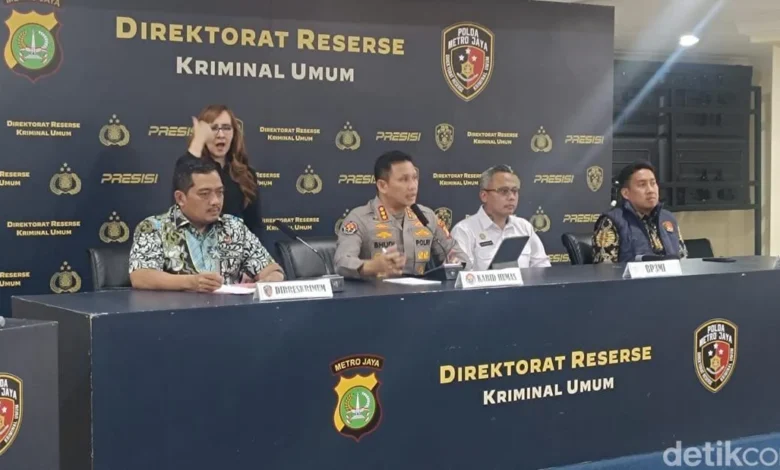
The shocking scale of the operation underscores a deeply rooted problem. Kombes Iman Imanuddin, the Director of General Criminal Investigation at Polda Metro Jaya, elaborated on the syndicate’s modus operandi and the grim realities awaiting the victims in Libya. "Why Libya? Because the network we uncovered is specifically established and deeply entrenched in Libya," Imanuddin stated in a press briefing on Friday, July 24, 2026. He further detailed that Libya’s current socio-political landscape, characterized by prolonged instability and a fragmented governance structure following the 2011 uprising, has regrettably become fertile ground for human traffickers. This environment allows unscrupulous agents to operate with relative impunity, exploiting desperate individuals seeking economic opportunities.
The Perilous Journey to Exploitation: Why Libya?
Kombes Imanuddin’s explanation sheds light on a critical aspect of the syndicate’s choice of destination: the prevalent practice of modern slavery in Libya. "And there, I regret to say, the practice of slavery is more dominant. As soon as the victims arrive, the agents are immediately given a sum of money as a form of payment. After these victims are received there, they are then forced to work according to the whims of their employers," he revealed. This chilling description paints a vivid picture of a transactional system where human beings are treated as commodities, bought and sold, with little regard for their rights or well-being. The employers, having "purchased" these workers, often believe they have absolute ownership, leading to extreme forms of exploitation, including excessive working hours, withheld wages, physical and psychological abuse, and severe restrictions on freedom of movement.
Libya, geographically positioned as a critical transit point for migrants from sub-Saharan Africa attempting to reach Europe, has long been a country fraught with humanitarian challenges. However, the revelation by Polda Metro Jaya points to its role not just as a transit hub but also as a destination where vulnerable individuals, including those from Southeast Asia, are specifically targeted for exploitative labor. The lack of robust legal frameworks, coupled with a fractured security landscape, creates a permissive environment for such illicit activities. International organizations, including the United Nations and various human rights groups, have consistently documented widespread abuses against migrants and refugees in Libya, including arbitrary detention, torture, sexual violence, and forced labor. The current police investigation confirms that Indonesian citizens are regrettably not immune to these systemic abuses.
Modus Operandi of the Syndicate: Deception and Desperation
The syndicate, led by R (Ica) and DY, meticulously preyed on the economic vulnerabilities and aspirations of Indonesian citizens, particularly those from rural areas with limited access to information and legitimate overseas employment channels. Their recruitment tactics likely involved false promises of high-paying jobs, better living conditions, and legitimate travel arrangements, often through informal networks in various regions of Indonesia. These promises would typically bypass the stringent legal requirements for overseas employment stipulated by Indonesian law, such as obtaining proper work permits, undergoing pre-departure training, and signing official contracts vetted by the Ministry of Manpower and the National Agency for the Protection of Indonesian Migrant Workers (BP2MI).
Victims, often burdened by debt or seeking to support their families, would be enticed by these seemingly lucrative offers, unaware of the treacherous path that lay ahead. The syndicate would arrange their travel, often through irregular routes or by falsifying travel documents, thereby circumventing immigration controls in both Indonesia and destination countries. Upon arrival in Libya, the true nature of their predicament would become brutally clear. Stripped of their passports, often isolated and unable to communicate due to language barriers, and with no recourse to legal protection, they would find themselves entrapped in forced labor situations, with their "purchase price" serving as a psychological and financial chain binding them to their exploiters.
A Disturbing Timeline of Exploitation: 105 Victims Uncovered
The investigation by Polda Metro Jaya has meticulously pieced together the syndicate’s operations, revealing a disturbing chronology of human trafficking. A total of 105 Indonesian citizens were illegally dispatched to Libya by the suspects R (Ica) and DY across three distinct periods, demonstrating the syndicate’s sustained and organized efforts.
- Phase 1: August 2023 – June 2024: During this initial phase, 35 individuals were trafficked to Libya. This period likely served as a testing ground for the syndicate’s methods, refining their recruitment and logistical processes.
- Phase 2: July 2024 – March 2025: The syndicate significantly escalated its operations, sending an additional 50 individuals. This marks the peak period of their trafficking activities, indicating a well-established and profitable network. Kombes Imanuddin noted that out of these 50 victims, nine had fortunately been repatriated before their "contracts" expired, possibly due to interventions by concerned families, local authorities, or even fortuitous escapes.
- Phase 3: April 2025 – May 2026: In the most recent period, 20 more individuals were trafficked. From this group, five victims were also repatriated prematurely, suggesting that awareness of the syndicate’s activities might have been growing or that some victims found avenues for escape.
The staggered nature of these deployments over nearly three years highlights the syndicate’s enduring presence and the consistent demand for cheap, exploitable labor in Libya. The fact that some victims were repatriated underscores the immense difficulties in tracing and rescuing those trapped in such dire circumstances, often requiring intricate diplomatic and humanitarian efforts.
Investigation Intensifies: International Cooperation and Repatriation Efforts
The Polda Metro Jaya’s commitment to justice extends beyond domestic arrests. Kombes Imanuddin announced ambitious plans for an international leg of the investigation. "Our investigative team will conduct examinations in Libya itself. We have coordinated with Divhubinter Polri [International Relations Division of the Indonesian National Police] to facilitate communication with the Indonesian Embassy [KBRI] in Libya and the Libyan authorities," he confirmed. This cross-border collaboration is crucial for several reasons:
- Victim Identification and Repatriation: To identify and assist the remaining victims still held in Libya, ensuring their safe return to Indonesia.
- Evidence Collection: To gather crucial evidence in Libya that can strengthen the case against the arrested suspects and potentially uncover other accomplices in the destination country.
- Dismantling the Network: To work with Libyan law enforcement to dismantle the entire trafficking network, including the "agents" and "employers" who facilitated and benefited from the exploitation.
- Preventive Measures: To establish stronger communication channels and protocols with Libyan authorities to prevent future incidents of human trafficking involving Indonesian citizens.
The involvement of Divhubinter Polri and the Indonesian Embassy in Tripoli is paramount. The Embassy, often the first point of contact for distressed Indonesian citizens abroad, plays a critical role in providing consular assistance, legal aid, and coordinating repatriation efforts. However, operating in a country like Libya, with its security challenges and fragmented governmental control, presents significant obstacles.
Broader Context: The Plight of Indonesian Migrant Workers
Indonesia is one of the world’s largest exporters of migrant labor, with millions of its citizens working overseas, primarily in Malaysia, Singapore, Hong Kong, Taiwan, and the Middle East. While their remittances contribute significantly to the national economy, amounting to billions of dollars annually, this economic lifeline often comes at a high human cost. Indonesian migrant workers, particularly those in the informal sector, are highly vulnerable to various forms of exploitation, including wage theft, poor working conditions, physical and sexual abuse, and even human trafficking.
Indonesia has a comprehensive legal framework in place to protect its migrant workers, notably Law No. 18/2017 on the Protection of Indonesian Migrant Workers. This law aims to streamline the placement process, provide pre-departure training, ensure legal contracts, and offer assistance during their employment abroad. It also mandates the establishment of a robust system for monitoring and protecting PMIs. However, the existence of syndicates like the one uncovered by Polda Metro Jaya highlights significant gaps in enforcement, the persistent allure of informal channels, and the relentless ingenuity of traffickers.
Libya’s Humanitarian Crisis and Modern Slavery
The situation in Libya is particularly dire. Since the overthrow of Muammar Gaddafi in 2011, the country has been plagued by civil war, political instability, and the rise of various armed groups. This vacuum of governance has created a lawless environment where human rights abuses flourish. Migrants and refugees, including those transiting through Libya, are routinely subjected to arbitrary detention, extortion, torture, and forced labor. Reports from organizations like Amnesty International and Human Rights Watch have consistently detailed how detention centers, often run by militias, are rife with abuses, and how migrants are sold into various forms of servitude.
For Indonesian migrant workers, the lack of a formal bilateral labor agreement between Indonesia and Libya makes their presence in the country inherently precarious. Without official channels, they are entirely at the mercy of their recruiters and employers, stripped of any legal protection or recourse. The description of "slavery-like practices" is not an exaggeration in this context but a grim reality faced by many caught in Libya’s human trafficking networks.
Official Responses and Calls to Action
While Polda Metro Jaya continues its investigation, this incident is expected to trigger stronger reactions and renewed commitments from various Indonesian government agencies.
- Ministry of Foreign Affairs: Beyond consular assistance, the Ministry will likely intensify diplomatic efforts with Libyan authorities to address the broader issue of migrant protection and to establish mechanisms for quicker repatriation and justice. There will be renewed calls for international cooperation in combating transnational organized crime.
- Ministry of Manpower and BP2MI: These agencies are expected to bolster their public awareness campaigns, particularly in regions known for high rates of irregular migration. They will emphasize the dangers of illegal recruitment channels and promote the use of official, safe pathways for overseas employment. There might also be a review of current regulations and enforcement mechanisms to identify and close loopholes exploited by traffickers.
- National Police (Polri): The success of this operation will likely encourage increased intelligence sharing and inter-agency cooperation within Indonesia to dismantle other existing trafficking networks. Training for law enforcement officers on identifying and prosecuting human trafficking cases will also be critical.
- Civil Society Organizations (CSOs) and NGOs: Human rights and migrant worker advocacy groups will undoubtedly use this case to amplify their calls for greater government accountability, more robust victim support services, and comprehensive preventative measures. They often play a crucial role in identifying victims, providing legal aid, and assisting with rehabilitation upon return.
Challenges in Repatriation and Justice
The repatriation of victims from Libya is fraught with challenges. The unstable security situation makes travel within the country dangerous, and identifying and extracting victims from their places of exploitation can be difficult without strong local cooperation. Furthermore, many victims may be undocumented, complicating the process of verifying their identities and arranging travel documents.
Achieving justice for the victims also presents a complex legal battle. While the syndicate leaders in Indonesia may face prosecution under Indonesian anti-trafficking laws, holding their accomplices and exploiters in Libya accountable will require significant diplomatic pressure and judicial cooperation between two countries with differing legal systems and varying capacities for enforcement. The focus will likely be on securing convictions for R and DY in Indonesia, which sends a strong message that such crimes will not be tolerated.
Preventative Measures and Public Awareness
This case serves as a stark reminder of the urgent need for enhanced preventative measures. Public awareness campaigns must be intensified, reaching even the most remote communities, to educate potential migrant workers about the risks of irregular migration and the importance of using official channels. Information must be disseminated in local languages and through accessible platforms, emphasizing the dangers of unregistered brokers and the false promises they make.
Furthermore, economic development initiatives in regions with high emigration rates could help reduce the desperation that drives individuals into the arms of traffickers. Creating more domestic job opportunities and improving living standards can offer viable alternatives to hazardous overseas employment.
In conclusion, the dismantling of this human trafficking syndicate by Polda Metro Jaya is a significant victory in the fight against modern slavery. However, it also painfully exposes the enduring vulnerabilities of Indonesian migrant workers and the brutal realities they can face when trafficked to unstable regions like Libya. The ongoing investigation and the planned international collaboration underscore Indonesia’s commitment to protecting its citizens, yet the broader challenge remains immense, demanding sustained efforts in law enforcement, diplomatic engagement, and public education to truly eradicate this abhorrent crime. The global community must also recognize its role in supporting countries like Indonesia in their fight against human trafficking, ensuring that no individual is ever treated as a commodity again.