Vice President Gibran Rakabuming Raka’s Seating Arrangement at Cabinet Meeting Prompts Discussion on Executive Protocol

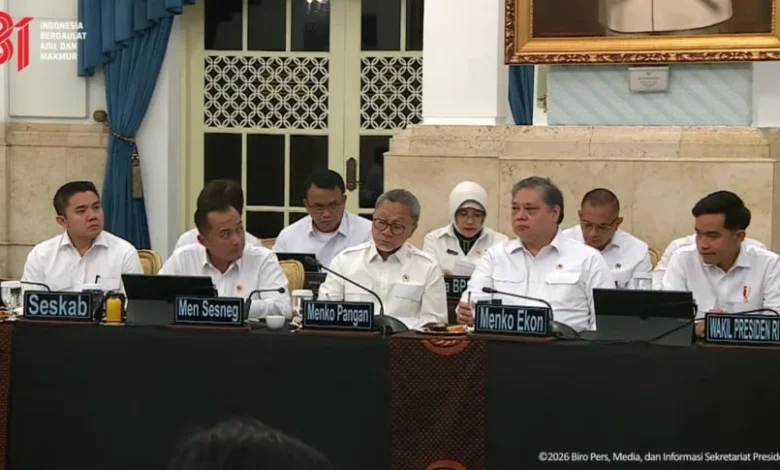
JAKARTA – The Indonesian State Palace has addressed a notable alteration in the seating arrangement for Vice President Gibran Rakabuming Raka during a Plenary Cabinet Meeting held on Monday, July 20, 2026. This change saw the Vice President seated alongside cabinet ministers, a departure from previous protocol where he occupied a position directly adjacent to President Prabowo Subianto. The adjustment has drawn attention and prompted official clarification regarding the executive branch’s established norms and practices.
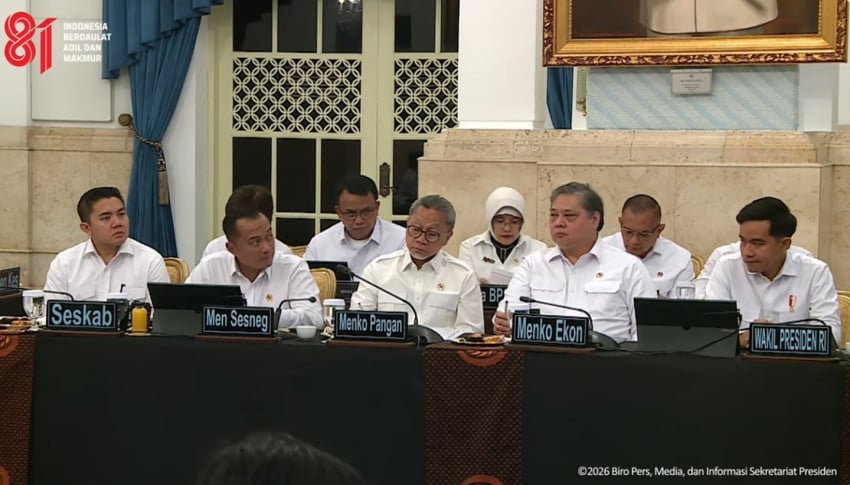
During the Plenary Cabinet Meeting at the State Palace on July 20, 2026, Vice President Gibran was observed to be seated on the front right side of President Prabowo. His position was aligned with that of other cabinet members, specifically next to key figures such as Coordinating Minister for Economic Affairs Airlangga Hartarto, Coordinating Minister for Food Zulkifli Hasan, State Secretary (Mensesneg) Prasetyo Hadi, and Cabinet Secretary Teddy Indra Wijaya. This configuration marked a distinct shift from an earlier session, specifically a Plenary Cabinet Meeting held on Friday, March 13, 2026, also at the State Palace. In that previous meeting, Vice President Gibran, then wearing a white shirt, sat directly beside President Prabowo, who was attired in a brown safari suit, occupying the President’s immediate left. The visual contrast between these two high-level gatherings immediately sparked discussions among political observers and media outlets regarding the implications of such a change in official protocol.
Understanding the Role and Protocol of the Vice President
The position of Vice President in Indonesia is constitutionally mandated and holds significant weight as the second-highest office in the executive branch. Article 4 of the 1945 Constitution stipulates that "The President of the Republic of Indonesia shall hold the power of government according to the Constitution." It further states that "In exercising his duties, the President shall be assisted by a Vice President." This fundamental provision underscores the Vice President’s role not as a subordinate minister, but as a direct partner and successor to the President, tasked with assisting in the broad execution of governmental power.
Traditionally, the seating arrangement in formal state events, particularly cabinet meetings, is a meticulously planned affair that reflects the hierarchy and protocol of the government. The Vice President’s role is distinct from that of a minister. While ministers lead specific portfolios and are accountable to the President, the Vice President’s mandate is broader, encompassing national policy coordination, special assignments from the President, and the critical constitutional duty of assuming the presidency in the event of the President’s incapacitation, resignation, or death. Therefore, placing the Vice President in a position parallel to ministers, rather than alongside the President, can be interpreted in various ways, ranging from a mere logistical adjustment to a symbolic redefinition of hierarchy.
Chronology of Seating Arrangement Changes
The comparison between the two cabinet meetings highlights the specific nature of the change:
- Friday, March 13, 2026: Plenary Cabinet Meeting at the State Palace. Vice President Gibran Rakabuming Raka was seated directly to the left of President Prabowo Subianto. This arrangement is widely considered the conventional protocol, emphasizing the joint leadership of the President and Vice President.
- Monday, July 20, 2026: Plenary Cabinet Meeting at the State Palace. Vice President Gibran Rakabuming Raka was seated on the front right side of President Prabowo, aligned with the positions occupied by cabinet ministers. Specifically, he was positioned with Coordinating Ministers and the State Secretariat leadership.
This timeline indicates a deliberate, albeit unexplained initially, shift in the protocol for this particular type of meeting. Such changes, even seemingly minor ones, often carry significant symbolic weight within political circles and are closely monitored by the public and media for any deeper implications about power dynamics or administrative structure.
Official Response from the State Palace
In response to inquiries regarding the altered seating, the State Palace, through officials, offered clarification. State Secretary (Mensesneg) Prasetyo Hadi, whose office is typically responsible for managing presidential and vice-presidential protocol, confirmed that the change was an administrative decision. While specific details were not immediately divulged, the general explanation pointed towards logistical or functional considerations rather than any shift in the Vice President’s constitutional standing or political importance.
"The seating arrangements for cabinet meetings can sometimes be adjusted based on the specific agenda, the layout of the meeting room, or other logistical considerations," Mensesneg Hadi reportedly stated. "The Vice President’s position and authority remain unchanged. This was an internal administrative decision to facilitate the flow of discussion and presentation during that particular session."
Such statements aim to quell speculation by framing the incident as a routine administrative matter. However, the lack of a prominent, pre-emptive announcement about such a change for a figure of the Vice President’s stature often leaves room for broader interpretation. The State Secretariat’s role involves meticulous planning for all presidential and vice-presidential engagements, and any deviation from established norms usually comes with clear reasoning.
Broader Context and Supporting Data on Executive Protocol
Indonesia’s executive branch operates under a well-defined system of protocol and hierarchy. The President and Vice President form the core of this structure, followed by Coordinating Ministers, who oversee clusters of ministries, and then individual ministers. This hierarchy is not merely ceremonial; it dictates lines of command, communication, and decision-making.
In many parliamentary and presidential systems globally, seating arrangements in high-level government meetings are a visual representation of this hierarchy. For instance, in the United States, the Vice President typically sits directly next to the President during cabinet meetings, symbolizing their constitutional partnership and shared executive authority. Similarly, in other democratic nations, the second-in-command is usually positioned to reflect their proximity to the head of state or government.
While the Indonesian protocol is generally robust, it also allows for certain flexibilities. For instance, during specialized meetings focusing on a particular sector, the President might choose to sit closer to relevant ministers or experts. However, a full Plenary Cabinet Meeting, which involves the entire executive leadership, is usually expected to adhere to the highest standard of formal protocol. The room layout in the State Palace’s cabinet meeting hall is designed to reflect the established hierarchy, with the President at the head, the Vice President at their immediate side, and ministers arranged according to their rank or portfolio seniority. Any significant alteration, therefore, naturally invites scrutiny.
Implications and Analysis
The change in Vice President Gibran’s seating arrangement, despite official explanations, carries several potential implications, both symbolic and practical:
- Symbolic Interpretation: In political culture, symbolism is potent. Seating arrangements can convey messages about power dynamics, influence, and the perceived relationship between leaders. Placing the Vice President among ministers, rather than alongside the President, could be interpreted by some as a subtle re-emphasis on the President’s singular authority, or perhaps, a perceived reduction in the Vice President’s independent standing within the cabinet. However, official statements vehemently deny such interpretations, insisting on the Vice President’s unchanged constitutional role.
- Functional Efficiency: The official explanation of facilitating discussion flow points to a practical consideration. It’s plausible that for certain types of discussions or presentations, having the Vice President in a position that allows for easier interaction with specific ministers or for viewing specific visual aids might be deemed more efficient. However, the standard setup usually accommodates such needs without altering the core hierarchical arrangement.
- Consistency in Protocol: For a high-profile office like the Vice Presidency, consistency in protocol is often valued. Frequent or unannounced changes can lead to confusion and generate unnecessary public discourse. Maintaining clear and predictable protocols helps in reinforcing the stability and professionalism of government operations.
- Political Scrutiny: The Prabowo-Gibran administration, being newly elected, is under intense scrutiny. Every action, from policy decisions to ceremonial protocols, is observed for signs of the administration’s direction and internal dynamics. Such a visible change in protocol, therefore, becomes a subject of public and media interest, even if the official explanation is purely administrative. Political analysts often look for patterns or underlying messages in such deviations.
- Role of the State Secretariat: The State Secretariat plays a crucial role in managing the logistics and protocol for the President and Vice President. Their explanation is vital in contextualizing such changes. The Mensesneg’s office is tasked with upholding established norms while also adapting to operational needs.
Looking Ahead: Maintaining Clarity and Communication
While the State Palace has provided an explanation, the incident underscores the importance of clear communication regarding governmental protocols, especially for high-ranking officials. In a nation where public perception and political symbolism hold sway, even seemingly minor adjustments to established norms can attract considerable attention.
The event of July 20, 2026, serves as a reminder that the conduct of state affairs extends beyond policy decisions to include the meticulous adherence to and explanation of protocol. As the Prabowo-Gibran administration progresses, maintaining transparent communication about such operational adjustments will be key to managing public expectations and reinforcing confidence in the consistency and stability of executive governance. The Vice President’s constitutional mandate remains unchanged, and the official stance emphasizes that his role as President’s partner and potential successor is undiminished, irrespective of a particular seating configuration.