Rising Demand for Subsidized Pertalite Prompts Indonesian Government to Reevaluate Fuel Quotas and Pricing Strategies

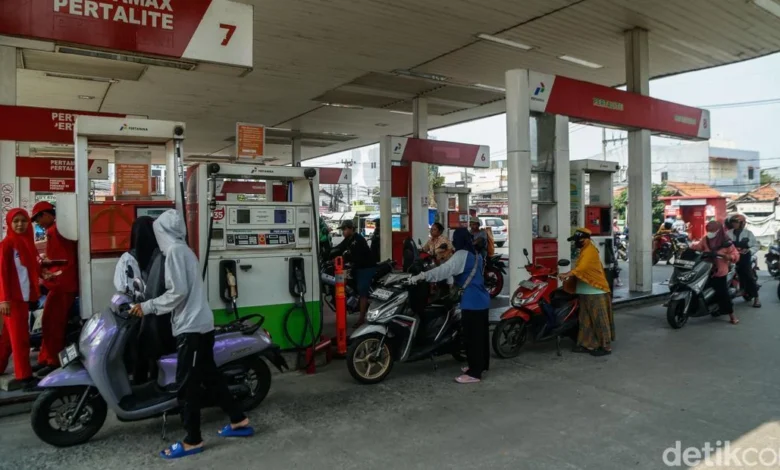
The Indonesian government is currently intensifying its monitoring of domestic fuel consumption patterns as a significant price disparity between subsidized and non-subsidized fuels drives a surge in demand for lower-cost products. With the price of Pertamax (RON 92) currently held at Rp 16,250 per liter, an increasing number of motorists are opting for the subsidized Pertalite (RON 90), which remains priced at Rp 10,000 per liter. This shift in consumer behavior has raised concerns regarding the sustainability of the national fuel quota and the stability of supply across the archipelago.
Laode Sulaeman, the Director General of Oil and Gas at the Ministry of Energy and Mineral Resources (ESDM), confirmed that the government is actively managing the production and distribution quotas for Pertalite. This intervention aims to ensure that the change in consumption patterns does not lead to widespread shortages at public refueling stations (SPBU). The government’s primary focus remains on maintaining the availability of subsidized fuel for those who qualify, while simultaneously navigating the complexities of global oil price fluctuations and domestic fiscal constraints.
Shifting Consumption Trends and Market Dynamics
The current energy landscape in Indonesia is characterized by a stark divide between market-driven pricing for high-end fuels and government-regulated pricing for subsidized options. According to reports from PT Pertamina Patra Niaga, the retail and distribution arm of the state energy giant, there has been a notable transformation in how the public consumes fuel following the price adjustments implemented on April 18, 2026.
Data released by Pertamina Patra Niaga indicates that the consumption of Pertalite saw a sharp increase of approximately 9.4% in July 2026. Conversely, the sales of the non-subsidized Pertamax Series experienced a significant decline, dropping by roughly 18% compared to the previous period. This nearly double-digit swing underscores the sensitivity of the Indonesian market to price differentials. For many middle-class consumers, the Rp 6,250 per liter gap between Pertalite and Pertamax has become a decisive factor in their daily commuting expenses.
A similar phenomenon has been observed in the diesel segment. The distribution of Biosolar—a subsidized B35 or B40 biodiesel blend—rose by 13.9% in July. Meanwhile, the Dex Series, which includes high-performance diesel products like Dexlite and Pertamina Dex, saw a sales contraction of about 6.4%. These figures suggest a broad-based migration of consumers across all vehicle categories toward subsidized energy products to mitigate rising living costs.
Management of National Fuel Quotas
The surge in demand has placed the 2026 Pertalite quota under intense scrutiny. The government originally set a consumption limit of 29.26 million kiloliters for the year. However, if the current growth rate of nearly 10% persists through the second half of the year, there is a substantial risk that the quota will be exhausted before December 31.
When questioned about the possibility of increasing the Pertalite quota, Laode Sulaeman remained cautious. He stated that while the situation is being managed, the government has not yet committed to a specific volume increase. The priority, according to Laode, is addressing immediate logistical bottlenecks and localized scarcities. He specifically cited recent fuel shortages in North Sumatra as a primary concern that the Ministry is working to resolve.
"We are managing the situation. One of our recent priorities has been resolving the fuel issues in North Sumatra to ensure that distribution returns to normal," Laode said during the Global Hydrogen Ecosystem Summit & Exhibition (GHES) 2026 at the Jakarta Convention Center.
The logistical challenge of fuel distribution in Indonesia is immense, given the country’s archipelagic geography. Any sudden spike in demand requires Pertamina Patra Niaga to rapidly adjust its shipping schedules and storage capacities. Eko Ricky Susanto, the Director of Retail Marketing at Pertamina Patra Niaga, explained that the company is currently in a "build-up" phase, attempting to fortify stocks across its entire network of refueling stations to prevent the long queues and "out of stock" signs that have plagued some regions.
Potential Adjustments to Non-Subsidized Fuel Prices
While the government manages the subsidized side of the ledger, there is growing speculation regarding a potential price reduction for Pertamax. The rationale behind this would be to narrow the price gap with Pertalite, thereby encouraging consumers to return to higher-octane fuels that are better for modern engines and the environment.
Minister of Energy and Mineral Resources Bahlil Lahadalia recently hinted that a downward adjustment for Pertamax and other non-subsidized fuels could be on the horizon, provided that global crude oil prices continue their current cooling trend. Bahlil noted that the government is monitoring international benchmarks and will hold meetings with both Pertamina and private fuel providers to discuss the timing of such adjustments.
"We are looking at the data. I have already begun calculations and will hold meetings with business entities, including Pertamina and private players. When world oil prices drop, we will adjust accordingly," Bahlil stated at the Presidential Palace complex. He emphasized that the government has already requested private fuel operators to remain agile and prepared to lower prices in alignment with global market movements.
However, Laode Sulaeman clarified that as of late July 2026, formal discussions regarding a specific price drop for Pertamax have not yet reached a conclusion. He pointed out that other non-subsidized products, such as Pertamax Turbo, Dexlite, and Pertamina Dex, already follow a market-based pricing mechanism that fluctuates more frequently based on crude oil costs. Pertamax (RON 92), while technically non-subsidized, often occupies a unique regulatory space where its price is more "sticky" and subject to higher levels of government coordination compared to the more premium Turbo and Dex products.
Chronology of the 2026 Fuel Price Crisis
To understand the current predicament, it is necessary to look at the timeline of events leading up to the July consumption spike:
- April 18, 2026: Pertamina adjusts the price of non-subsidized fuels. Pertamax is set at Rp 16,250 per liter, reflecting a period of high global oil volatility and a weakening Rupiah.
- May – June 2026: Consumers begin to feel the pinch of the high Pertamax price. Initial reports from regional SPBUs indicate a gradual shift toward Pertalite.
- Early July 2026: Reports of fuel "scarcity" emerge from North Sumatra and parts of Kalimantan. Long queues for Pertalite become a common sight, sparking public outcry and concerns over hoarding.
- July 16, 2026: Pertamina Patra Niaga meets with Commission XII of the House of Representatives (DPR RI). Director Eko Ricky Susanto presents data showing the 9.4% jump in Pertalite demand and the 18% drop in Pertamax sales.
- July 20, 2026: Minister Bahlil Lahadalia acknowledges the potential for price cuts if global crude prices stabilize at lower levels.
- July 21, 2026: Dirjen Migas Laode Sulaeman confirms that the government is in "management mode" regarding quotas and is prioritizing the resolution of supply issues in Sumatra.
Economic and Fiscal Implications
The migration of consumers from Pertamax to Pertalite carries significant weight for the Indonesian state budget (APBN). Every liter of Pertalite sold requires a government subsidy to cover the gap between the regulated retail price and the actual market cost of production and distribution. If consumption exceeds the 29.26 million kiloliter quota, the government must either allocate additional funds from the national budget—potentially diverting money from infrastructure or social welfare—atau implement stricter controls on who can purchase subsidized fuel.
Furthermore, the increased use of RON 90 Pertalite in modern vehicles designed for RON 92 or higher can lead to decreased engine efficiency and increased emissions. From an environmental standpoint, the shift is a step backward for Indonesia’s "Blue Sky" initiative, which aims to promote cleaner-burning fuels.
The government is also wary of the inflationary impact of fuel prices. While keeping Pertalite at Rp 10,000 helps stabilize the price of basic goods and transportation, a failure to manage the supply could lead to "shadow inflation," where the lack of availability forces transport costs up regardless of the official price.
Future Outlook and Strategic Recommendations
As the government moves toward the final quarter of 2026, several strategies are being considered to balance the energy trilemma of security, equity, and sustainability.
First, there is a renewed push for the implementation of a more targeted subsidy system. The government has long discussed revising Presidential Regulation (Perpres) Number 191 of 2014 to more clearly define which types of vehicles are eligible for Pertalite. By restricting high-capacity luxury vehicles from using subsidized fuel, the government could significantly preserve the remaining quota for those truly in need.
Second, a price adjustment for Pertamax seems inevitable if the government wishes to rebalance consumption. If the price of Pertamax can be brought down to a "psychological threshold"—perhaps closer to Rp 14,000 or Rp 15,000—many motorists might be persuaded to switch back to the higher-quality fuel, easing the pressure on the Pertalite supply chain.
Lastly, the Ministry of ESDM and Pertamina must improve the digitalization of fuel monitoring. The use of the MyPertamina app and QR codes for subsidized fuel purchases is expected to play a crucial role in preventing "leakage" and ensuring that the 29.26 million kiloliters last until the end of the year.
The coming months will be a critical test for Indonesia’s energy policy. The government must find a way to satisfy the immediate economic needs of a population sensitive to fuel prices while maintaining fiscal discipline and ensuring that the national energy company, Pertamina, can continue to operate without incurring unsustainable losses. For now, the focus remains on "managing" the quota and watching the global tickers for a chance to bring relief to the pumps.