UEFA President Aleksander Ceferin Launches Scathing Critique of FIFA Leadership and Commercialization Plans in Copenhagen Address

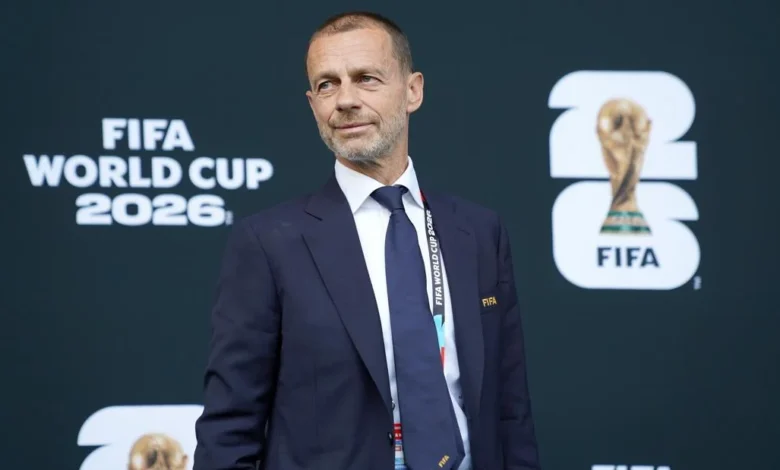
The governance of global football has once again been cast into the spotlight following a scathing and comprehensive critique delivered by UEFA President Aleksander Ceferin against the leadership style and strategic initiatives of FIFA President Gianni Infantino. Speaking before an audience of continental stakeholders, club executives, and administrators at the European Football Clubs (EFC) General Assembly in Kopenhagen, Denmark, Ceferin utilized the timeless allegory of Hans Christian Andersen’s classic fairy tale, The Emperor’s New Clothes, to dismantle what he perceives as a profound lack of transparency, democratic accountability, and ethical stewardship within the world governing body.
Although the UEFA chief notably refrained from directly uttering Infantino’s name throughout the duration of his formal address, the structural targets of his grievances were unmistakable. The primary catalyst for this heightened diplomatic and administrative friction is the controversial FIFA Forward Enterprise (FFE) proposal—an ambitious yet heavily scrutinized initiative that has since been officially withdrawn by FIFA following widespread domestic and international pushback. The friction underscores a deepening ideological and structural divide between European football authorities and the global governing body, raising fundamental questions about how the sport’s economic assets, competitions, and governance models will be managed in the decades to come.
Anatomy of the Conflict: The FIFA Forward Enterprise Proposal
To fully understand the gravity of Aleksander Ceferin’s remarks in Kopenhagen, it is essential to examine the genesis and mechanics of the initiative that provoked them. The FIFA Forward Enterprise represented a sweeping strategic proposal by the administration of Gianni Infantino designed to fundamentally restructure the commercial exploitation of FIFA’s most lucrative and prestigious assets. Under the parameters of the FFE proposal, FIFA sought to establish a dedicated, centralized commercial entity tasked with overseeing and monetizing the media and sponsorship rights associated with several of the sport’s premier global tournaments.
Most notably, this encompassing portfolio was intended to include the flagship men’s FIFA World Cup, the expanding FIFA Women’s World Cup, and the newly formatted, high-capacity FIFA Club World Cup. Crucially, the blueprint of the proposal opened the door for private equity firms, institutional investment funds, and external corporate entities to acquire up to a 20 percent equity stake in this newly minted commercial vehicle.
Proponents of the scheme within FIFA argued that such a mechanism was necessary to unlock unprecedented capital streams, insulate global football from macroeconomic volatility, and redistribute development funds more robustly to smaller member associations across the globe, particularly in Africa, Asia, and Oceania. However, the proposal triggered immediate, visceral alarms across the European football landscape. Critics, spearheaded by UEFA and major domestic leagues, argued that monetizing core assets through private equity ownership would irrevocably alienate control of the sport, prioritize short-term financial returns over the long-term integrity of the competition calendar, and undermine the traditional solidarity-based funding models that have sustained European and global football for decades.
The Chronology of Escalation
The friction between UEFA and FIFA over commercial centralization and governance is not a sudden development, but rather the culmination of a multi-year divergence in administrative philosophy. The timeline of this escalating ideological battle can be traced through several key milestones:
- Early Conceptualization: FIFA administration quietly began drafting frameworks for enhanced commercial capitalization of its tournament portfolios, aiming to maximize revenue ahead of the expanded 48-team men’s World Cup format scheduled for 2026 and the revamped 32-team Club World Cup.
- The Private Equity Outreach: Informal discussions and exploratory dialogues regarding external institutional investors taking equity stakes in FIFA’s commercial rights began circulating among selected council members and commercial partners, bypassing comprehensive consultation with broader confederation stakeholders.
- Leak and Immediate Backlash: Details of the proposal leaked into mainstream sports media, triggering an immediate and coordinated wave of skepticism and opposition from European clubs, leagues, and UEFA leadership who felt blindsided by the unilateral approach.
- Formal Opposition and Withdrawal: Facing a unified wall of resistance from European stakeholders and mounting questions regarding transparency, FIFA leadership formally decided to withdraw the FFE proposal from active consideration, though questions regarding alternative commercial structures remained unresolved.
- The Copenhagen Address (September 29): Aleksander Ceferin takes the stage at the EFC General Assembly in Kopenhagen, utilizing the platform to deliver his most direct and philosophically profound public rebuke of FIFA’s governance methods to date.
The Metaphor of the Naked Emperor
In his address at the EFC General Assembly, Ceferin deliberately stepped away from standard sports-administration rhetoric, choosing instead to anchor his critique in literary critique. By invoking Hans Christian Andersen’s The Emperor’s New Clothes, the UEFA President sought to illustrate a systemic culture of compliance and performative consultation within global football administration.
"Hampir 200 tahun lalu, dia menulis Baju Baru Sang Kaisar. Kita semua tahu ceritanya. Seorang kaisar diyakinkan bahwa dirinya mengenakan pakaian yang sangat indah, pakaian yang katanya hanya tidak bisa dilihat oleh orang bodoh atau tidak cakap," intoned Ceferin, framing the narrative for his international audience. "Para pengikutnya ikut membenarkan sampai seorang anak akhirnya mengatakan dengan lantang apa yang bisa dilihat semua orang. Kaisar itu telanjang."
Ceferin’s application of the metaphor served as a direct indictment of the semantic strategies employed by sports administrators to rebrand unilateral corporate maneuvers as progressive reforms. He argued that the lexicon of modern sports administration has been co-opted, weaponized to obscure administrative overreach behind a veneer of benevolent rhetoric.
"Barangkali pesan moral dari cerita ini adalah kata-kata yang nyaman tidak dapat mengubah kenyataan yang tidak nyaman," Ceferin emphasized. "Sepakbola dunia belakangan ini mendengar banyak kata yang sangat nyaman. Pengembangan, demokratisasi, konsultasi, kata-kata yang pada kenyataannya digunakan untuk menggambarkan hal sebaliknya."
The UEFA leader systematically deconstructed three primary buzzwords frequently utilized in contemporary sports governance discourse:
- Development: Ceferin challenged the notion that asset privatization equates to grassroots or structural growth. "Menjual sebagian masa depan sepakbola tidak menjadi pengembangan hanya karena Anda menyebutnya sebagai pengembangan," he asserted.
- Democratization: Addressing the top-down nature of decision-making, he noted that presenting national associations with pre-formulated, fait accompli policies does not constitute democratic participation. "Menempatkan keputusan yang sudah jadi di depan asosiasi nasional tidak menjadi demokratisasi hanya karena Anda menyebutnya demokratisasi, sebesar apa pun ceknya."
- Consultation: Highlighting procedural opacity, he dismissed tokenistic briefings as genuine dialogue. "Dan kerahasiaan tidak menjadi konsultasi hanya karena Anda menyebutnya konsultasi."
Guardians, Not Owners: The Philosophy of Stewardship
Beyond the immediate administrative policy disputes concerning commercial rights and private equity, Ceferin’s speech touched upon a deeper philosophical debate regarding the fundamental ownership and cultural identity of association football. In an appeal designed to resonate deeply with club executives, players, and supporters alike, the UEFA President urged stakeholders to reflect on the moral obligations of sports administration.
He asked the audience of club leaders to imagine a hypothetical scenario within their own domestic structures: if a senior executive were to secretly negotiate the surrender of control over a club’s most cherished assets and heritage without the explicit consent, awareness, or authorization of the board, the playing staff, and the fanbase, how long would it take for the institution to declare that a line had been crossed?
"Kalau begitu, teman-teman, saya pikir sudah waktunya untuk mengatakan cukup," declared Ceferin. "Sepakbola tidak membutuhkan kaisar dan tidak punya tempat bagi para pengikutnya. Mereka yang mengelola olahraga ini datang dan pergi. Kami adalah penjaga, bukan pemilik. Sepakbola bukan untuk dijual. Tidak hari ini. Tidak besok. Tidak akan pernah."
This distinction between being a "guardian" (penjaga) and an "owner" (pemilik) strikes at the heart of the European sporting model, which historically prioritizes community roots, sporting merit, and institutional continuity over pure shareholder value maximization. While global governing bodies face immense pressure to generate commercial revenue to sustain operations across 211 member associations—many of which lack self-sustaining domestic markets—European stakeholders remain fiercely protective of the domestic and continental pyramids that generate the vast majority of the sport’s global wealth.
Implications for Global Football Governance
The escalating public rhetoric between the leaders of UEFA and FIFA carries profound systemic implications for the future trajectory of international football. As the sport prepares for an increasingly congested international match calendar—marked by expanded tournament formats, the impending introduction of new global club competitions, and relentless pressure from commercial partners—the friction between centralized global expansion and decentralized continental preservation is reaching a critical inflection point.
The withdrawal of the FIFA Forward Enterprise proposal, catalyzed by European resistance, demonstrates that UEFA and its allied clubs still retain significant structural leverage to block initiatives that threaten their commercial and competitive hegemony. However, it also highlights an underlying climate of mistrust between Zurich and Nyon. When leadership figures resort to literary allegories and public rebukes of this magnitude, normal channels of diplomatic and administrative dialogue are clearly under severe strain.
Observers note that this ideological clash will likely define the political landscape of international football administration for the foreseeable future. Key areas of ongoing tension include:
- Match Calendar Congestion: Ongoing disputes regarding the saturation of fixtures, player welfare, and the physical toll exacted by expanded international tournaments.
- Commercial Sovereignty: The continuous tug-of-war over who controls the broadcasting, sponsorship, and digital rights of major international competitions.
- Governance Reform: Pressures from player unions, fan organizations, and continental confederations for greater transparency, independent oversight, and democratic participation in FIFA’s executive decision-making processes.
As football navigates an era of unprecedented commercialization and financial globalization, Aleksander Ceferin’s address in Kopenhagen serves as a stark reminder that the soul of the sport remains a contested terrain. Whether the metaphor of the naked emperor will inspire meaningful structural reform or merely deepen the trenches between global administrators and continental stakeholders remains one of the defining questions facing modern association football.