50 Best Korean Thriller Dramas of All Time Featuring High Ratings and Latest Releases

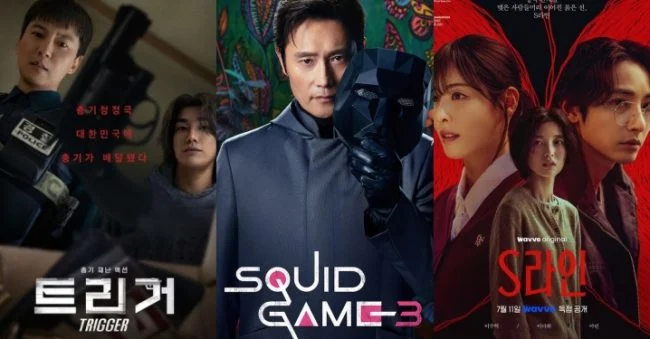
The evolution of South Korean television has seen a significant shift in global audience preferences, moving beyond the traditional romantic melodrama toward the high-stakes, narrative-dense genre of the psychological and crime thriller. These series are characterized by intricate plotting, moral ambiguity, and the frequent use of suspenseful cliffhangers that challenge the viewer’s perception of justice. As streaming platforms such as Netflix, Disney+, and Viu continue to invest heavily in original content, the production value of Korean thrillers has reached cinematic standards, often outperforming conventional broadcast dramas in both domestic ratings and international viewership.

The genre’s rising popularity is not merely a trend but a reflection of a sophisticated shift in storytelling. Korean thrillers often incorporate social commentary, critiquing systemic corruption, the influence of social media, and the ethics of vigilantism. This article provides a comprehensive examination of 50 pivotal thriller dramas, analyzing their impact on the industry and the thematic elements that define this golden era of Korean suspense.

The Rise of Vigilante Narratives and Moral Ambiguity
Recent productions have increasingly focused on the concept of "dark justice." Series such as A Killer Paradox (2024), starring Choi Woo Shik and Son Suk Ku, explore the psychological toll of accidental violence and the philosophical question of whether certain individuals deserve to be eradicated by someone operating outside the law. This theme is mirrored in Vigilante (2023), where the protagonist, Kim Ji Yong, navigates a dual existence as a model police student by day and a brutal judge of criminals who have slipped through the cracks of the justice system by night.

These narratives tap into public frustration with perceived judicial leniency, a common motif in modern Korean crime dramas. The audience resonance for such stories highlights a growing demand for protagonists who occupy a moral grey area, forcing viewers to question their own ethical boundaries.

Psychological Depth and Societal Critique
Beyond the action-heavy "vigilante" sub-genre, many Korean thrillers utilize psychological horror to critique modern societal structures. Mask Girl (2023), for instance, offers a harrowing look at the pressures of beauty standards, the anonymity of the internet, and the consequences of trauma. By splitting the protagonist’s life into different stages and actors, the series provides a visceral analysis of how societal rejection can warp an individual’s identity.

Similarly, Celebrity (2023) examines the volatile world of social media influencers. By presenting a "whodunit" mystery surrounding the death of a prominent streamer, the series exposes the cutthroat nature of online fame. These shows function as mirrors, reflecting the isolation and performative nature of contemporary life.

The Supernatural and Sci-Fi Thriller Spectrum
The integration of supernatural and science-fiction elements has expanded the boundaries of the traditional thriller. Revenant (2023), which combines folklore with police procedural elements, showcases the industry’s ability to weave mythology into modern-day investigation. The series, featuring Kim Tae Ri as a woman possessed by an entity, serves as a masterclass in atmospheric tension.

In the sci-fi domain, Duty After School (2023) and Sweet Home (2020-2024) have redefined the "survival thriller." In Sweet Home, the focus remains on the fragility of human nature when faced with existential threats. The series’ success in depicting monster transformations as metaphors for inner desire and despair has solidified its place as a cornerstone of the genre.

Chronology of Notable Thriller Milestones
To understand the trajectory of the genre, one must look at the transition from 2016’s Signal—a groundbreaking series that utilized time-travel to solve cold cases—to the 2025-2026 slate of upcoming high-budget productions.

- 2016-2019: The Foundation Phase: The era of Signal, Stranger, and Vagabond. These shows established the template for professional, high-tension investigations involving government conspiracies and police corruption.
- 2020-2022: The Expansion Phase: The period marked by the massive success of Squid Game (2021) and The Glory (2022). These series proved that Korean thrillers could become global cultural phenomena.
- 2023-2026: The Diversification Phase: Recent and upcoming releases like The Manipulated (2025) and Gold Land (2026) show a move toward high-concept, genre-blending thrillers that integrate medical ethics, political intrigue, and advanced technology.
Analysis of Institutional Response and Industry Impact
The sustained success of these series has fundamentally changed the business model for Korean production houses. Studios are no longer prioritizing the "safe" rom-com route; instead, they are investing in long-form, multi-season thriller arcs. According to industry analysis, the high export value of thriller series to Western markets is largely due to the universal nature of the crime and mystery tropes employed, which transcend linguistic barriers.

The involvement of major platforms like Disney+ and Netflix has also introduced a more aggressive pacing. Unlike older dramas that relied on slow-burn character development, modern thrillers are structured to maintain momentum, ensuring that the "plot twist" remains a central feature. This shift has necessitated higher budgets for special effects and action choreography, leading to a noticeable increase in the quality of stunt work, as seen in the tactical combat scenes of Trigger (2025).

Examining the 2025-2026 Pipeline
The upcoming releases represent a maturation of the genre. Projects such as The Witch (2025) and Hunter with a Scalpel (2025) demonstrate an increasing interest in forensic and specialized thrillers. By focusing on niche professions—such as data statisticians investigating supernatural phenomena or pathologists tracking serial killers—the genre continues to find fresh ways to deliver suspense.

Furthermore, the 2026 slate, including titles like The Scarecrow and Reserve, suggests a return to character-driven narratives that emphasize the personal histories of the investigators. This indicates that while the industry is capable of producing massive, high-concept spectacles, it has not lost sight of the importance of grounded, human-centric storytelling.

Implications for Future Storytelling
The long-term implication of this trend is the professionalization of the "Korean Noir" aesthetic. As these dramas continue to garner awards and international recognition, they set a new standard for television production globally. The success of these 50 recommended titles is a testament to the creative risks being taken by writers and directors who are no longer afraid to explore the darker corners of human experience.

For viewers, this evolution offers a rich library of content that spans from the grit of urban crime to the terror of the unknown. As the genre continues to evolve, it is likely that we will see further experimentation with form and theme, cementing the Korean thriller’s status as a dominant force in world media. Whether through the lens of political conspiracy in Tempest (2025) or the psychological warfare of The Manipulated (2025), the future of the Korean thriller remains as intense and unpredictable as the plots themselves.