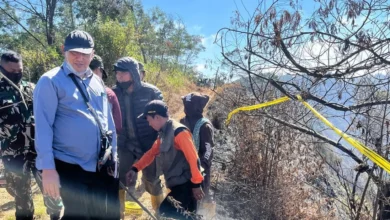
A horrific incident unfolded on the Rangkasbitung-Panimbang Toll Road in Lebak, Banten, when a religious boarding school teacher attempted to evade law enforcement after being caught engaging in illicit acts inside a parked vehicle. The suspect, identified by the initials ED (27), rammed his Toyota Avanza into two officers from the Highway Patrol (PJR) unit of the Banten Regional Police Traffic Directorate. The reckless escape attempt resulted in one of the officers being thrown onto the hood of the moving vehicle and violently dragged for approximately three kilometers at high speeds before being hurled onto the asphalt.
The high-stakes pursuit, which occurred on the afternoon of Sunday, October 1, 2026, sparked widespread public outrage and intense police scrutiny. Following a swift and intensive investigation led by the Banten Regional Police, authorities successfully apprehended ED just hours later in the Cadasari District of Pandeglang Regency. Both the driver and his female companion, who was inside the vehicle at the time of the incident, have since been officially designated as suspects by law enforcement. The case has cast a harsh spotlight on driver accountability, the safety of law enforcement personnel on high-speed roadways, and the moral responsibilities of public figures within religious and educational communities.
Chronology of Events: From Routine Patrol to High-Speed Horror
The sequence of events began during a routine patrol conducted by members of the Banten Regional Police PJR, specifically Bripda Rizki Novyandri and Briptu Wahyu. While traversing the Rangkasbitung-Panimbang Toll Road, the officers noticed a suspicious black Toyota Avanza parked irregularly on the shoulder of the highway. Given the inherent dangers associated with stationary vehicles on high-speed toll roads—where rear-end collisions frequently result in severe fatalities—the officers decided to investigate.
The patrol vehicle pulled up directly behind the halted Avanza to assess the situation, verify the driver’s condition, and offer assistance if necessary, or ensure that traffic regulations were not being violated. As Bripda Rizki and Briptu Wahyu dismounted from their service vehicle and approached the dark sedan on foot, the situation escalated catastrophically. Instead of complying with standard police procedures, the driver of the Avanza, later identified as ED, abruptly slammed on the accelerator. Without warning, the vehicle surged forward, deliberately striking both officers and propelling them into the air before fleeing the scene at a dangerous velocity.
The terrifying apex of the evasion occurred as Bripda Rizki, who had been attempting to record the vehicle’s license plate and actions, was hit directly. Refusing to let the suspect escape without accountability, the officer managed to hoist himself onto the hood of the accelerating car. Clinging desperately to the vehicle, Bripda Rizki repeatedly struck the windshield in a frantic effort to force the driver to halt.

Disregarding human life entirely, ED continued to accelerate, weaving through traffic with a law enforcement officer clinging to the hood. The harrowing ride lasted for an astonishing three kilometers along the toll road. The ordeal finally ended when the vehicle made a sharp movement, causing Bripda Rizki to be violently dislodged and thrown onto the hard asphalt pavement, sustaining significant injuries. The driver then vanished into traffic, leaving the injured officers behind.
Panic and Motives: The Fear of Reputational Ruin
During subsequent interrogations conducted by the Directorate of General Criminal Investigation (Ditreskrimum) of the Banten Regional Police, ED confessed to the harrowing sequence of events. The primary catalyst for his violent and erratic escape was sheer panic. ED admitted that at the time the police approached his vehicle, he was engaged in immoral and illicit acts inside the car with a woman whom he acknowledged as his girlfriend.
As a non-resident religious teacher—commonly known as a guru ngaji—who provided private instruction across several local households and Islamic boarding schools (ponpes) in Pandeglang and surrounding areas, ED was acutely aware of the social gravity of his actions. Fearing immediate exposure, the destruction of his social standing, and the inevitable public condemnation that would follow if his behavior was officially recorded and publicized, he made a split-second, criminal decision to flee by any means necessary.
Head of Sub-Directorate III of Jatanras Ditreskrimum of the Banten Regional Police, Commissioner Yeremia Iwo, elaborated on the suspect’s psychological state during the apprehension. According to police findings, ED understood completely that his initial conduct violated both moral standards and the law. When law enforcement officers unexpectedly materialized beside his vehicle, the terror of reputational devastation overrode his basic sense of civic duty and human empathy, leading directly to the assault on the officers.
Police Investigation and Swift Apprehension
Following the hit-and-run incident, the Banten Regional Police launched an aggressive multi-agency manhunt to track down the fleeing suspect. Investigators deployed advanced investigative techniques, beginning with a comprehensive analysis of closed-circuit television (CCTV) footage obtained from the Serang Barat Toll Gate and surrounding infrastructure.
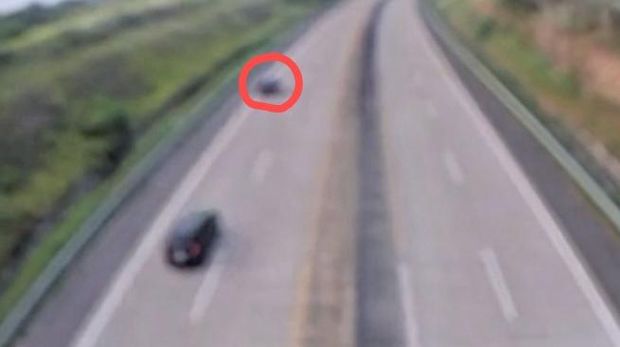
By meticulously tracing the vehicle’s movements through electronic surveillance, police were able to identify the specific make, model, and registration details of the Toyota Avanza. Further fieldwork led detectives to the automobile showroom where the vehicle had been acquired, which subsequently provided critical leads regarding the identity and residential address of the registered owner and primary user.
Armed with precise intelligence, a specialized pursuit team from the Banten Regional Police closed in on the suspect. In the early hours of Monday, November 2, 2026—precisely at 02.30 AM—authorities raided a location in the Cadasari sub-district of Pandeglang Regency. ED was apprehended swiftly and without offering physical resistance. He was immediately transported to the Banten Regional Police Headquarters (Mapolda Banten) for formal detention and rigorous interrogation. The Toyota Avanza utilized during the crime was likewise seized and secured as primary physical evidence.
Legal Ramifications: Suspects and Criminal Charges
The severity of the actions committed on the Rangkasbitung-Panimbang Toll Road has resulted in severe legal consequences for both individuals present in the vehicle. The Banten Regional Police officially elevated the status of both ED and his female companion, identified by the initials AM, from witnesses to criminal suspects.
Head of Public Relations for the Banten Regional Police, Commissioner Maruli Ahiles Hutapea, detailed the specific legal standing of each suspect during an official press briefing. While ED is being held directly accountable for operating the vehicle during the assault, AM faces serious charges as an accomplice due to her passive complicity throughout the ordeal.
According to police testimonies and forensic analysis, AM was fully aware that law enforcement officers were attempting to conduct a lawful inspection. Furthermore, she remained inside the vehicle while ED struck the officers and witnessed firsthand as Bripda Rizki was dragged across the hood for three terrifying kilometers. Despite the gravity of the situation, AM made no verbal or physical attempt to urge the driver to stop, nor did she make any effort to render aid to the injured officers. Following the incident, both suspects simply returned to their respective homes and deliberately chose to conceal the crime, failing to report the violent encounter to emergency services or local authorities.
Consequently, ED has been charged under multiple provisions of the Indonesian Criminal Code (KUHP), including Article 466 and Article 348, which pertain to acts of violence causing physical injury, resisting a public official executing their lawful duties, and endangering human life through reckless endangerment. Prosecutors have indicated that the cumulative charges carry a potential maximum penalty of approximately ten years of imprisonment.

Meanwhile, AM has been charged under a robust combination of legal statutes, including Article 466 KUHP, Article 348 KUHP, Article 349 Paragraph (2) KUHP, Article 406 KUHP, and Article 458 KUHP, in conjunction with Article 17 and Article 21 KUHP concerning aiding and abetting, failure to report a crime, and acting in concert to obstruct justice.
Broader Implications for Public Safety and Professional Conduct
The Rangkasbitung toll road incident has resonated deeply across Indonesian society, triggering national discourse concerning several distinct societal vulnerabilities. First, the event highlights the extreme physical dangers routinely faced by highway patrol officers. Operating in high-speed, unpredictable environments, traffic police officers are frequently exposed to dynamic threats from erratic drivers, making adherence to tactical safety protocols paramount.
Second, the case sheds light on the sociological dimensions of moral panic among public figures. The willingness of an educator within a religious community to endanger human life merely to avoid the social stigma of an illicit affair has drawn sharp rebukes from community leaders and social observers alike. Analysts point out that the incident underscores an urgent need for heightened ethical standards, psychological resilience, and accountability among individuals entrusted with moral or educational leadership roles.
Finally, the swift legal response demonstrated by the Banten Regional Police serves as a critical deterrent against acts of violence directed at law enforcement personnel. By employing modern technological tools such as toll gate CCTV analytics and rapidly establishing a clear chain of culpability for both the primary actor and the passive accomplice, the authorities have reinforced the principle that evasion through violence will be met with unyielding judicial prosecution. As the case proceeds toward the judicial phase, it stands as a grim reminder of how instantaneous panic, poor decision-making, and moral cowardice can permanently shatter lives on the nation’s highways.