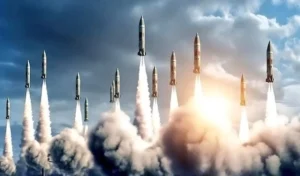
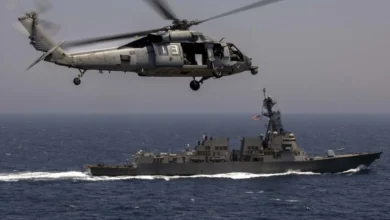
Iran declares strategic defiance against global military superpowers despite four decades of comprehensive sanctions

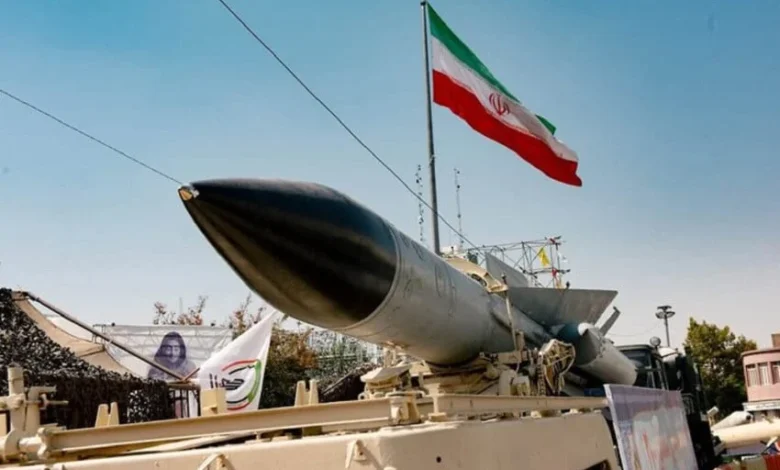
The Islamic Republic of Iran has officially asserted its emergence as a self-sufficient military power, capable of challenging the world’s most advanced armed forces through domestic technological innovation. This declaration, delivered by Brigadier General Hossein Mohebbi, spokesperson for the Islamic Revolutionary Guard Corps (IRGC), marks a pivotal moment in the nation’s long-standing geopolitical standoff with the West. Despite enduring 47 years of stringent economic and military sanctions, Tehran maintains that its aerospace capabilities have not only matured but have surpassed the defensive expectations of its adversaries, effectively neutralizing the intended impact of international isolation.
The Evolution of Iran’s Military Autonomy
The assertions made by General Mohebbi during a recent defense briefing in Tehran underscore a shift in Iran’s military doctrine. For decades, the nation was heavily reliant on foreign-sourced hardware, largely inherited from the pre-1979 era. However, the imposition of global sanctions—which accelerated following the 1979 Islamic Revolution and the subsequent hostage crisis—forced the Iranian defense sector to pivot toward an "economy of resistance."
According to the IRGC, this pivot was not merely a survival strategy but a catalyst for scientific acceleration. By transitioning from an importer of finished weapon systems to a developer of proprietary platforms, Iran claims to have achieved "strategic parity" in regional conflicts. The focus of this advancement has been primarily in the aerospace sector, specifically in the development of ballistic missile technology, sophisticated unmanned aerial vehicles (UAVs), and indigenous air defense networks that challenge the dominance of global superpowers, particularly the United States and its regional allies.
A Chronology of Sanctions and Strategic Response
To understand the gravity of the IRGC’s claims, one must examine the timeline of Iran’s isolation and its corresponding military trajectory:
- 1979–1980: Following the Islamic Revolution and the storming of the U.S. Embassy in Tehran, the United States imposed the first major round of economic sanctions. This period marked the beginning of an arms embargo that cut off Iran’s access to spare parts for its existing fleet of F-14 Tomcats and other Western-made assets.
- 1980–1988: The Iran-Iraq War served as a crucible for Iranian military planners. Facing an adversary backed by both the East and the West, Iran realized that reliance on external supply chains was an existential liability.
- 1990s–2000s: Tehran began investing heavily in reverse-engineering and domestic missile research. During this era, the foundations for the Shahab missile series were laid, drawing heavily on Soviet and North Korean technological influences, which were later refined by domestic engineers.
- 2010–2018: The implementation of the Joint Comprehensive Plan of Action (JCPOA) provided a temporary easing of sanctions, but the subsequent withdrawal of the U.S. from the agreement in 2018 led to "maximum pressure" sanctions. Rather than collapsing the economy, this period saw an explosion in the production of low-cost, high-impact drones and precision-guided munitions.
- 2020–Present: Iran has showcased its ability to conduct long-range precision strikes and maintain air superiority in the face of sophisticated radar-jamming technologies, culminating in the recent assertions by IRGC leadership.
Supporting Data: The Aerospace Shift
The Iranian claim of technological superiority is rooted in its expanding aerospace portfolio. Independent military analysts have observed that while Iran may not match the total inventory numbers of a superpower like the United States, its "asymmetric warfare" approach has forced a change in how global naval and air forces operate in the Persian Gulf.
Data from the International Institute for Strategic Studies (IISS) suggests that Iran’s UAV program has become a primary export and operational asset. The proliferation of the Shahed-series drones, which have been observed in multiple regional theaters, indicates a shift in production capability—from bespoke prototypes to mass-manufactured assets. Furthermore, the development of the Bavar-373 surface-to-air missile system represents a significant step toward an independent, long-range integrated air defense system (IADS), designed to track and intercept fourth and fifth-generation fighter aircraft.
Official Responses and Geopolitical Context
General Mohebbi’s remarks are widely interpreted as a direct response to recent military posture changes in the Middle East. Notably, IRGC advisors have frequently touted the "strategic retreat" of U.S. naval assets, claiming that Iranian maritime capabilities have forced U.S. carrier strike groups to maintain a distance of at least 1,000 kilometers from Iranian territorial waters during periods of heightened tension.
While Washington and its regional partners generally characterize Iran’s military advancements as destabilizing, Tehran frames them as deterrents. The IRGC argues that the very sanctions intended to weaken the country have inadvertently removed the "crutch" of foreign technology, forcing a culture of rapid innovation. This narrative is essential to the internal political stability of the Iranian government, as it justifies the economic hardships faced by the civilian population by highlighting the achievement of "national sovereignty" and "military self-reliance."
Analysis: Implications for Global Security
The implications of a technologically independent Iran are significant for global security architecture. If Iran has successfully mastered the full cycle of aerospace manufacturing—from material science to guidance systems—then the efficacy of future economic sanctions as a tool for non-proliferation or military containment becomes increasingly limited.
- The "Sanctions-Proof" Model: Iran is attempting to demonstrate a new paradigm of statecraft: that a nation can sustain a robust, indigenous military-industrial complex while effectively detached from the global financial system. This model is being closely watched by other nations currently under Western sanctions.
- Shifting Power Dynamics in the Gulf: The ability to mass-produce precision-guided munitions changes the "cost-exchange ratio" of war. If a relatively inexpensive Iranian drone can threaten a multi-billion dollar naval asset, the traditional military calculus of the world’s superpowers must be re-evaluated.
- Regional Arms Proliferation: As Iran becomes more self-reliant, its ability to supply its regional partners—often referred to as the "Axis of Resistance"—with advanced military hardware increases. This creates a ripple effect, where the technological advancement of Tehran is mirrored by the enhanced capabilities of non-state actors throughout the Levant and the Arabian Peninsula.
Future Outlook
As the world approaches the mid-2020s, the standoff between Iran and global military powers remains a volatile centerpiece of international relations. The IRGC’s recent assertions suggest that Tehran is no longer seeking a return to pre-sanction reliance on the West. Instead, the country is doubling down on a policy of strategic autonomy.
However, observers remain cautious. While the rhetoric from Tehran is one of triumph, the economic reality of 47 years of sanctions continues to place a heavy burden on the Iranian public. The challenge for the Iranian leadership will be to maintain this high-tech military momentum while addressing the underlying economic pressures that threaten long-term stability.
For international stakeholders, the message from the IRGC is clear: the Iran of today is fundamentally different from the Iran of the 1970s. The military infrastructure has been hardened by decades of isolation, and the government views its technological advancement not as a bargaining chip for the lifting of sanctions, but as the final insurance policy for its survival. As both sides continue to test the boundaries of their respective military capabilities, the risk of miscalculation remains high, making the stability of the Persian Gulf one of the most critical security concerns for the coming decade.
In conclusion, the statements from Brigadier General Mohebbi serve as a historical marker. Whether or not these technological advancements provide the security Tehran seeks, they have irrevocably changed the nature of the conflict, transforming a local regional dispute into a long-term challenge to the established global military order. The trajectory of Iran’s defense sector, from the ruins of the 1979 revolution to its current status as a producer of sophisticated aerospace technology, remains a testament to the unpredictable consequences of prolonged international economic isolation.