Resilience in Retail: Local Hijab Brand naPocut Expands Physical Presence at Kota Kasablanka Amid Economic Uncertainty

JAKARTA — Amid ongoing concerns regarding fluctuating purchasing power and broader macroeconomic uncertainties, Indonesia’s modest fashion and local hijab industry continues to demonstrate robust resilience. Rather than retreating solely to digital storefronts or scaling back operations, prominent domestic labels are actively navigating market headwinds through strategic physical expansions.
A prime example of this retail dynamism is local modest fashion and hijab label naPocut. Founded by entrepreneurs Amanda Zada, Cut Dila, and Dina Fadila, the brand officially inaugurated its 17th permanent physical store at the Kota Kasablanka (Kokas) shopping mall in South Jakarta. This latest launch underscores a concerted effort by local brands to capture offline consumer segments by addressing evolving post-pandemic shopping behaviors.
Strategic Expansion Rooted in Consumer Demand
The opening of the Kota Kasablanka boutique transcends a standard retail milestone; it serves as a calculated response to shifting consumer lifestyles following the COVID-19 pandemic. Speaking at the grand opening event, naPocut Co-Founder Amanda Zada revealed that the choice of location was driven by persistent requests from the brand’s loyal customer base, colloquially known as the naPocut community.
"Why did we choose Kokas? Because from the very beginning, a large portion of our customer base specifically requested that we open a store here. So, the decision is fundamentally rooted in customer demand," Amanda stated.
However, despite strong consumer enthusiasm, the brand deliberately avoided a hurried expansion strategy. Given the current economic landscape, Amanda emphasized that executing a physical retail rollout requires meticulous caution and empirical market testing.
Rather than jumping straight into long-term lease commitments, naPocut employs a phased testing framework. The label typically initiates its market evaluation by deploying temporary pop-up booths in targeted areas. This approach allows the management team to gauge foot traffic, measure local brand awareness, and analyze real-time consumer feedback before determining the viability of a permanent storefront.
"Our strategy at naPocut is quite measured and gradual. We try to understand the market first. We usually test the waters by opening a pop-up booth in that specific area. From there, we observe the customer feedback and assess whether sufficient brand awareness exists," Amanda explained. She further noted that physical expansion decisions cannot rely solely on anecdotal consumer requests, but must also account for the underlying economic health and purchasing capacity of the target region.
Balancing Long-Term Roadmaps with Post-Pandemic Retail Shifts
The continuous rollout of physical stores during a period marked by cautious consumer spending often prompts industry scrutiny. Addressing these perceptions, Amanda clarified that naPocut’s retail expansion is aligned with a comprehensive five-year strategic roadmap formulated well in advance. Consequently, cash flow allocations, capital expenditure, and budgetary parameters were thoroughly vetted prior to execution.
The brand’s physical retail strategy is heavily informed by post-pandemic behavioral shifts. While online shopping became a default habit for millions of consumers during health restrictions, the subsequent normalization of mobility revealed a persistent psychological need for tactile, in-store shopping experiences. Consumers increasingly seek physical touchpoints where they can interact directly with products.
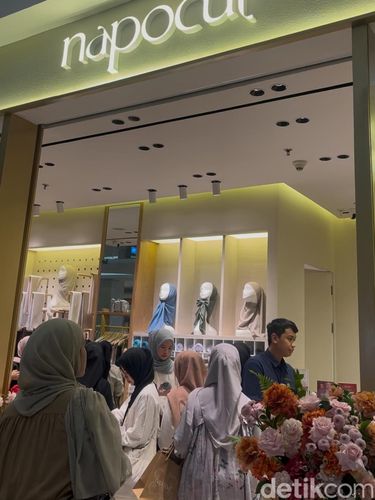
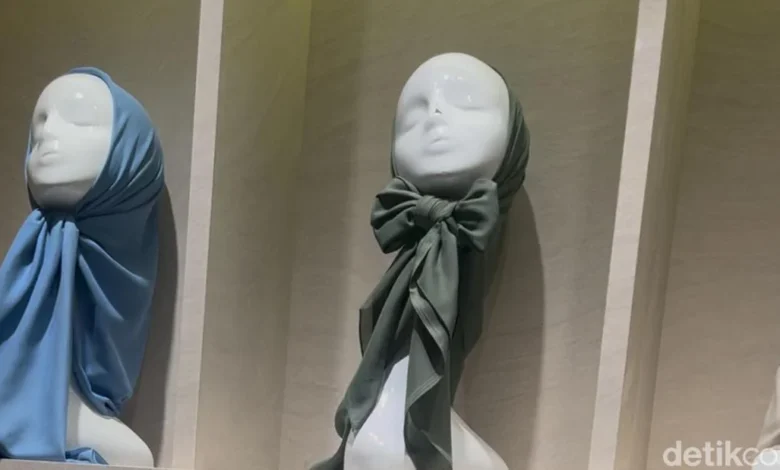
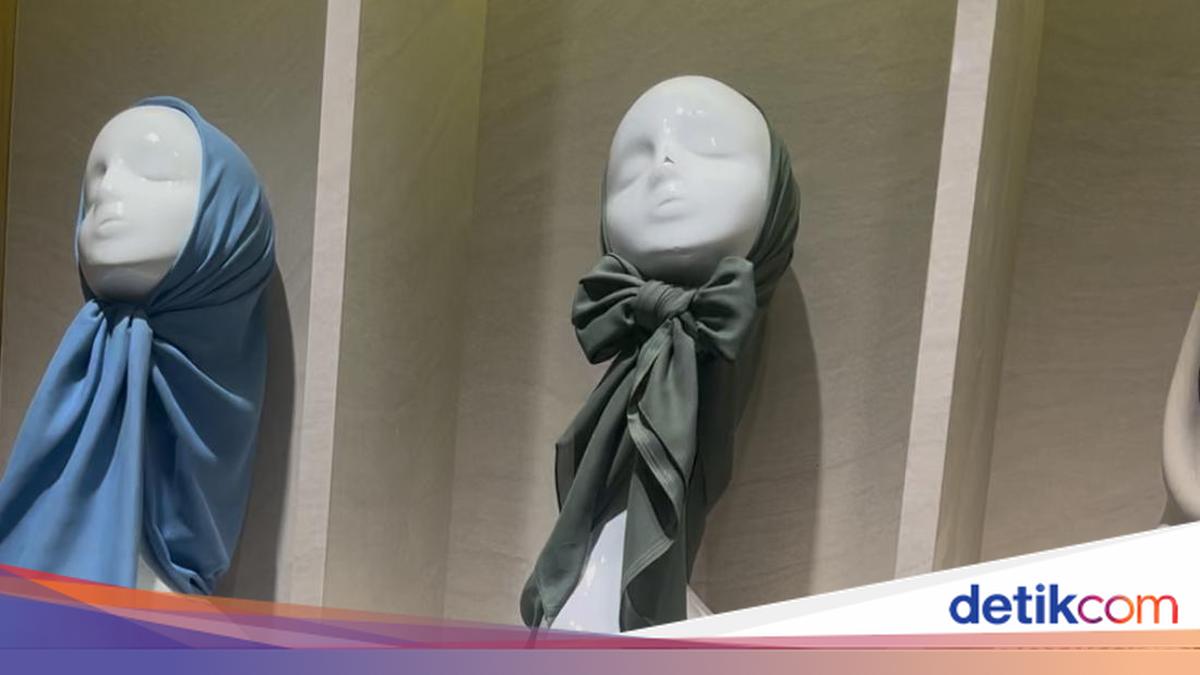
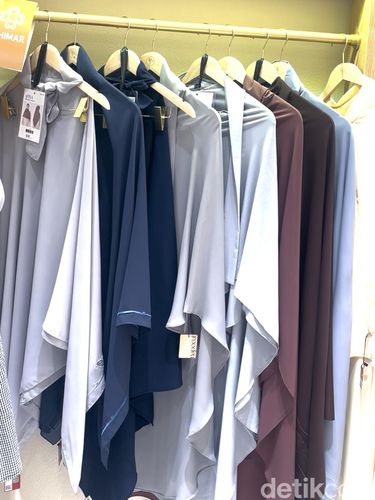
In response, naPocut designs each of its retail locations to deliver an immersive brand experience. At the Kota Kasablanka outlet, the store layout prominently features a signature display of the brand’s staple Paris hijab collection, arranged in a comprehensive color gradient. This visual merchandising allows shoppers to immediately evaluate fabric textures, weight, and color accuracy firsthand—elements that digital screens cannot fully replicate.
Navigating Reduced Purchasing Power Without Price Wars
The retail sector in recent quarters has faced noticeable pressures concerning domestic purchasing power. In response to these macroeconomic headwinds, many retail operators resort to aggressive discounting or price-war strategies to clear inventory. However, naPocut has consciously opted out of deep discount cycles, preferring instead to reinforce brand value through product diversification and closer alignment with evolving consumer lifestyles.
"Challenges certainly exist every year because the character of each shopping mall varies… The primary challenge right now in this economic climate is likely the contraction in purchasing power. But instead of resorting to heavy discounting, we try to explore alternative approaches," Amanda noted.
These alternatives involve closely monitoring emerging lifestyle trends among Indonesian women, such as the rising popularity of sports and fitness activities within the hijab-wearing demographic. By identifying these shifts, naPocut has expanded its product catalog to include functional modest activewear tailored specifically to active consumers, thereby capturing new revenue streams without compromising brand equity.
Broader Economic Implications for the Indonesian Modest Fashion Sector
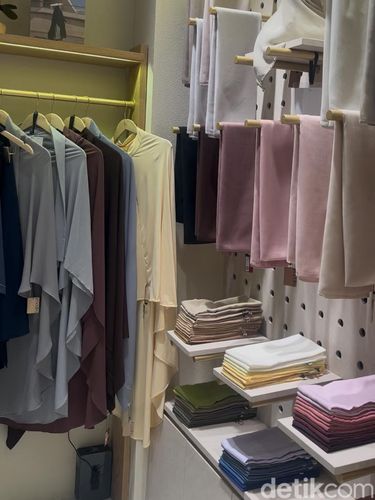
Indonesia’s modest fashion industry represents a significant pillar of the national creative economy. Government estimates and industry reports frequently position Indonesia as a prospective global hub for modest fashion, driven by a large Muslim demographic and a vibrant ecosystem of independent designers and small-to-medium enterprises (SMEs).
However, the sector operates against a backdrop of macroeconomic volatility, including inflationary pressures on raw materials, fluctuating currency exchange rates, and cautious consumer spending behaviors. In this environment, the strategies deployed by established players like naPocut offer valuable insights into sustainable retail management.
Industry analysts observe that the shift from pure-play e-commerce to an omni-channel model—where digital platforms and physical stores operate in synergy—has become a survival imperative for fashion brands. While online channels lower initial overhead costs and expand geographic reach, physical stores build trust, enhance brand prestige, and fulfill consumer desires for sensory engagement.
Advice for Emerging Local Brands and Creative Entrepreneurs
Reflecting on the broader landscape of the local creative industry, Amanda shared critical guidance for emerging brands seeking to establish resilient business foundations amid economic fluctuations. She cautioned against rapid, unstructured expansion driven purely by market FOMO (Fear Of Missing Out) or superficial trends.
"Because this is a substantial investment, it must be evaluated through a long-term lens. Sometimes, the mistake a brand makes is opening numerous branches when the internal foundation is not yet strong—referring to product capacity, operational bandwidth, and human resources. Therefore, patience is often the wiser path," Amanda advised.
She underscored that internal introspection and rigorous operational audits must precede any major strategic leap. Business owners are urged to evaluate management readiness and cash flow stability before committing capital to brick-and-mortar expansion.
"We shouldn’t just follow trends by opening everywhere. Instead, we need to look inward and evaluate ourselves. Are our management systems robust? Is our cash flow healthy? Once those fundamental points are secure, then it becomes appropriate to consider and commit to expansion," she concluded.
As the retail landscape continues to evolve, the expansion trajectory of brands like naPocut illustrates that measured growth, responsiveness to consumer lifestyles, and strong operational discipline remain critical catalysts for sustained success in Indonesia’s competitive modest fashion market.