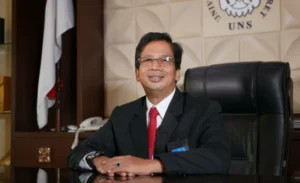
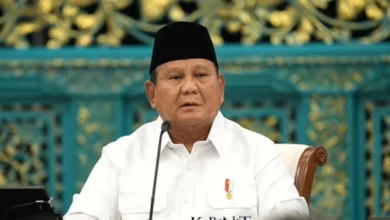
President Prabowo Subianto Appoints Kuntadi as New Jampidsus Amidst High-Profile Corruption Scandal, Signaling Commitment to Institutional Integrity

Jakarta, Indonesia – President Prabowo Subianto has officially appointed Kuntadi as the new Junior Attorney General for Special Crimes (Jampidsus), a pivotal role within the Attorney General’s Office (AGO) responsible for investigating and prosecuting major corruption cases. This significant appointment, confirmed on Wednesday, July 22, 2026, comes at a critical juncture for Indonesia’s anti-corruption efforts, as Kuntadi steps into the position previously held by Febrie Adriansyah, who is now facing corruption charges. The move has been widely endorsed by key government figures, including Coordinating Minister for Political, Legal, and Security Affairs (Menko Polhukam) Imipas Yusril Ihza Mahendra, who lauded the President’s decision as a carefully considered and appropriate choice for the challenging mandate ahead.
A Pivotal Appointment Amidst Institutional Scrutiny
The appointment of Kuntadi by President Prabowo Subianto is more than a routine administrative change; it is a strategic move designed to reinforce public trust and institutional integrity within one of the nation’s most crucial law enforcement bodies. The Jampidsus position is at the forefront of Indonesia’s battle against corruption, handling high-stakes cases that often involve powerful political and economic figures. The sudden vacancy created by the corruption allegations against Febrie Adriansyah sent ripples through the legal and political landscape, raising questions about the internal mechanisms of oversight and accountability within the AGO itself.
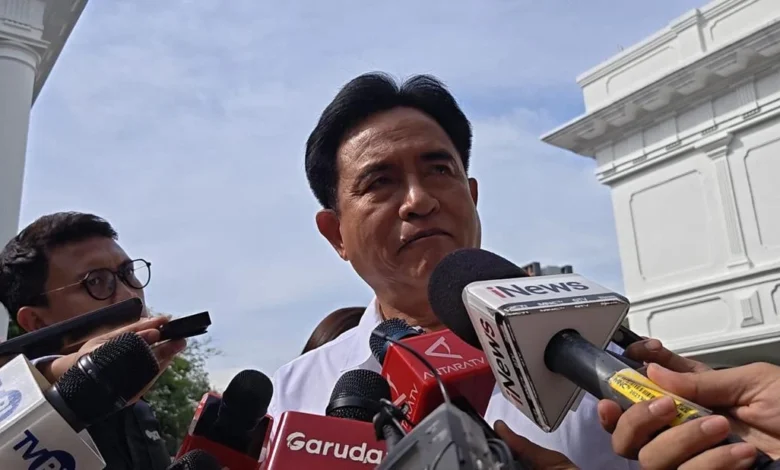
Yusril Ihza Mahendra, a seasoned legal expert and a key figure in the Prabowo administration, expressed strong support for Kuntadi’s appointment, emphasizing the meticulous consideration by the President. "Oh, Mr. Kuntadi, yes? If the President has agreed, it means the President has carefully considered that he is the right person to hold the position of Jampidsus," Yusril stated at the Presidential Palace complex in Jakarta. His remarks underscore the perceived suitability of Kuntadi for a role that demands not only profound legal acumen but also unwavering ethical fortitude and resilience under intense public and political pressure.
The Mandate of the Junior Attorney General for Special Crimes (Jampidsus)
The Junior Attorney General for Special Crimes (Jampidsus) is one of the five Junior Attorney Generals (Jampidsus, Jamintel, Jambin, Jampidum, Jamdatun) who assist the Attorney General in leading the various divisions of the AGO. The Jampidsus division is specifically tasked with the investigation, prosecution, and execution of judgments related to special crimes, primarily focusing on corruption and human rights violations. Given Indonesia’s persistent struggle with corruption, the Jampidsus plays an indispensable role in upholding the rule of law, recovering state assets, and ensuring accountability for those who misuse public office or funds.
The scope of the Jampidsus’s work is vast, encompassing complex financial crimes, procurement fraud, bribery, and embezzlement schemes that often run into trillions of Rupiah and involve intricate networks. The division’s success is frequently seen as a barometer of the government’s commitment to good governance and transparency. Therefore, the integrity and capability of the individual holding this position are paramount, as any perceived weakness or compromise can significantly erode public confidence in the entire justice system. The institution itself operates under the direct command of the Attorney General, who in turn reports to the President, highlighting the political significance of these appointments.
The Predecessor’s Shadow: Febrie Adriansyah’s Case
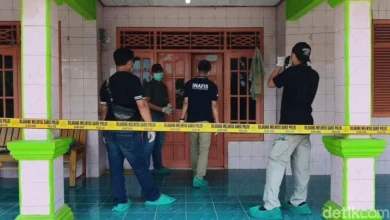
The backdrop to Kuntadi’s appointment is the unprecedented situation involving his predecessor, Febrie Adriansyah, who has been named a suspect in a corruption case. While specific details of Febrie Adriansyah’s alleged involvement in corruption have not been extensively elaborated in public statements, the mere fact that a sitting Jampidsus, the nation’s top anti-corruption prosecutor, faces such allegations is a profound blow to the institutional credibility of the AGO. This situation naturally sparks intense public scrutiny and calls for absolute transparency and thoroughness in the investigation.
Yusril Ihza Mahendra acknowledged the public’s understandable desire for a complete and fair resolution to Febrie’s case. "And [Kuntadi] must know that the main task of the Jampidsus now is to resolve the case of Mr. Febrie, who is also a former Jampidsus. And we hope that the Attorney General’s Office will work on track, in accordance with the hopes of all of us, so that the law is enforced fairly and there is legal certainty," Yusril stated. This highlights the delicate and challenging mandate Kuntadi inherits: not only to continue the fight against corruption but also to oversee an investigation that critically examines the actions of his immediate predecessor, thereby demonstrating the AGO’s commitment to internal accountability. The perceived ability of the AGO to investigate one of its own without bias will be a crucial test for the institution’s integrity.
Presidential Decree and the Appointment Process
The formalization of Kuntadi’s appointment followed a rigorous administrative and evaluative process, culminating in a Presidential Decree (Keppres). According to State Secretary Prasetyo Hadi, President Prabowo signed the Keppres based on recommendations from the Attorney General and the Final Assessment Team (TPA). The TPA is a high-level body responsible for evaluating candidates for senior positions within the government, ensuring that only individuals meeting stringent criteria of competence, experience, and integrity are considered for critical roles.
"Regarding the presidential decree in accordance with the proposal from the Attorney General concerning officials within the Attorney General’s Office, we can inform that yesterday Mr. President signed the presidential decree in accordance with the assessment of the Final Assessment Team, as referred to in the Attorney General’s letter of proposal," Prasetyo Hadi explained at the Presidential Palace complex. He further added that the official copy of the Keppres confirming Kuntadi’s appointment would be submitted to the AGO on Wednesday, July 22, facilitating the swift transition of leadership. This procedural clarity aims to instill confidence in the legitimacy and transparency of the appointment process, particularly given the sensitive nature of the Jampidsus role. The involvement of the TPA underscores the multi-layered scrutiny applied to such crucial appointments, ensuring alignment with presidential directives and national strategic goals.
Official Endorsements and Public Expectations
The endorsement from key cabinet members like Yusril Ihza Mahendra is significant, offering an official stamp of approval and signaling the government’s collective support for Kuntadi. Such endorsements are crucial in galvanizing support for the new Jampidsus, both within the bureaucracy and among the public. Yusril’s emphasis on the need for the AGO to work "on track" reflects a broader expectation for consistency, fairness, and a robust application of the law without fear or favor.
Beyond official statements, public expectations for Kuntadi are undeniably high. Indonesian civil society organizations and anti-corruption watchdogs will be closely monitoring his performance, particularly regarding high-profile cases and the handling of his predecessor’s alleged transgressions. The public yearns for a justice system that is truly independent and effective, capable of prosecuting corruption at all levels, irrespective of the perpetrator’s position or influence. Kuntadi’s initial actions and strategic priorities will be scrutinized as indicators of his commitment to these ideals. His challenge will be to not only maintain but also to elevate the public’s trust in the AGO, demonstrating that the institution is capable of self-correction and relentless in its pursuit of justice.
Kuntadi’s Task: Restoring Trust and Upholding Justice
Kuntadi assumes the Jampidsus role at a moment of both intense scrutiny and immense opportunity. His primary task will be multifaceted: to vigorously pursue ongoing corruption investigations, initiate new ones where warranted, and, crucially, to restore any trust potentially eroded by his predecessor’s situation. This involves ensuring that the investigation into Febrie Adriansyah is conducted with utmost integrity, transparency, and impartiality, demonstrating that no one is above the law, especially those tasked with enforcing it.
The new Jampidsus will also face pressure to deliver tangible results in the fight against grand corruption, which continues to plague various sectors of the Indonesian economy and governance. This includes tackling cases involving state-owned enterprises, infrastructure projects, and natural resource exploitation, which often entail complex financial trails and powerful vested interests. Success in these areas would not only fulfill the AGO’s mandate but also bolster President Prabowo’s broader agenda of clean governance and economic development. Kuntadi’s leadership will require a steady hand, strategic foresight, and the ability to inspire confidence within his team of prosecutors and investigators. His track record and approach to managing complex cases will be defining factors in his tenure.
Broader Implications for Indonesia’s Anti-Corruption Landscape
The change in Jampidsus has broader implications for Indonesia’s anti-corruption landscape. It signifies the ongoing, dynamic nature of the fight against corruption and the continuous need for vigilance, even within institutions designed to combat it. The episode involving Febrie Adriansyah serves as a stark reminder that even high-ranking officials in anti-corruption roles are not immune to temptation or allegations, underscoring the systemic challenges that persist.
Kuntadi’s appointment, therefore, is not merely about replacing an individual but about reinforcing the structural integrity and operational effectiveness of the AGO. It presents an opportunity to review and strengthen internal control mechanisms, ethical guidelines, and accountability frameworks within the institution. Furthermore, the handling of Febrie’s case will set a precedent for how future allegations against senior law enforcement officials are managed, potentially shaping public perception and institutional culture for years to come. This incident could serve as a catalyst for deeper reforms and a renewed commitment to ethical conduct across all levels of government and law enforcement. The international community, often a keen observer of Indonesia’s governance reforms, will also be watching closely, as robust anti-corruption efforts are often linked to foreign investment confidence and international partnerships.
Institutional Integrity and Public Trust
Maintaining institutional integrity and public trust is paramount for the Attorney General’s Office to effectively carry out its mission. When a senior official like the Jampidsus becomes a corruption suspect, it inevitably raises concerns about the institution’s overall credibility and its capacity to act as an impartial guardian of justice. Kuntadi’s arrival offers a chance for the AGO to proactively address these concerns.
By demonstrating a firm commitment to internal accountability and by pursuing all corruption cases, including those involving former colleagues, with unwavering resolve, the new Jampidsus can work towards rebuilding and strengthening public confidence. This involves not only securing convictions but also ensuring transparent processes, adherence to due process, and clear communication with the public. In a democratic society, the legitimacy of law enforcement agencies rests heavily on the public’s belief in their fairness and integrity. Kuntadi’s tenure will thus be a crucial test of the AGO’s ability to self-correct and uphold the highest ethical standards, reaffirming its vital role in Indonesia’s democratic governance.
The Road Ahead
As Kuntadi steps into his challenging new role, the road ahead is fraught with both obstacles and opportunities. He will be expected to provide strong leadership, inspire his team, and navigate the complex political and legal terrains that often characterize high-profile corruption cases in Indonesia. His success will not only be measured by the number of cases brought to justice but also by his ability to foster a culture of integrity within the Jampidsus division and to contribute to a broader environment of accountability across the nation.
The appointment on July 22, 2026, marks a new chapter for the Attorney General’s Office and Indonesia’s ongoing fight against corruption. With President Prabowo Subianto’s clear endorsement and the high expectations from the public and legal community, Kuntadi faces an immense responsibility. His performance in the coming months will be instrumental in shaping the trajectory of anti-corruption efforts and in reinforcing the bedrock principles of justice and rule of law in Indonesia. The nation watches as the new Jampidsus begins his critical mandate to clean up corruption, both externally and, perhaps most importantly, internally.