Pedro Acosta to Challenge Marc Marquez Directly Inside Ducati Lenovo Garage in 2027 as KTM Crew Chief Warns of Historic Intra-Team Rivalry

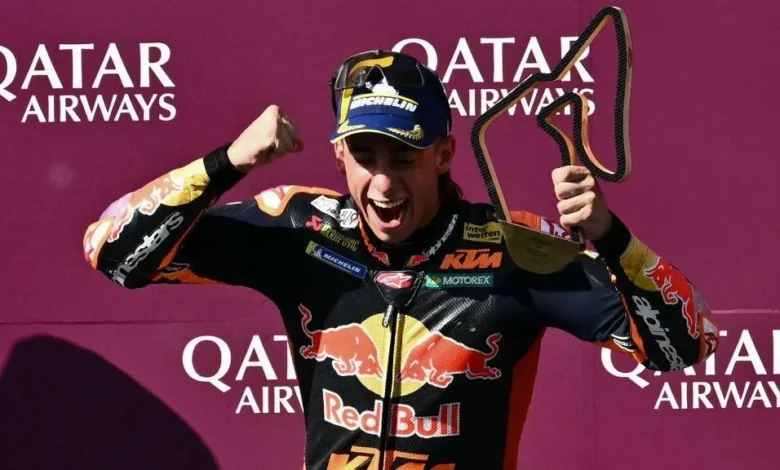
The landscape of premier-class motorcycle racing is bracing for a seismic shift as young Spanish sensation Pedro Acosta prepares to transition to the factory Ducati Lenovo team, where he will share a garage with eight-time world champion Marc Marquez. According to Paul Trevathan, the seasoned Crew Chief at KTM, this impending partnership will present Marquez with a distinct and unprecedented challenge that could redefine the internal dynamics of the dominant Italian manufacturer. Trevathan’s insights, shared in the wake of Acosta’s emotional maiden victory in the premier class at the Austrian Grand Prix, underscore the magnitude of what many analysts are already calling the most anticipated teammate pairing in modern MotoGP history.
The stakes of the 2027 MotoGP season were brought into sharp relief at the Red Bull Ring in Spielberg, where Acosta finally converted his immense potential into a Grand Prix victory. Having accumulated 15 podium finishes without standing on the top step since his debut in 2024, the young prodigy delivered a masterclass on home soil for the Austrian manufacturer. This breakthrough triumph serves as the ultimate punctuation mark on Acosta’s tenure with KTM, a journey defined by rapid development, occasional mechanical hurdles, and an unwavering tenacity that has rattled the established hierarchy of the paddock. As he packs his bags for Bologna, the racing world is left to ponder how the veteran craftiness of Marquez will cope with the relentless, unyielding pressure applied by a teammate possessing the unique competitive DNA of Acosta.
Intra-Team Warfare: A New Frontier for Marc Marquez
Marc Marquez has long mastered the art of psychological warfare within a Grand Prix garage. Throughout his illustrious career, the Catalan champion has consistently managed to establish dominance over his teammates, shaping the team environment around his feedback and riding style while subtly eroding the confidence of those sharing pit space with him. However, Trevathan argues that the arrival of Acosta will introduce a variable that Marquez has never previously encountered in his storied career.
"This is a massive challenge," Trevathan remarked during an extensive technical debroadcast with TNT Sports following the Austrian Grand Prix. "The competition has already begun inside the garage. Marc is a master at influencing the mindset of his teammate and understanding how to rally the team around him. But he has never had a character like Acosta right beside him."
Trevathan, who has worked intimately with Acosta since the rider’s much-anticipated premier-class debut, describes the young Spaniard as a competitor utterly devoid of conventional fear or psychological deference. Unlike riders who measure themselves cautiously against a living legend, Acosta’s approach is characterized by absolute single-mindedness. He does not obsess over the politics of winning or losing; instead, he relentlessly extracts maximum performance from every machine placed beneath him, treating every session as an uncompromising battle.
"Marc is an incredible champion, a great rider, and I certainly don’t underestimate his abilities," Trevathan continued. "However, as I said, I don’t believe he has ever had a figure with a character as strong—or a ‘monster’ in the competitive sense—as Pedro Acosta by his side. Believe me, this is going to be exceptionally thrilling to watch for the fans."
The Chronology of a Prodigy: From Debut to Breakthrough
To understand the weight of Acosta’s impending move to Ducati, one must examine the rapid and sometimes turbulent trajectory of his professional career. Entering the MotoGP paddock in 2024 with the weight of immense expectations—often dubbed the "next Marquez"—Acosta immediately made waves by securing podium finishes in the opening rounds of the season. His adaptability on the RC16 was praised universally, yet KTM’s ongoing struggles to match the aerodynamic and chassis development pace of their European rivals frequently left Acosta fighting against machinery limitations rather than purely competing for victories.
Throughout 2024 and 2025, Acosta accumulated a formidable collection of podiums, regularly dragging a less-than-optimal KTM package into podium contention against a dominant armada of Ducati Desmosedicis. The frustration of coming so close to victory time and time again tested the patience of the young rider, yet it simultaneously forged a hardened racing intellect. Trevathan played a pivotal role in this maturation process, steering technical development and managing the psychological burden of a rider whose ambitions frequently outpaced the equipment available to him.
The culmination of this multi-year developmental arc arrived at the 2026 Austrian Grand Prix. Racing at the spiritual home of his employer, Acosta executed a flawless tactical and physical performance. Shrugging off the pressure of 15 prior podium disappointments without a win, he dominated the weekend from practice through the checkered flag. The emotional release in Parc Fermé was palpable, signaling not only a personal milestone for Acosta but also a formal announcement to the paddock that he was ready for factory-level equipment and the ultimate challenge of fighting for a world championship.
Ducati’s Strategic Gamble: Pairing Two Generations of Spanish Greatness
The decision by Ducati Lenovo to secure Acosta’s services for the 2027 season represents a masterstroke in long-term roster management, albeit one fraught with internal friction. By pairing Marquez—who remains the benchmark of modern grand prix racing—with the fastest rising star of the younger generation, Ducati has essentially insulated its future while creating a high-voltage environment within the pit box.
In recent seasons, Ducati has maintained a delicate balance within its factory structure, ensuring that internal rivalries do not boil over into counterproductive crashes or destabilized team morale. However, the introduction of Acosta fundamentally alters this dynamic. Marquez, whose career entered a renaissance following his high-profile switch to Ducati machinery, relies heavily on establishing psychological ascendancy over his garage neighbors. Against a rider like Acosta—who possesses neither intimidation nor reverence for past titles when the visor goes down—standard tactical playbooks may prove obsolete.
Industry analysts suggest that this pairing could mirror legendary intra-team battles of the past, such as Valentino Rossi versus Jorge Lorenzo at Yamaha or Ayrton Senna versus Alain Prost at McLaren. Both Marquez and Acosta share an uncompromising desire to win, and operating within identical technical specifications will eliminate any excuses regarding equipment disparity.
Technical Implications and the 2027 Regulatory Shift
The rivalry will unfold against the backdrop of significant technical upheaval in MotoGP. The 2027 season introduces a major overhaul of technical regulations, featuring reduced engine displacements, altered aerodynamic parameters, and the restriction of ride-height devices. These changes will level the playing field as all manufacturers redesign their prototypes from the ground up.
For Ducati, having two elite riders of differing riding styles and generational perspectives will be an invaluable asset during the R&D phase of the new machine. Marquez brings years of acute analytical feedback regarding tire wear, traction management, and racecraft under varied track conditions. Acosta, conversely, offers a raw, boundary-pushing approach, often riding around chassis limitations through sheer physical commitment and adaptability.
Trevathan believes that this contrast in technical feedback and riding philosophy will push the Ducati engineering department to its absolute limits. While the factory will benefit enormously from the dual-pronged data collection, the logistical and emotional management of the garage will require diplomatic finesse from team management.
Broader Impact on the MotoGP Landscape
The ripple effects of Acosta’s move to Ducati and his impending clash with Marquez extend far beyond the confines of the Borgo Panigale garage. Competitor manufacturers such as Aprilia, KTM, and Yamaha are watching these developments closely. KTM, in particular, faces the formidable task of restructuring its developmental roadmap to fill the void left by a generational talent who helped shape their premier-class program from its infancy.
Furthermore, the commercial and promotional impact on Dorna Sports and MotoGP broadcasting partners cannot be overstated. A direct, intra-team championship battle between the reigning standard-bearer of the sport and the undisputed leader of the next generation provides a compelling narrative arc that transcends traditional motorsport audiences. As global interest in MotoGP continues to expand, the narrative of Marquez defending his territory against the relentless advance of Acosta promises to be the defining storyline of the late 2020s.
As the 2026 season progresses toward its conclusion and the paddock prepares for the dawn of the 2027 regulatory era, all eyes will remain fixed on the unfolding dynamic between two of Spain’s most ferocious competitors. Whether Marquez can maintain his psychological stronghold or whether Acosta will successfully dethrone the master inside his own house remains one of the most compelling questions in contemporary sports history.