Jejak Kolonial: Menelusuri Lima Hotel Bersejarah di Indonesia yang Masih Bertahan dan Beroperasi Hingga Kini

The tourism industry in Indonesia possesses a deeply rooted history that is inextricably linked to the colonial era of the Dutch East Indies, commonly known as Hindia Belanda. Long before modern aviation transformed global mobility into a seamless experience, the archipelago served as a major maritime crossroad and a coveted destination for intrepid European travelers. The inception of Indonesia’s modern tourism sector can be reliably traced back to the mid-19th century, catalyzed by a monumental geopolitical and engineering achievement: the official opening of the Suez Canal in 1869.
This artificial sea-level waterway in Egypt dramatically shortened the maritime voyage from European ports to the East Indies, eliminating the treacherous and lengthy journey around the Cape of Good Hope. Consequently, a steady influx of commercial steamships, luxury cruise liners, and elite travelers began arriving at various ports across the Nusantara. Wealthy Western tourists, scholars, and colonial administrators disembarked in search of exotic landscapes, cultural immersion, and tropical respite. To accommodate these discerning visitors, the colonial administration, alongside private investors, embarked on a strategic campaign to construct high-end accommodations primarily across the island of Java and subsequently in Bali. These properties were designed to reflect European standards of comfort while harmonizing with tropical aesthetics. Remarkably, many of these architectural masterpieces survived the turbulent transitions of the Japanese occupation, the Indonesian National Revolution, and the modernization of the post-independence era. Today, several of these historical hotels remain fully operational, serving as living museums that offer contemporary guests a tangible connection to a bygone era.
The Evolution of Colonial Hospitality and Infrastructure
The rapid expansion of maritime trade and passenger shipping in the late 19th and early 20th centuries necessitated a sophisticated hospitality infrastructure. The pioneering hospitality ventures in the Dutch East Indies were often modeled after grand European hotels, yet they incorporated distinct architectural adaptations suited to the tropical climate, such as high ceilings, wide verandahs, and extensive ventilation systems. These establishments were not merely places of lodging; they functioned as vital social hubs for the colonial elite, expatriates, and visiting dignitaries. Business deals were brokered, political strategies were formulated, and cultural exchanges took place within their opulent dining halls and lush gardens.
As the political landscape shifted toward Indonesian independence, these properties underwent significant nationalization and rebranding processes. Many were repurposed to host pivotal international summits, accommodate heads of state, and anchor the nascent republic’s ambitions on the global tourism stage. The survival and ongoing commercial viability of these heritage hotels underscore a broader commitment to historical preservation amidst rapid urban development. Below is a comprehensive examination of five iconic heritage hotels in Indonesia that continue to operate, offering a unique blend of historical significance, architectural grandeur, and modern luxury.
1. Hotel Indonesia Kempinski Jakarta: A Monument of Independence and Diplomacy
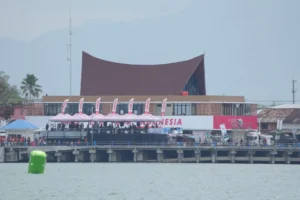
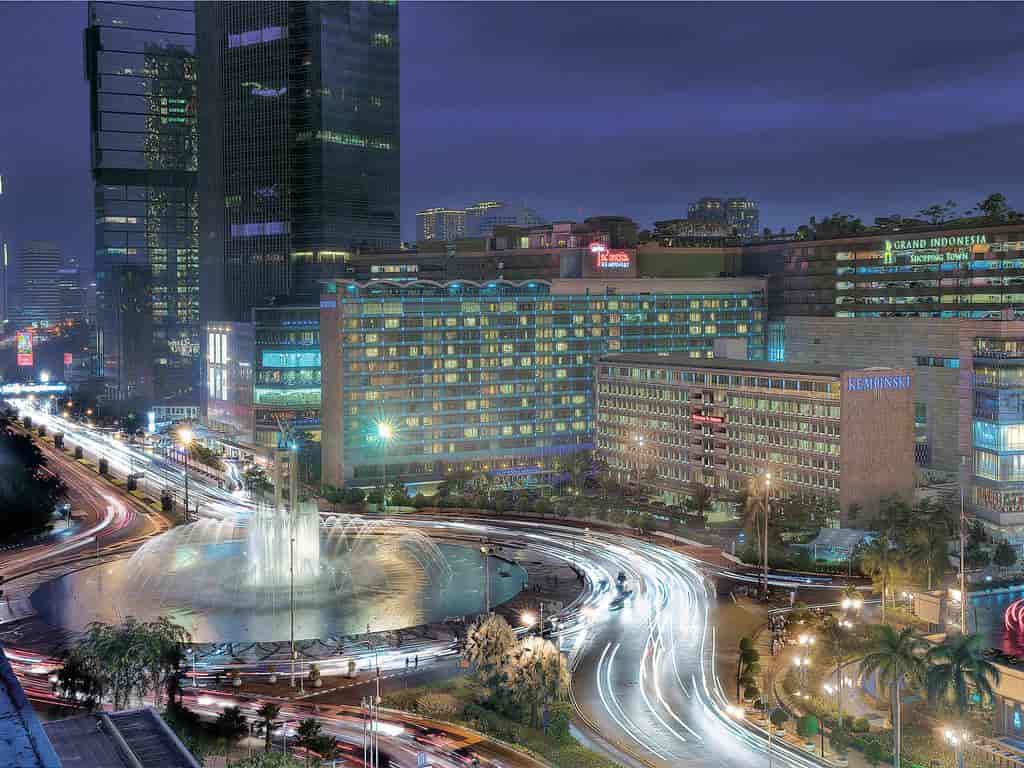
Standing proudly in the heart of the capital city, Hotel Indonesia Kempinski holds the distinction of being Indonesia’s first five-star luxury hotel and historically the tallest building in Jakarta upon its completion. The genesis of this monumental property is closely tied to the post-colonial nation-building efforts under President Sukarno. Funded largely through Japanese war reparations, the hotel was envisioned as a world-class showcase for the newly independent republic and was officially inaugurated in 1962 to accommodate athletes, delegates, and international visitors participating in the Fourth Asian Games (Asian Games IV).
President Sukarno recognized the critical need for high-end international infrastructure to project a modern, sovereign image of Indonesia to the world. Hotel Indonesia was designed by the prominent American architect Abel Sorenson, incorporating modernist architectural principles while subtly integrating Indonesian artistic motifs. Over the decades, the hotel has hosted numerous world leaders, diplomats, and cultural icons. A notable testament to its enduring diplomatic and historical prestige occurred in 2020, when King Willem-Alexander and Queen Máxima of the Netherlands chose the hotel as their official residence during their historic state visit to Indonesia. The royal couple stayed in the presidential suite, which was specially retrofitted with reinforced bulletproof glass to meet stringent international security protocols.
Operating under the management of the prestigious Kempinski brand today, the property seamlessly bridges its storied past with contemporary ultra-luxury. Room rates generally fluctuate starting from approximately Rp 2,98 million per night, depending on seasonal demand, room category, and booking timing. The hotel’s enduring presence on the iconic Bundaran HI (Hotel Indonesia Roundabout) serves as an urban anchor, witnessing the socio-political evolution of Jakarta from a post-colonial capital into a bustling global metropolis.
2. Hotel Majapahit Surabaya: The Crucible of National Resolve
Located in the vital port city of Surabaya, Hotel Majapahit stands as an architectural and historical landmark intrinsically linked to the fierce struggle for Indonesian independence. Originally established in 1910 by the Sarkies Brothers—a prominent family of Armenian hoteliers renowned for developing luxury properties across Southeast Asia—the hotel initially operated under the name Hotel Oranje during the late Dutch colonial period.
The property gained monumental historical significance during the Japanese occupation, when it was forcibly repurposed and renamed Hotel Yamato. However, its most defining moment occurred on October 19, 1945, in the immediate aftermath of the proclamation of Indonesian independence. Following the failure of negotiations between the regional Indonesian leadership and the Dutch representative W.V.Ch. Ploegman regarding the status of sovereignty, tensions boiled over. A group of resolute Indonesian youths scaled the roof of the hotel and famously tore the blue stripe off the Dutch tricolor flag (red-white-blue), transforming it into the red and white Indonesian national flag (Sang Saka Merah Putih). This bold act of defiance became a powerful catalyst for the historic Battle of Surabaya on November 10, 1945, a defining engagement in the Indonesian National Revolution.
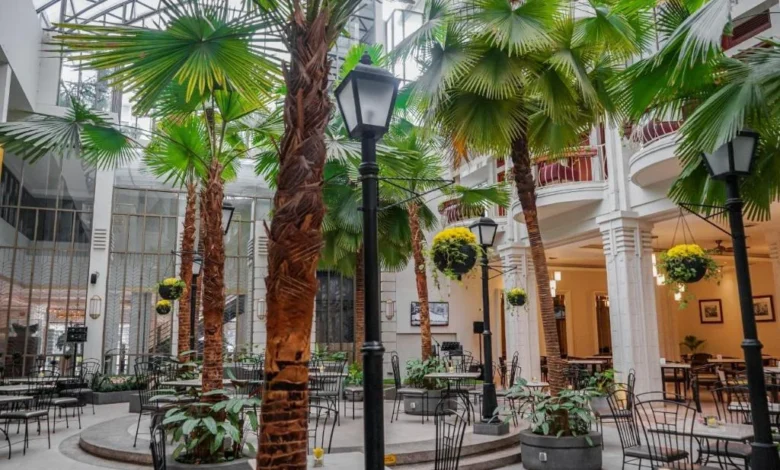
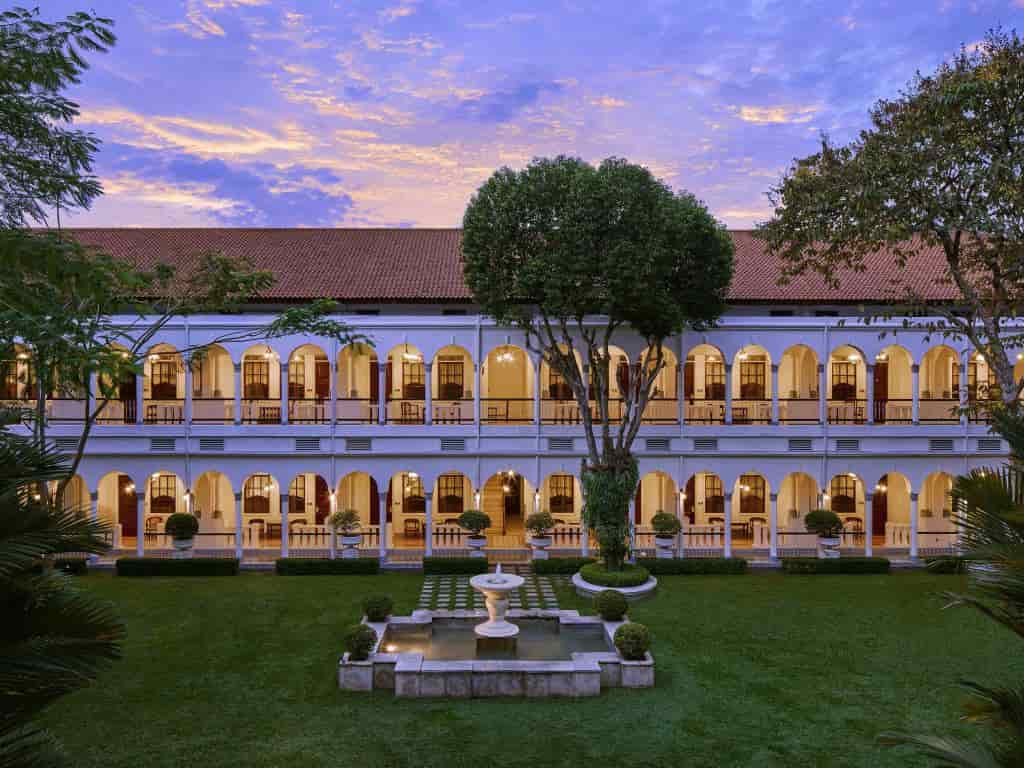
Now operating under global hospitality management and designated as a protected cultural heritage site, Hotel Majapahit retains its distinct colonial-era architecture, characterized by expansive courtyards, classic pillars, and refined art deco elements. Guests seeking to immerse themselves in this rich historical narrative can secure accommodations starting from approximately Rp 985.125 per night. The hotel offers a rare opportunity to walk the very corridors where pivotal decisions shaped the destiny of the Indonesian archipelago.
3. Royal Ambarrukmo Yogyakarta: A Royal Sanctuary of Javanese Heritage
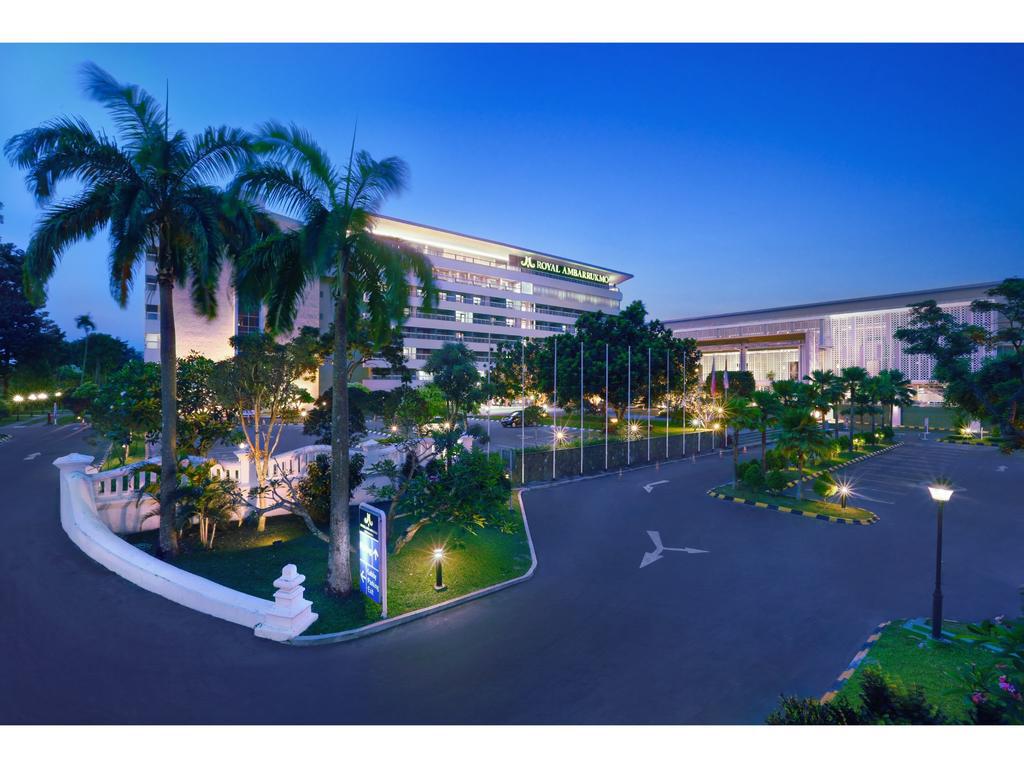
Situated along Jalan Laksda Adisucipto in Yogyakarta, Royal Ambarrukmo occupies a unique position within Indonesia’s hospitality landscape, bridging royal Javanese tradition with modern luxury. The origins of the site date back to the 19th century as part of the Kedhaton Ambarrukmo, a royal palace complex commissioned by Sultan Hamengku Buwono V and later extensively utilized by Sultan Hamengku Buwono VII as a royal retreat and administrative residence.
In the mid-20th century, as part of President Sukarno’s visionary nation-wide tourism initiative, the historic compound was selected for transformation into a world-class hotel. In 1966, Royal Ambarrukmo was officially inaugurated as one of the first four international-standard luxury hotels in the country, explicitly promoted by Sukarno to attract global travelers to the cultural heartland of Java. The integration of the original royal Loji (colonial-style administrative building) and the Bale Kambang (floating pavilion) within the modern hotel grounds preserves an authentic connection to the royal court of Mataram.
As a contemporary five-star establishment, Royal Ambarrukmo provides guests with world-class amenities—including professional golf access, extensive recreational facilities, and sophisticated poolside lounges—while maintaining strict adherence to traditional Javanese hospitality standards (Tamu Agung). Room rates for this cultural landmark begin at approximately Rp 911.250 per night. The property serves as an academic and cultural nexus, allowing visitors to experience firsthand the living traditions of the Yogyakarta Sultanate while enjoying top-tier modern comforts.
4. Hotel Savoy Homann Bandung: An Art Deco Masterpiece and Global Retreat
Positioned strategically along the historic Jalan Asia-Afrika in Bandung—a city historically celebrated as the "Paris of Java"—Hotel Savoy Homann represents a pinnacle of pre-WWII architectural innovation and international prestige. The enterprise began modestly in the late 19th century as a modest family-run lodging established by the Homann family, who gained widespread renown among colonial elites for serving elaborate Dutch-Indonesian culinary spreads, particularly the traditional rijsttafel prepared by Mrs. Homann.
As Bandung evolved into a fashionable hub for European planters and intellectuals, the original structure was entirely demolished to make way for a bold architectural redesign. In 1939, the renowned Dutch architect Albert Aalbers was commissioned to redesign the property. Aalbers infused the building with a striking streamline moderne and art deco style, characterized by sweeping, wave-like curves meant to evoke the movement of ocean liners. Rebranded as Hotel Savoy Homann in 1940, the hotel quickly established itself as the premier luxury destination in the priangan highlands.
The global renown of Hotel Savoy Homann is further underscored by its illustrious guest registry, which includes international luminaries such as the legendary silent film actor Charlie Chaplin, who famously stayed at the hotel during his Southeast Asian tours in the 1930s. Furthermore, during the historic Asian-African Conference held in Bandung in 1955, the hotel served as a primary residence for participating international delegates and heads of state. Today, travelers can experience this living monument to international diplomacy and design heritage with room rates starting from approximately Rp 390.880 per night, making historical luxury remarkably accessible.
5. Inna Bali Heritage Hotel: Pioneering Hospitality in the Island of the Gods
Marking the expansion of colonial-era tourism beyond the island of Java, Inna Bali Heritage Hotel stands as the first luxury accommodation established on the island of Bali. Opened on August 22, 1927, the hotel was built to accommodate the burgeoning wave of foreign tourists who began arriving on the island via the luxury steamships operated by the Royal Packet Navigation Company (Koninklijke Paketvaart-Maatschappij or KPM).
Located in the heart of Denpasar, the hotel was envisioned by the colonial administration to provide a comfortable base for Western artists, anthropologists, and travelers who were increasingly captivated by Balinese arts, spirituality, and culture. Throughout the late 1920s and 1930s, the hotel hosted numerous notable painters, writers, and scholars who played a pivotal role in introducing traditional Balinese culture to the global stage.
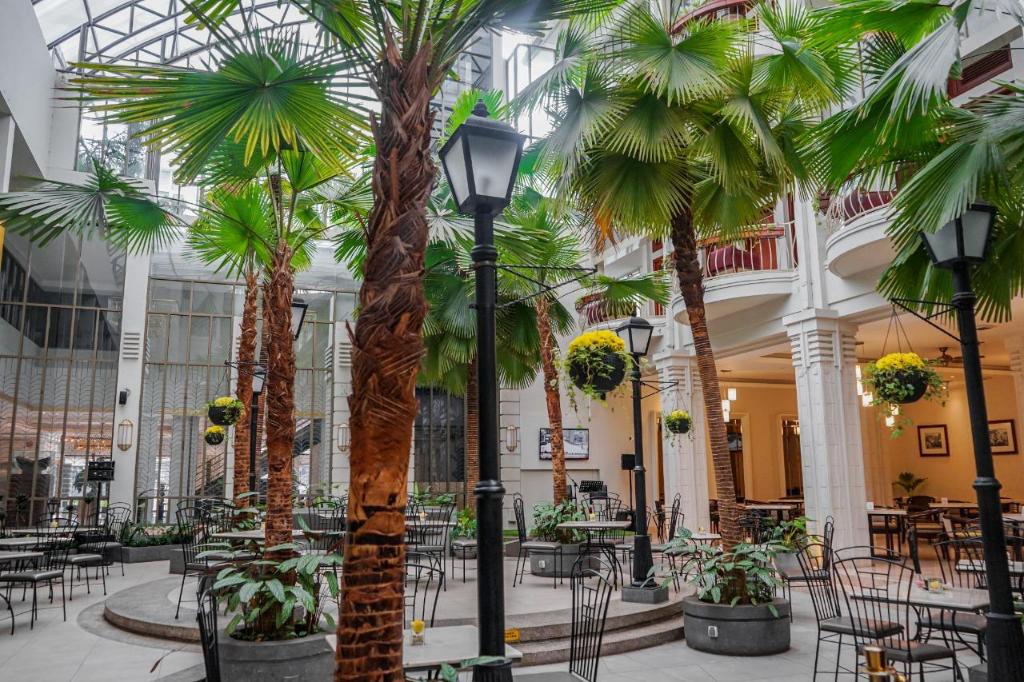
Operating today as a charming three-star heritage property, Inna Bali maintains its classic colonial architectural layout, featuring tropical gardens, an open-air restaurant, historic courtyards, and a central swimming pool. Despite decades of rapid modernization and massive resort developments across the island, this pioneering property preserves an intimate, old-world atmosphere. Travelers can experience this foundational piece of Balinese tourism history with nightly rates starting from approximately Rp 270.000.
Economic Implications and Preservation Challenges
The ongoing operation of these five historical hotels carries profound economic, cultural, and structural implications for Indonesia’s contemporary tourism sector. From an economic perspective, these heritage assets diversify the national hospitality portfolio, attracting a specialized demographic of cultural tourists, history enthusiasts, and architectural researchers who prioritize authenticity and historical narrative over generic modern resort experiences. This niche tourism generates sustained local employment, stimulates heritage conservation funding, and distributes economic benefits beyond conventional mass-tourism centers like Bali and urban Jakarta.
However, operating century-old properties presents significant operational and financial challenges. Structural maintenance must balance strict historical preservation mandates—often overseen by municipal cultural heritage boards—with modern guest expectations for high-speed digital infrastructure, energy efficiency, and advanced safety standards. Furthermore, room pricing dynamics remain highly sensitive to broader macroeconomic indicators, including seasonal tourism fluctuations, national inflation rates, regional tax policy adjustments, and shifts in international travel demand. Generally, booking during the low season yields significantly reduced rates, though industry analysts advise consumers to verify all final taxes and fees prior to confirmation.
Ultimately, these colonial-era hotels transcend their commercial functions as mere places of lodging. They serve as resilient architectural archives that narrate the complex, multi-layered history of Indonesia—from the height of the colonial enterprise and the crucible of the national revolution to the triumphant establishment of an independent republic. Preserving these institutions ensures that future generations of domestic and international travelers can continue to engage directly with the physical spaces where modern Indonesian history was written.