The Indonesian military establishment and the nation as a whole entered a period of profound mourning following the passing of Admiral (Ret.) Widodo Adi Sutjipto (AS), one of the most prominent military figures in modern Indonesian history and the first-ever Commander of the Indonesian National Armed Forces (TNI) to hail from the naval branch. Admiral Widodo passed away on Saturday, leaving behind a monumental legacy defined by steadfast loyalty to the state, leadership during times of severe national turbulence, and an unwavering commitment to institutional reform. His journey from a young Naval Academy graduate to a cornerstone of national defense and governance stands as a testament to a life dedicated entirely to public service.
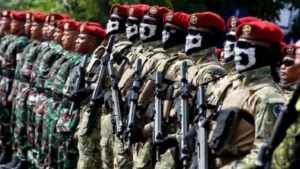
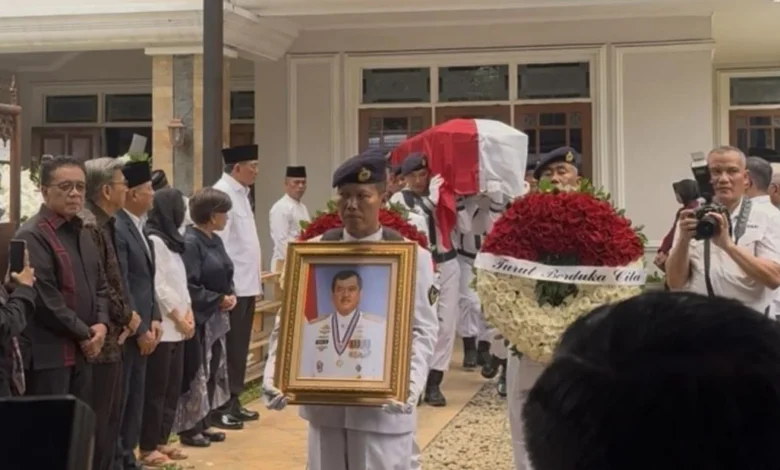
A solemn and deeply respectful military funeral was held on Sunday, October 25, 2026, at the Kalibata Kalibata Heroes Cemetery in South Jakarta. The ceremony drew a large gathering of high-ranking state officials, military leaders, and prominent political figures who came to pay their final respects. Among the notable attendees were the 6th President of the Republic of Indonesia, Susilo Bambang Yudhoyono (SBY), Minister of Coordinating Politics and Security Dudung Abdurachman, Minister of Defense Sjafrie Sjamsoeddin, and Chief of the Indonesian National Police General Suyudi Ario Seto. The procession was led by TNI Commander General Agus Subiyanto, who presided over the final military honors, reflecting the immense respect the institution held for the late admiral.
The chronological trajectory of Admiral Widodo’s career is deeply intertwined with the modern history of Indonesia, particularly the turbulent transition from the New Order to the Reform Era. Born into a tradition of service, Widodo graduated from the Naval Academy (AAL) in 1968. Over the subsequent decades, he steadily climbed through the ranks of the Indonesian Navy (TNI AL), holding numerous strategic operational and administrative positions that honed his leadership capabilities. His steady rise within the naval hierarchy prepared him for the monumental responsibilities that would face the nation at the close of the twentieth century.
A pivotal turning point in his career occurred on June 26, 1998, when he was appointed as the Chief of Staff of the Indonesian Navy (KSAL), serving until July 17, 1999. This period coincided with the immediate aftermath of the 1998 financial crisis and the fall of President Suharto, a time when the entire military architecture of Indonesia was forced to reevaluate its socio-political role and operational focus. Recognizing his leadership acumen and capacity for maintaining institutional stability, President B.J. Habibie promoted Widodo to the position of Deputy Commander of the Armed Forces (ABRI) in 1999.
Shortly thereafter, in October 1999, President Abdurrahman Wahid (Gus Dur) appointed Admiral Widodo as the Commander of the TNI, a position he held until June 2002. His appointment marked a historic milestone: for the first time, the highest military office in the republic was entrusted to an officer from the Navy, breaking decades of Army dominance in the top military post. Leading the armed forces during a fragile democratic transition required delicate balancing acts, as the military stepped back from active domestic politics while simultaneously managing regional conflicts and internal restructuring. Widodo’s calm demeanor and strategic vision were widely credited with guiding the TNI safely through these choppy political waters.

Retirement from active military service did not mark the end of Widodo’s contributions to the Indonesian state. In October 2004, newly elected President Susilo Bambang Yudhoyono appointed him as the Coordinating Minister for Political, Legal, and Security Affairs (Menko Polhukam), a critical cabinet post he held for a full five-year term until October 20, 2009. In this role, Widodo oversaw national security policies, counter-terrorism initiatives, and domestic stability measures during a formative decade of Indonesian democracy. Following his tenure as coordinating minister, he continued to serve the state as a member of the Presidential Advisory Board (Wantimpres) during SBY’s second presidential term, from 2009 to 2014, providing invaluable counsel on defense and security matters.
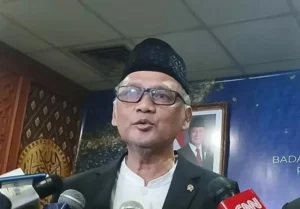
During the memorial and funeral proceedings, numerous leaders shared deep personal and professional recollections of the late admiral, highlighting his multifaceted contributions to national unity and defense strategy. Minister of Defense Sjafrie Sjamsoeddin emotionally recalled Widodo’s pivotal role as a unifying force during the fragile early years of the Reform Era. Sjafrie noted that Widodo actively traveled to various regional commands to rally the three military services—the Army, Navy, and Air Force—ensuring institutional cohesion at a time when external pressures threatened to fracture the armed forces.
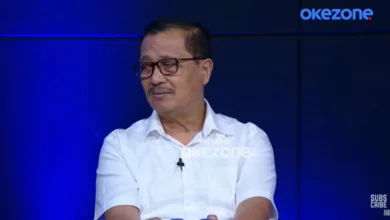
Furthermore, Sjafrie shed light on Widodo’s distinct leadership style, which favored collaboration and collective intellectual engagement over autocratic decision-making. Remembering his time working as a Special Staff Expert to the Panglima TNI under Widodo’s command, Sjafrie highlighted the concept of "pikir bareng" (thinking together). Instead of formulating defense strategies in isolation, Widodo consistently convened his staff to deliberate, debate, and synthesize comprehensive policies. Sjafrie also underscored the deep psychological and professional rapport Widodo shared with former Defense Minister and current President Prabowo Subyanto, noting that their collaborative efforts laid critical foundations for modernizing Indonesia’s defense capabilities.
Former President Susilo Bambang Yudhoyono, who shared a professional partnership with Widodo spanning more than a decade across various administrations, praised the late admiral as a quintessential soldier-statesman. Speaking after the funeral service, SBY emphasized that Widodo’s dedication to the Constitution and the national flag was absolute and uncompromising. SBY noted that navigating the crises of 1998 and the subsequent decade required leaders of exceptional moral fiber, and Widodo consistently demonstrated tireless energy and a single-minded devotion to the public good.
TNI Commander General Agus Subiyanto echoed these sentiments, reflecting on how Widodo served as a professional role model for generations of military officers. Recalling that he held the rank of captain to major during Widodo’s tenure as Panglima TNI, General Subiyanto noted that the admiral’s exemplary conduct and strategic brilliance provided a lasting template for modern military professionalism. The formal placement of floral tributes, the reading of traditional prayers, and the final salute at Kalibata marked the closure of a physical chapter, but the institutional impact of Admiral Widodo remains deeply embedded within the DNA of the Indonesian Armed Forces.
The passing of Laksamana (Purn) Widodo AS carries significant implications for contemporary Indonesia, serving as a poignant reminder of the generation of military leaders who successfully navigated the nation away from authoritarianism while preserving the integrity of the state. As modern security challenges evolve in the 21st century, the foundational principles championed by Widodo—inter-service unity, strict adherence to constitutional governance, and collaborative strategic planning—continue to guide the leadership of the TNI and the Ministry of Defense. His legacy endures not merely through the historical milestones he achieved, but through the enduring stability and professionalism of the institutions he helped shape during Indonesia’s most critical hours of transformation.