Honda Set to Revive the Iconic Motra Mini-Bike with Modern Dual-Powertrain Patent Filings

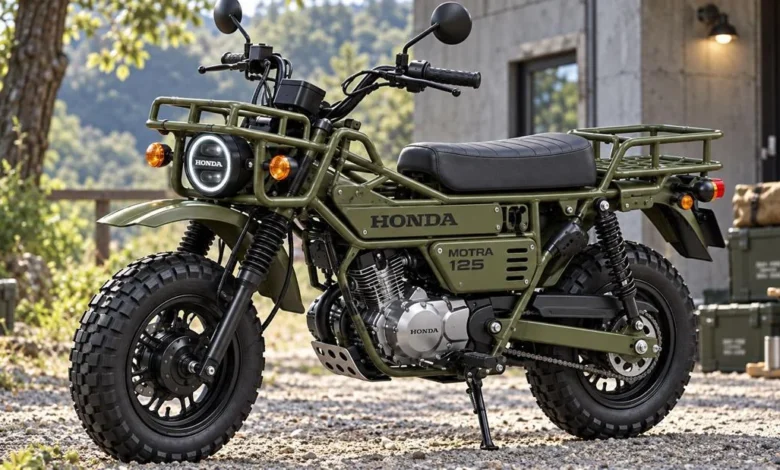
Honda Motor Co. is reportedly preparing to breathe new life into one of its most eccentric and beloved historical two-wheelers: the Honda Motra. Originally introduced to the Japanese domestic market in 1982, the utilitarian mini-bike has long held a cult status among motorcycle enthusiasts, collectors, and camping aficionados due to its rugged, industrial design and exceptional cargo-hauling capabilities. Recent intellectual property filings have surfaced, indicating that the Japanese manufacturing giant is developing a modern reincarnation of the classic machine. More intriguingly, the new patent documentation suggests that this upcoming iteration is being engineered to support both traditional internal combustion engines (ICE) and cutting-edge battery-electric propulsion systems on a single, highly adaptable vehicle platform.
The discovery of these patent illustrations has sent ripples of excitement through the global motorcycle community. For decades, small-displacement fun bikes produced by Honda—such as the Monkey, the Dax, and the Super Cub-derived Trail series—have enjoyed immense commercial success and passionate global followings. However, the Motra always occupied a uniquely utilitarian niche. Unlike its leisure-focused siblings, the original Motra was built with a strict emphasis on heavy-duty functionality. Now, as consumer demand for retro-styled modern classics continues to surge, Honda appears poised to capitalize on this nostalgia while simultaneously future-proofing the vehicle’s architecture to align with global automotive electrification trends.

The Legacy of the 1982 Honda Motra: A Masterclass in Industrial Utility
To understand the significance of Honda’s recent patent filings, one must look back at the origins of the Motra. Launched during an era of bold experimentation in Japanese industrial design, the Motra was conceived as a compact, heavy-duty packhorse designed for urban commuters, farmers, and outdoor adventurers who required reliable transport over short distances, often across rough terrain.
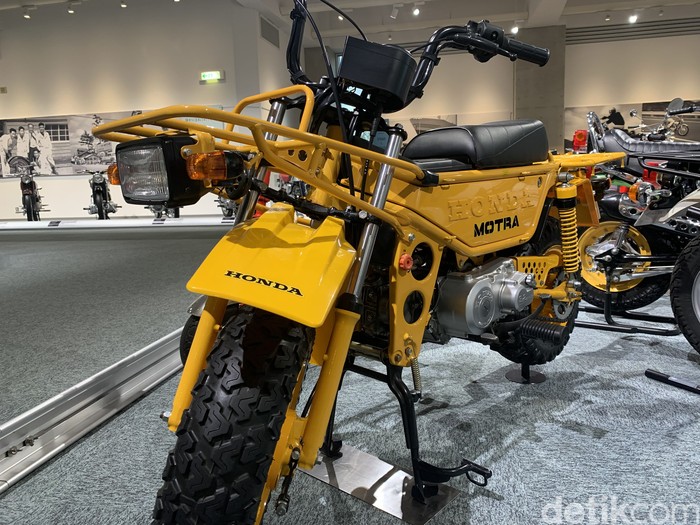
At the heart of the original Motra’s appeal was its unmistakable aesthetic. The motorcycle featured an exposed, heavy-duty steel tube frame that gave it a distinctly boxy, industrial appearance. Unlike standard step-through underbone motorcycles, the Motra was equipped with oversized, aggressive block-pattern tires, prominent front and rear cargo racks designed to bear substantial loads, and a dual-range transmission. The original machine was powered by a modest 50cc, four-stroke, single-cylinder engine mated to a three-speed centrifugal clutch transmission, paired with a sub-transmission that allowed riders to select between low-range crawling power for steep inclines and high-range cruising speeds.
Despite its innovative design and robust capabilities, the Motra’s production run was surprisingly short-lived. Manufacturing constraints, shifting market preferences, and a niche appeal resulted in a limited lifespan during the early 1980s. Consequently, original units remaining in good condition have become prized collector’s items, frequently commanding high prices at auctions and drawing massive crowds whenever displayed at heritage events, such as those held at the Honda Collection Hall in Motegi, Japan.
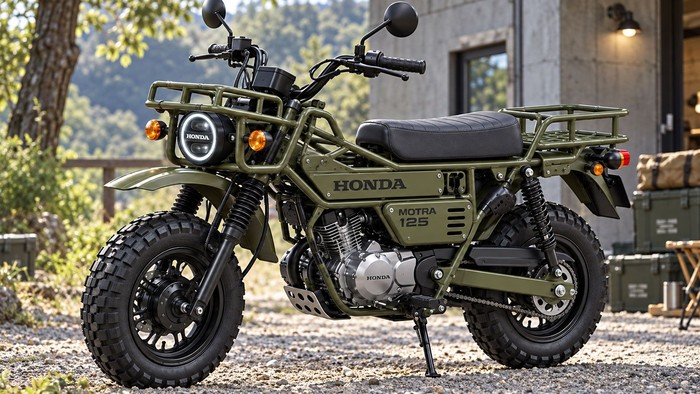
Analyzing the New Patent Filings: Design Continuity Meets Technological Flexibility
The resurgence of the Motra nameplate began as whispered rumors among automotive journalists before gaining substantial credibility with the discovery of official patent documents. These diagrams reveal a vehicle that stays remarkably faithful to the core silhouette of the 1982 classic while incorporating modern engineering solutions.
The patented frame retains the signature boxy geometry, low-slung stance, and prominent structural framing designed to support extensive front and rear luggage racks. This layout promises to retain the maximum functional versatility that made the original model famous. Whether utilized for urban grocery runs, off-grid camping trips, or light commercial delivery work in densely populated Asian megacities, the proportions of the upcoming machine appear optimized for practicality.
However, the most significant revelation within the patent documentation lies beneath the chassis. The newly developed architecture has been specifically engineered to accommodate dual powertrain options. Engineers at Honda have designed a flexible platform capable of housing either a compact, clean-burning internal combustion engine—likely derived from the brand’s current lineup of fuel-efficient small-displacement engines—or an electric motor powered by a modular battery pack.
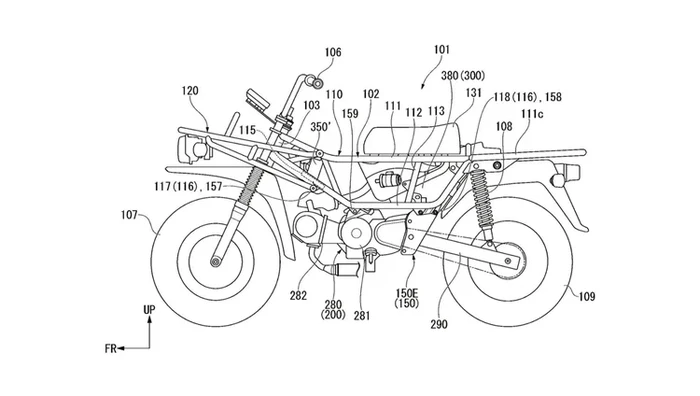
This dual-pathway approach reflects a pragmatic corporate strategy. While major motorcycle manufacturers face increasing regulatory pressure to transition toward zero-emission electric mobility, global infrastructure readiness varies wildly. By creating a unified platform that can seamlessly transition between a petrol engine and an electric motor, Honda can cater simultaneously to markets demanding eco-friendly urban transport and regions where traditional combustion engines remain more practical due to refueling logistics and cost considerations.
Strategic Implications of Honda’s Small-Displacement Electrification Strategy
The decision to potentially resurrect the Motra as both a gas-powered and electric mini-bike highlights a broader shift in how legacy manufacturers approach retro vehicle revivals. Over the past decade, Honda has successfully re-introduced several heritage models to the global market, most notably the modern Honda Monkey 125, the Super Cub C125, and the CT125 Hunter Cub. These machines have proven that modern consumers are willing to pay a premium for nostalgic design paired with modern reliability, electronic fuel injection, and safety features such as ABS.
Applying this successful playbook to the Motra represents a logical next step, but the inclusion of an electric variant introduces an entirely new dimension. Small-displacement electric motorcycles and scooters have seen exponential growth, particularly in urban environments across Asia and Europe, where riders prioritize low operating costs, silent operation, and zero tailpipe emissions. A compact electric utility bike bearing the iconic Honda badge could find a massive ready-made market among delivery services, last-mile logistics companies, and urban commuters seeking an alternative to traditional scooters.
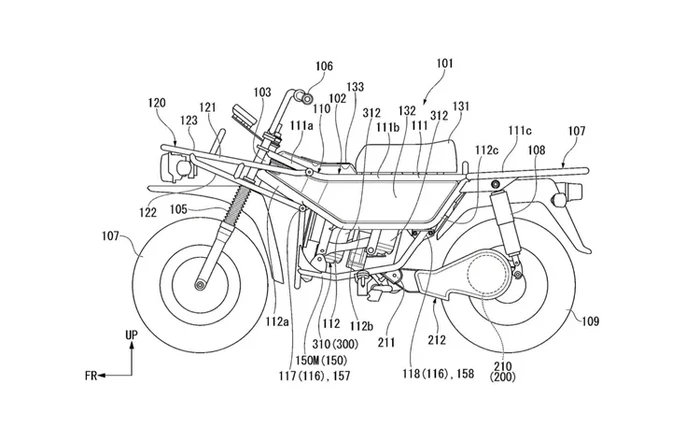
Furthermore, utilizing a shared platform for both internal combustion and electric powertrains offers profound manufacturing and economic advantages. By standardizing the structural framework, suspension geometry, and body panels across both versions, Honda can significantly reduce research, development, and tooling costs. This modularity ensures that production lines can quickly scale up or down to meet fluctuating market demands for either electric or petrol-powered variants without requiring entirely separate manufacturing ecosystems.
Industry Reaction and Future Outlook
While Honda has not yet issued an official, formal press release confirming the production timeline of the new Motra, industry analysts and automotive insiders view the publication of these detailed patent applications as a strong indicator that a concept vehicle or pre-production prototype could debut in the near future. Major international motorcycle exhibitions, such as EICMA in Milan or the Japan Mobility Show, are frequently utilized by manufacturers to gauge public interest through concept reveals.
If the Motra successfully transitions from patent blueprints to showroom floors, it is expected to carve out a distinct identity separate from the existing lifestyle mini-bikes in Honda’s lineup. While models like the Monkey emphasize playful leisure and the CT125 focuses on recreational trail riding, the revived Motra is positioned to reclaim its crown as the ultimate heavy-duty, multi-purpose micro-transporter.
The potential arrival of a dual-powertrain Honda Motra marks an intriguing intersection of automotive history and future technology. By honoring the rugged, utilitarian ethos of the 1982 original while embracing the operational flexibility required for the modern era, Honda is demonstrating its capacity to innovate while respecting its rich heritage. As further developments, prototype sightings, and official announcements emerge from Tokyo, the global motorcycling community will undoubtedly be watching closely to see how this legendary packhorse is reborn for the twenty-first century.