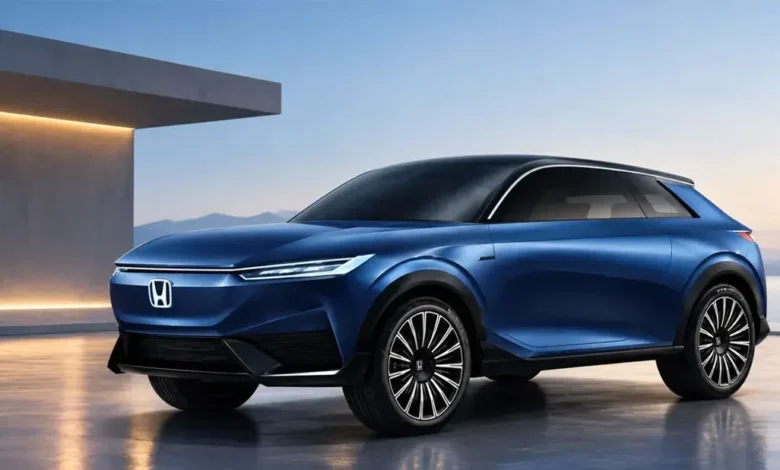
The automotive landscape in India is on the brink of yet another seismic shift as Japanese manufacturing giant Honda reportedly explores the development of an ultra-affordable compact SUV. According to recent industry reports originating from automotive publications such as Cartoq, this strategic project aims to capture the booming entry-level utility vehicle segment with an aggressive target price ranging between Rs 9 lakh and Rs 12 lakh, approximately equivalent to Rp 168 million to Rp 225 million using current conversion rates.
If the initiative successfully transitions from the conceptual drawing board to full-scale manufacturing, production could potentially commence as early as October 2028. However, despite the mounting industry speculation and insider leaks, Honda Motor Co. has maintained a cautious stance. The automaker has yet to issue an official confirmation regarding the existence of the project, nor has it verified potential engine suppliers, component sharing agreements, or final vehicle specifications. Consequently, industry analysts emphasize that the program remains strictly within the exploratory and developmental phase rather than serving as a definitive commercial launch commitment.
Strategic Market Positioning and Segment Expansion
Should Honda bring this sub-compact SUV to fruition, the vehicle is expected to slot neatly beneath the existing Honda Elevate, a model that currently commands a starting price of approximately Rs 11,81 lakh in the Indian domestic market. By introducing a smaller, more cost-effective utility vehicle, Honda would effectively position itself to capture a massive demographic of first-time car buyers who are rapidly migrating away from traditional hatchbacks and entry-level sedans in favor of high-riding SUV styling.
The Indian passenger vehicle market has witnessed an unprecedented surge in demand for utility vehicles over the past half-decade. Entry-level and compact SUVs now constitute a substantial share of total industry sales, driven by shifting consumer preferences, improved infrastructure, and a desire for versatile styling. By entering the Rs 9 lakh to Rs 12 lakh price bracket, Honda would directly challenge established segment heavyweights such as the Tata Nexon, Maruti Suzuki Brezza, Hyundai Venue, and Kia Sonet.
Interestingly, industry insiders suggest that Honda is actively evaluating the possibility of utilizing an existing vehicle platform currently manufactured and commercialized in Indonesia. Adapting a proven regional architecture would allow the automaker to capitalize on economies of scale and significantly reduce tooling and engineering expenditures. Despite these structural considerations, comprehensive details regarding the vehicle’s definitive dimensions, exterior styling philosophy, transmission options, power outputs, and onboard technology suites remain entirely undisclosed.
A Paradigm Shift: Embracing External Powertrains
Perhaps the most revolutionary aspect of the reported development is Honda’s willingness to look outside its own corporate ecosystem for core mechanical components. Traditionally, the manufacturer has fiercely guarded its engineering independence, relying almost exclusively on its proprietary internal combustion engines. Notable examples include the highly regarded 1.2-liter naturally aspirated engine utilized in the Amaze, alongside the robust 1.5-liter i-VTEC powerplants driving the City sedan and the Elevate SUV.
However, the reported SUV project may shatter this long-standing corporate tradition by potentially utilizing advanced powertrains sourced from Horse Powertrain. For the uninitiated, Horse Powertrain is a prominent global powertrain technology company established as a joint venture between the Renault Group and Zhejiang Geely Holding Group, with energy giant Saudi Aramco also holding a strategic equity stake. The firm specializes in the research, development, and mass production of state-of-the-art internal combustion engines, advanced hybrid systems, specialized transmissions, and range-extender modules designed to serve multiple automotive brands globally.
For Honda, integrating a third-party powertrain solution presents distinct strategic advantages. Developing a proprietary, multi-fuel-compliant powertrain lineup from scratch demands monumental capital expenditure and prolonged testing cycles. By tapping into Horse Powertrain’s extensive portfolio, Honda can drastically compress development timelines and minimize financial exposure. Furthermore, the burgeoning Indian market demands immense flexibility, requiring modern compact SUVs to offer diverse powertrain configurations capable of accommodating traditional gasoline, eco-friendly Compressed Natural Gas (CNG), and electrified hybrid systems depending on localized consumer demand and tightening regulatory emissions standards.
Accelerating the Development Cycle and Engineering Partnerships
The rumored budget SUV project is reflective of a much larger corporate overhaul at Honda, which is urgently seeking to streamline its product development lifecycle to better compete with aggressive Chinese and domestic Indian automakers. Historically, traditional Japanese automakers have relied on meticulous, lengthy research and testing phases, with typical vehicle development cycles stretching up to 49 months from initial concept to commercial showroom availability.
In response to rapidly shifting market dynamics and the lightning-fast product refresh rates exhibited by competitors, Honda has initiated a comprehensive internal restructuring. The automaker has established an ambitious corporate target to compress its total vehicle development cycle from approximately 49 months down to just 30 months. This dramatic reduction in timeline requires a fundamental decentralization of engineering tasks and a heavier reliance on specialized external technical partners.
Industry reports indicate that Honda is already enlisting third-party engineering giants to handle specialized aspects of its upcoming vehicle architectures. Specifically, Tata Technologies has been linked to vehicle engineering and structural development tasks, leveraging its deep domain expertise in automotive manufacturing processes. Simultaneously, Tata Consultancy Services (TCS) is expected to play a pivotal role in designing and implementing advanced in-car infotainment systems, digital instrument clusters, and connected-vehicle ecosystems tailored to modern consumer expectations.
Official Corporate Stance and Broader Implications
While Honda has officially acknowledged that several strategic vehicles tailored specifically for the Indian market are slated for introduction by 2028, the company has deliberately refrained from explicitly linking these high-level corporate announcements to the rumored budget SUV currently undergoing internal evaluation.
During recent corporate briefings, Honda executives reiterated their long-term commitment to the Indian market, highlighting it as a critical pillar of the company’s regional growth strategy. The brand’s official roadmap confirms that the execution phase for its next wave of strategic regional models has formally begun, reinforcing the notion that Honda is preparing a major product offensive for the late 2020s.
The broader implications of Honda’s evolving strategy are profound. Should the Japanese manufacturer successfully execute an affordable SUV project utilizing external powertrain partnerships and shortened development cycles, it could serve as a viable blueprint for how legacy automakers adapt to intense pricing pressures in emerging markets. By shedding rigid, insular manufacturing philosophies and embracing collaborative global supply chains, legacy brands can remain fiercely competitive against digitally native, vertically integrated new-market entrants.
As the industry looks toward the anticipated production window of October 2028, automotive analysts and consumers alike will be closely monitoring Honda’s official communications for concrete verifications regarding pricing, platform sharing, and the final confirmation of external powertrain collaborations. For now, the project remains an intriguing glimpse into the future of cross-border automotive cooperation and the relentless pursuit of affordability in the global SUV segment.