Evolution of the T32 Chassis: A Strategic Shift
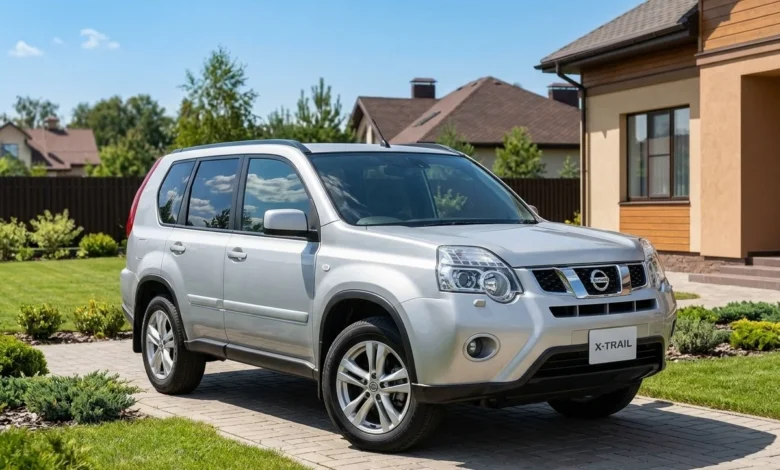
The introduction of the T32 generation marked a pivotal moment for Nissan’s global SUV strategy. Launched in the Indonesian market in 2014, the vehicle was designed to bridge the gap between a rugged off-roader and a premium family cruiser. This transition was not merely cosmetic; it involved a complete overhaul of the chassis architecture to emphasize interior volume and ride quality.
The 2014 launch was a response to the shifting demands of the mid-size SUV segment, where consumers began prioritizing cabin modularity and fuel efficiency over pure off-road capability. By replacing the angular design of the T31 with the fluid, rounded lines of the T32, Nissan aimed to capture the burgeoning demographic of young families who required the versatility of an SUV without sacrificing the comfort of a sedan.
Engineering Specifications and Powertrain Dynamics
At the heart of the 2014-2015 Nissan X-Trail 2.5 is the venerable QR25DE engine. This 2,488 cc, four-cylinder DOHC 16-valve powerplant utilizes Dual-CVTC (Continuously Variable Valve Timing Control) technology, which optimizes intake and exhaust valve timing to maximize efficiency across various engine loads.
The engine produces 171 PS (approximately 168 horsepower) at 6,000 rpm and a robust peak torque of 233 Nm at 4,000 rpm. While these figures were competitive for the era, the real engineering achievement lies in the integration with Nissan’s Xtronic CVT (Continuously Variable Transmission). Unlike traditional stepped transmissions, the Xtronic CVT provides a seamless, infinite ratio change, which minimizes the "shift shock" typically associated with conventional automatic gearboxes. This setup ensures that power delivery is linear and consistent, an attribute that significantly enhances passenger comfort during long-haul highway travel or congested urban commutes.
Market Positioning and Consumer Impact
In the context of the Indonesian automotive market, the 2.5-liter variant was positioned as the flagship offering, sitting above the entry-level 2.0-liter models. This hierarchy was intentional; by offering a more powerful engine, Nissan sought to compete directly with high-displacement rivals such as the Honda CR-V and the Mazda CX-5.
Industry analysts observed that the T32’s success was largely attributed to its "5+2" seating configuration in certain markets, though in Indonesia, the focus remained heavily on the spacious two-row layout that prioritized legroom and cargo capacity. The vehicle’s dimensions—measuring 4,640 mm in length and 1,820 mm in width—offered a substantial footprint that translated into a cavernous interior, making it a preferred choice for long-distance family excursions.
Chronology of the T32 Lifecycle
- 2013 (Global Debut): The third-generation Nissan X-Trail (T32) makes its world premiere at the Frankfurt Motor Show, signaling a departure from previous boxy iterations.
- 2014 (Indonesian Market Launch): PT Nissan Motor Indonesia officially launches the T32 X-Trail at the Gaikindo Indonesia International Auto Show (GIIAS). The 2.5-liter model becomes the primary focus for consumers seeking performance.
- 2015 (Consolidation): The X-Trail 2.5 firmly establishes itself as a benchmark in the segment, consistently ranking among the top-selling mid-size SUVs in its class for the fiscal year.
- 2017 (Mid-Cycle Facelift): Nissan introduces a refreshed T32 model, featuring cosmetic tweaks to the front fascia and interior materials, which subsequently impacts the residual value of the 2014-2015 models.
- 2020-Present (Used Market Maturity): The 2014-2015 models enter their prime as "value-for-money" options, as depreciation curves flatten, making them accessible to a wider demographic of second-hand buyers.
Technical Analysis: Why the 2.5-Liter Remains Relevant
The durability of the QR25DE engine is frequently cited by automotive technicians as a primary reason for the vehicle’s longevity. Unlike smaller, turbocharged engines that have become ubiquitous in the modern era, the naturally aspirated 2.5-liter engine operates under lower thermal stress, contributing to a longer service life if maintained with regular oil changes and proper transmission fluid management.
However, the reliance on the Xtronic CVT necessitates diligent maintenance. Industry reports indicate that the performance of the CVT is highly dependent on the quality and frequency of fluid changes. For prospective buyers, this represents a crucial checkpoint in the pre-purchase inspection process. When properly maintained, the system offers a fuel-efficient driving experience that is difficult to replicate with traditional gearboxes of the same vintage.
Comparative Advantage in the Used Segment
When comparing the 2014-2015 X-Trail 2.5 to its contemporaries, the vehicle consistently scores high in "NVH" (Noise, Vibration, and Harshness) levels. The cabin insulation is noticeably superior to many competitors from the same period, effectively muting road noise and engine drone.
Furthermore, the inclusion of features such as Dual-Zone Climate Control, leather upholstery, and a panoramic sunroof in the 2.5-liter trim levels provided a level of luxury that remains relevant even by today’s standards. These amenities, combined with the vehicle’s high seating position and ergonomic dashboard layout, have helped the model maintain its resale value compared to peers that lack similar feature sets.
Implications for Prospective Buyers
For those currently in the market for a used SUV, the 2014-2015 Nissan X-Trail 2.5 offers a calculated balance. The initial depreciation, which saw the vehicle lose a significant portion of its showroom value within the first five years, has effectively "reset" the price, allowing buyers to acquire a premium-class SUV at the price point of a newer, entry-level hatchback.
However, buyers must remain cognizant of the broader economic implications of purchasing a decade-old vehicle. While parts availability for the T32 remains strong due to its global production footprint, the cost of specialized repairs—specifically involving the electronic sensors and the CVT module—should be factored into the total cost of ownership. Experts recommend an extensive diagnostic scan of the transmission and engine management systems prior to closing any transaction.
Official Stance and Market Reaction
At the time of its release, Nissan executives emphasized that the X-Trail was intended to be the "ultimate family adventure vehicle." Feedback from early adopters in 2014 highlighted the steering precision and the effectiveness of the vehicle’s suspension setup, which managed to absorb road imperfections without feeling "floaty."
Reaction from automotive journalists during the 2014-2015 period was generally positive, with many reviews noting that while the X-Trail was not the most agile vehicle in its class, it was arguably the most comfortable. This distinction allowed it to carve out a loyal niche among families who prioritized ride comfort above the sporty, stiff handling offered by some of its direct competitors.
Conclusion: A Legacy of Practicality
The enduring appeal of the Nissan X-Trail 2.5 2014-2015 is a testament to the effectiveness of its original design brief. By focusing on fundamental human needs—spaciousness, consistent power, and ergonomic comfort—Nissan created a product that has gracefully aged.
As the automotive industry pivots toward electrification and smaller displacement engines, the traditional mid-size SUV experience offered by the X-Trail 2.5 stands as a reminder of an era where naturally aspirated engines and comfort-oriented engineering were the industry standard. For the buyer who values a proven platform with a high degree of comfort and utility, the 2014-2015 X-Trail 2.5 continues to offer a compelling value proposition that stands up to the test of time and utility. Whether navigating the complexities of daily urban traffic or facilitating long-distance family travel, this vehicle remains a cornerstone of the used SUV market, offering a blend of performance and practicality that is increasingly rare in the modern automotive landscape.