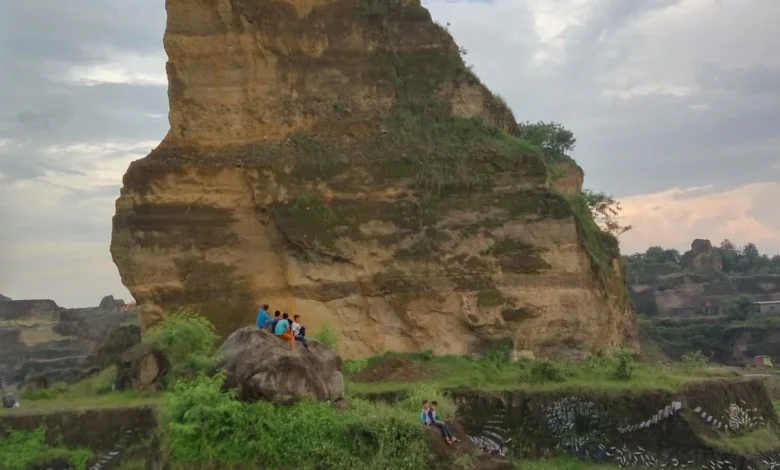
The Brown Canyon, located in the Rowosari area of Meteseh, Tembalang, Semarang, stands as a paradoxical landmark in Central Java. While it has gained significant notoriety as a tourist destination, the site is not a natural geological formation or a managed recreation park. Instead, it is the product of over a decade of intensive industrial mining activity. The area, which functions primarily as a quarry for sand, soil, and padas (sedimentary rock) extraction, has inadvertently evolved into a landscape reminiscent of the famous Grand Canyon in the United States, drawing photographers, outdoor enthusiasts, and curious travelers from across Indonesia.
The Genesis of an Industrial Landscape
The transformation of this region began more than ten years ago when local operators initiated extensive excavations to supply raw materials for the burgeoning construction industry in Semarang and its surrounding districts. The constant removal of earth and stone, combined with the region’s natural topography, gradually carved out deep ravines, jagged cliffs, and towering pillars of rock. Unlike protected national parks, the site lacks the infrastructure typical of tourist destinations. There are no paved paths, managed viewpoints, or visitor centers. Instead, the "landscape" is defined by the heavy machinery, dump trucks, and industrial dust associated with ongoing commercial mining operations.

Geographical Context and Accessibility
The site is situated in the southern outskirts of Semarang, specifically in the Rowosari village within the Meteseh sub-district. For those traveling from the city center, the journey requires navigating through suburban routes, often involving poorly maintained, unpaved, and undulating roads that are frequently impacted by weather conditions.
Accessibility to the site is complex due to the absence of official signage. Visitors typically rely on local landmarks to navigate. For those approaching from the eastern side of Semarang, the route involves navigating via the Jalan Fatmawati artery, passing the Regional General Hospital (RSUD) of Semarang, and heading toward the Klipang Golf area. From there, travelers must cross several bridges—the third of which spans a significant river—before turning south toward the excavation zone. For those arriving from the west, including directions from Kendal or Batang, the route is equally involved, requiring navigation through local markets and residential corridors such as Kedungmundu and Sambiroto.
The Paradox of Industrial Tourism
The appeal of Brown Canyon lies in its stark, raw, and almost alien aesthetic. The high, exposed cliffs, often topped with sparse vegetation, provide a dramatic backdrop that has become a favorite among professional and amateur photographers. However, the site presents a notable contrast to traditional tourism. Because it remains an active industrial zone, the experience for a casual visitor is vastly different from a visit to a botanical garden or a nature reserve.
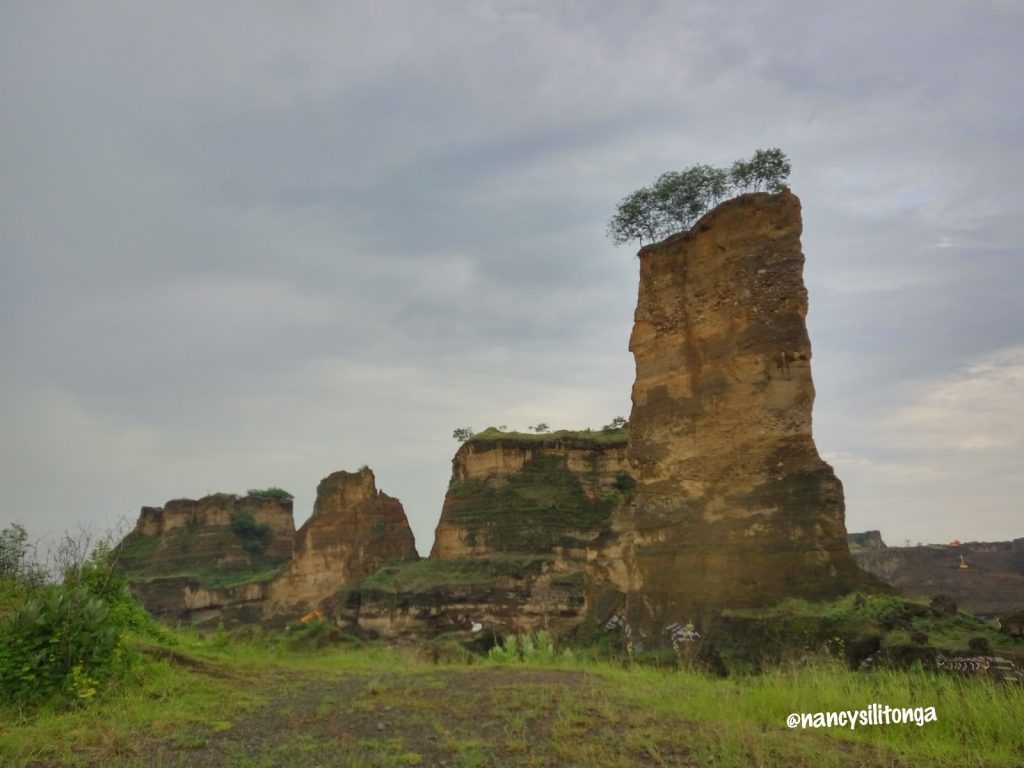
The lack of amenities is a defining feature of the site. There is no official management or hospitality infrastructure; consequently, there are no formal restrooms, food stalls, or designated parking areas. The "fees" often collected by locals are informal arrangements, generally amounting to approximately IDR 5,000 for entry and IDR 10,000 for vehicle parking. These arrangements are not sanctioned by the municipal government as formal entrance fees, highlighting the site’s status as a grey area between industrial use and public curiosity.
Operational Hazards and Safety Considerations
The primary concern regarding Brown Canyon is the safety of visitors, as the area remains a functional quarry. The presence of heavy transport vehicles, deep, unstable pits, and the risk of landslides at the cliff faces pose genuine hazards. Because the site was never engineered for human traffic, the structural integrity of the ridges and pathways is not monitored for public safety.
Furthermore, environmental conditions can be severe. During the dry season, the dust generated by constant mining traffic creates significant air quality issues, necessitating the use of protective gear such as masks and goggles. During the rainy season, the unpaved, undulating terrain becomes hazardous, with deep mud and standing water complicating navigation and increasing the risk of accidents. Visitors are strongly advised to avoid the site during active working hours, as the heavy machinery and truck traffic are not designed to accommodate pedestrians or recreational vehicles.

Broader Economic and Environmental Implications
The existence of Brown Canyon raises significant questions regarding land use management in Central Java. The site represents the intersection of economic necessity—the supply of construction materials for regional development—and the unplanned creation of a tourist asset. From an environmental perspective, the continuous excavation of the landscape has permanently altered the local topography. While the visual outcome is aesthetically striking, the long-term impact on soil stability, local water tables, and ecological biodiversity remains a subject of concern for environmental planners.
From an urban planning standpoint, the site highlights the demand for diverse outdoor spaces in the Semarang region. The influx of visitors suggests a gap in the availability of natural or unique recreational sites within reach of the city. However, turning Brown Canyon into a formal, safe tourist destination would require extensive remediation, structural stabilization of the cliffs, and a complete cessation of mining activities. Given the economic value of the material extracted from the quarry, such a transition is currently not on the local government’s immediate development agenda.
Future Outlook and Recommendations
As the site continues to gain popularity on social media and travel blogs, the pressure on local authorities to manage the area will likely increase. Currently, the "tourism" aspect of Brown Canyon remains entirely self-regulated and informal. For the potential visitor, the experience requires a high degree of self-sufficiency. It is recommended that those planning a visit prioritize their safety by:

- Timing the Visit: Arriving outside of standard operational hours (early mornings or weekends) to minimize exposure to heavy industrial traffic.
- Protective Equipment: Utilizing appropriate footwear for uneven terrain and bringing protective eyewear and respiratory masks to mitigate dust exposure.
- Local Awareness: Acknowledging that the site is a place of labor and respecting the work of the local miners who depend on the site for their livelihood.
- Preparedness: Carrying adequate water and supplies, as there are no commercial services available on-site.
In conclusion, Brown Canyon serves as a testament to the unintended consequences of industrial expansion. While it offers a unique visual experience that has captured the imagination of many, it is not a destination for the casual tourist seeking comfort and facilities. It remains, at its core, a site of labor and raw geological exposure. As Semarang continues to develop, the fate of Brown Canyon—whether it will eventually be rehabilitated, fully commercialized, or left to its current status—remains a case study in the complex relationship between industrial activity and the evolving landscape of the Indonesian archipelago. The site serves as a reminder that beauty can often be found in the most unexpected places, provided one approaches with the necessary caution and respect for the environment and the local economic realities that created it.