AS Harus Terima 4 Kenyataan Akibat Perang Iran, dari Reputasi Rusak hingga Harus Akui Kekalahan

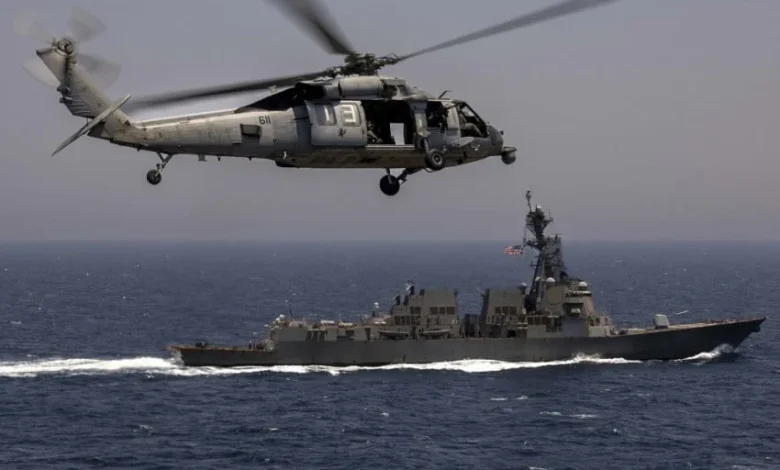
The geopolitical landscape of the Middle East has undergone a seismic shift following the military escalations between the United States and Iran in February. As the dust settles on recent naval confrontations, experts and analysts are increasingly pointing toward a diminished American strategic posture. Mohamad Elmasry, a professor at the Doha Institute for Graduate Studies, has emerged as a prominent voice arguing that the reputation of the United States military has suffered irreparable damage on the international stage. This assessment comes as Washington grapples with the operational realities of the Strait of Hormuz, a critical maritime artery that has become the focal point of a high-stakes standoff.
The Erosion of Strategic Deterrence
The central tenet of U.S. foreign policy in the Persian Gulf has long been the maintenance of freedom of navigation. However, the events of early 2024 have cast doubt on the efficacy of this policy. According to Elmasry, the gap between official rhetoric and the data tracked by global maritime intelligence services is widening. While political figures, including former President Donald Trump, have previously touted the resilience of oil tanker traffic through the Strait, independent tracking data paints a markedly different picture.
The reality on the ground—or rather, on the water—suggests that even with enhanced military posturing and covert night-time escort operations, the volume of shipping has failed to return to pre-conflict levels. This shortfall signifies a failure of American efforts to dictate the terms of engagement in the region. The inability of the U.S. Navy to secure consistent, high-volume transit routes has forced international observers to reconsider the extent of American hegemony in the Middle East.
Chronology of Escalation: A Brief Overview
The recent friction is not an isolated incident but rather the culmination of years of mounting tensions. To understand the current impasse, one must look at the timeline of the most recent hostilities:
- Early February: Tensions spiked following a series of targeted military maneuvers by the United States against Iranian-linked assets, which prompted a swift and tactical response from Tehran regarding its maritime defenses.
- Mid-February: Iran intensified its surveillance and patrol operations within the Strait of Hormuz, effectively creating a "chokepoint" that required vessels to navigate under de facto Iranian oversight.
- Late February: Despite the deployment of additional U.S. naval assets, reports emerged that commercial shipping companies were increasingly diverting vessels or cancelling shipments due to high insurance premiums and security risks.
- March to Present: The diplomatic stalemate has deepened, with the U.S. shifting away from direct military confrontation toward a reliance on regional proxies and Gulf state intermediaries to negotiate transit, signaling a tactical retreat from its previous "maximum pressure" doctrine.
The Strategic Importance of the Strait of Hormuz
The Strait of Hormuz is arguably the most important oil chokepoint in the world. Approximately 20 to 30 percent of the world’s total oil consumption passes through this narrow passage daily. For Iran, the control of this waterway is not merely a tactical advantage; it is a fundamental pillar of its national security architecture.
Alan Eyre, a former U.S. diplomat and researcher at the Middle East Institute, emphasizes that for Tehran, the Strait represents a "strategic deterrent" that serves as a shield against potential future aggression from the United States or Israel. By maintaining a presence that can throttle global energy supplies, Iran ensures that any military move against its borders carries an immediate, global economic cost. This creates a scenario where the cost of conflict for the U.S. is not just measured in military casualties, but in a catastrophic global energy crisis.
The Shift in Diplomatic Power Dynamics
One of the most profound implications of the recent conflict is the apparent migration of diplomatic leverage away from Washington. For decades, the U.S. acted as the primary broker of stability in the Gulf. Today, that influence has waned. Nations in the Gulf Cooperation Council (GCC) and Iraq have increasingly taken the lead in diplomatic channels, recognizing that Washington may no longer possess the political or operational appetite for sustained engagement.
Analysts suggest that the United States has reached a point where it must decide between two difficult paths: either escalate the conflict significantly—a move that carries the risk of a full-scale regional war—or accept the "new normal" where Iran exerts control over the Strait of Hormuz. As Elmasry notes, the latter appears increasingly likely. Acceptance of this reality, while bitter for Washington, may be the only way to prevent a complete collapse of global trade logistics in the region.
Economic Implications and Global Markets
The uncertainty surrounding the Strait of Hormuz has had a direct impact on global markets. Even as energy prices fluctuate, the "risk premium" associated with Middle Eastern oil remains elevated. Shipping firms are currently absorbing higher costs, which are ultimately passed down to consumers worldwide.
If the U.S. cannot restore the freedom of navigation, the global economy faces a long-term inflationary pressure. The International Energy Agency (IEA) has previously warned that prolonged instability in the Gulf could lead to supply chain disruptions that extend far beyond the energy sector. The fact that the U.S. has been unable to resolve this impasse highlights a transition in global power, where regional middle powers are successfully challenging the established order.
Official Responses and Tactical Limitations
The U.S. Department of Defense has maintained that its commitment to the region remains "unwavering." However, internal assessments leaked to the press suggest a more pragmatic outlook. Officials are reportedly acknowledging that "military solutions" to the maritime security crisis are limited by the geography of the Strait and the sophisticated anti-access/area-denial (A2/AD) capabilities that Iran has spent decades developing.
The silence from the Pentagon regarding specific success metrics for current operations speaks volumes. By failing to provide concrete evidence of increased transit volumes, the U.S. military has left a vacuum that is being filled by critical analysis from scholars and regional experts.
Conclusion: A New Geopolitical Era
The current situation in the Strait of Hormuz serves as a definitive case study in the limits of hard power. The United States finds itself in a position where its military superiority, while undisputed in terms of raw firepower, is insufficient to achieve its specific political and economic objectives.
As the international community watches, the implications for the future of U.S. foreign policy are significant. Whether Washington chooses to pivot toward a more collaborative regional security framework or persists in its current approach, the reality remains that the status quo has been permanently altered. The "new normal" in the Strait of Hormuz is not just a temporary challenge for the current administration, but a foundational shift that will influence American policy in the Middle East for years to come. The era of unquestioned American dominance in the region has been replaced by a complex, multipolar environment where control over strategic chokepoints is no longer guaranteed by the presence of a single superpower.