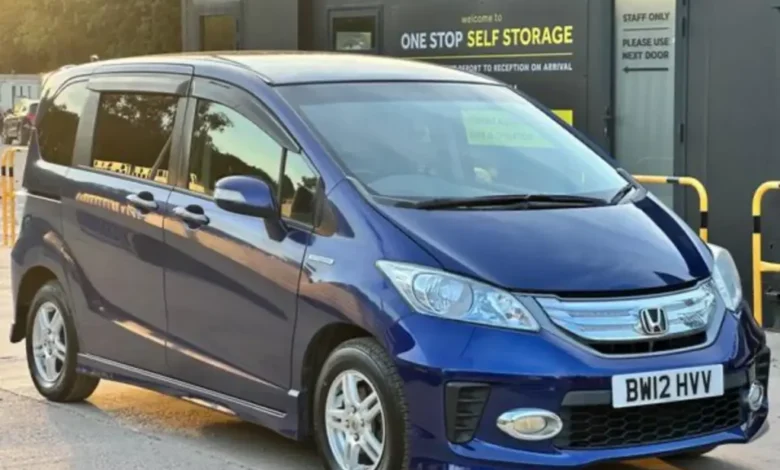
Selecting an ideal family vehicle requires a balanced assessment of passenger capacity, long-term operational costs, and overall reliability. For many Indonesian families, the Honda Freed has remained a top-tier candidate in the secondary market due to its unique combination of MPV functionality and sedan-like driving dynamics. With used units of the 2016 model year currently circulating in the market at price points starting from approximately IDR 130 million, prospective buyers are increasingly weighing the vehicle’s long-term viability against modern alternatives.
The Evolution and Market Context of the Honda Freed
The Honda Freed was first introduced to the Indonesian market in 2009, positioning itself as a "Premium MPV" that sat above the entry-level Mobilio but below the luxury Odyssey. It was designed to bridge the gap between functional family transport and aesthetic comfort. By 2016, the model was reaching the final stages of its production lifecycle in Indonesia, as Honda shifted its focus toward newer platforms.
The 2016 model represents the culmination of the first generation’s refinement. During this period, the automotive industry in Indonesia saw a significant shift toward efficiency and urban mobility, and the Freed’s unique selling proposition—the combination of a compact footprint and sliding doors—resonated strongly with urban families facing limited parking space and high-traffic environments. While the model was officially discontinued in the Indonesian market shortly after, its legacy continues to thrive in the used car sector, where it remains a benchmark for interior packaging.
Engineering Specifications and Mechanical Reliability
Under the hood, the 2016 Honda Freed is powered by the proven 1.5-liter L15A 4-cylinder engine. This powerplant utilizes SOHC, i-VTEC, DBW (Drive-by-Wire), and PGM-FI (Programmed Fuel Injection) technologies. The engine produces a maximum output of 118 PS at 6,000 rpm and a peak torque of 146 Nm at 4,800 rpm.
From an engineering perspective, the L15A is widely regarded as one of Honda’s most robust engines. It has seen extensive use across various global platforms, which contributes to the widespread availability of spare parts and the ease of maintenance for independent workshops. The engine is paired with a 5-speed automatic transmission, which offers a predictable and smooth power delivery suitable for both stop-and-go city traffic and occasional highway cruising. The front-wheel-drive (FWD) configuration further optimizes interior space by eliminating the central transmission tunnel, allowing for a flat floor that enhances passenger comfort.
Interior Design: Prioritizing Passenger Ergonomics
The most distinct feature of the 2016 Honda Freed is its cabin configuration. The interior was designed with "Space Creation" in mind, featuring a walk-through cabin that allows occupants to move between rows without exiting the vehicle.
The inclusion of Captain Seats in the second row serves as a significant luxury upgrade compared to the standard bench seats found in competitors like the Toyota Avanza or Daihatsu Xenia of the same era. These seats provide superior lateral support and individual comfort, making the vehicle particularly attractive for families with children or elderly passengers. The fabric upholstery, while requiring consistent maintenance to prevent staining, offers superior breathability in tropical climates compared to lower-grade leatherette alternatives.
The dashboard layout features a multi-layered design that emphasizes visibility. The 7-inch touchscreen head unit serves as the command center for infotainment, supporting Bluetooth connectivity, USB and AUX inputs, and CD/DVD playback. Higher trim levels, specifically the E-variant, include an Automatic Climate Control system, which provides consistent cabin cooling—a critical necessity in the Indonesian climate.
Safety Features and Structural Integrity
Safety has always been a core pillar of Honda’s design philosophy. The 2016 Freed incorporates the G-CON (G-Force Control) + ACE (Advanced Compatibility Engineering) body structure, which is designed to dissipate collision energy away from the passenger cabin.

Standard safety equipment on the 2016 model includes:
- Dual SRS Airbags for the driver and front passenger.
- Anti-lock Braking System (ABS) with Electronic Brakeforce Distribution (EBD).
- Brake Assist (BA) for optimized stopping power in emergency situations.
- ISOFIX anchor points for secure child seat installation.
- Immobilizer and alarm systems to mitigate theft risks.
- Child safety locks on the rear doors.
While these features may appear standard by today’s highly digitized standards, they represent a high level of safety for the 2016 model year, particularly within the mid-range MPV segment.
Market Analysis: Why the 2016 Freed Retains Value
The current pricing of the Honda Freed 2016, hovering around the IDR 130 million mark, is a reflection of its sustained demand. Automotive analysts suggest that the Freed’s value proposition is driven by three primary factors: mechanical longevity, brand equity, and the utility of the power sliding doors.
The sliding door mechanism, in particular, remains a rarity in the sub-IDR 200 million price bracket. Its ability to open fully in tight parking spaces is a major convenience factor that many newer, lower-priced MPVs lack. From an economic standpoint, the cost of ownership remains manageable. Honda’s broad service network and the abundance of third-party parts manufacturers ensure that maintenance does not become an undue financial burden for the average family.
However, prospective buyers are advised to consider the age of the vehicle. As the model approaches a decade of service, common wear-and-tear items—such as the power sliding door motors, suspension bushings, and transmission fluid health—should be the primary focus of any pre-purchase inspection.
Implications for the Used Car Segment
The continued popularity of the 2016 Honda Freed highlights a broader trend in the Indonesian automotive market: a preference for "tried and tested" utility over the latest technological gadgets. Families are increasingly prioritizing proven reliability and cabin space over advanced driver-assistance systems (ADAS) or modern connectivity features.
Industry experts observe that as new vehicle prices continue to rise due to inflation and the transition toward electric vehicles, the secondary market for high-quality, mid-tier MPVs like the Freed is expected to remain stable. The "worth it" factor for the 2016 Freed is largely determined by the individual condition of the unit. A well-maintained unit with a complete service history remains one of the most practical investments a family can make in the used market.
Final Considerations for Prospective Buyers
When evaluating a used Honda Freed, experts recommend a systematic approach:
- Engine Health: Check for any signs of oil leakage and ensure the engine operates smoothly at idle.
- Transmission: The 5-speed automatic should shift without hesitation or clunking noises.
- Sliding Doors: Manually and electronically test the doors to ensure the rails are lubricated and the motor is responsive.
- Suspension: A test drive on uneven surfaces will reveal any worn-out bushings or shock absorbers.
- Documentation: Ensure all vehicle registration documents (STNK and BPKB) match the physical VIN numbers on the chassis.
In conclusion, the 2016 Honda Freed remains a relevant and highly capable vehicle for modern families. Its combination of a reliable powertrain, spacious interior, and practical entry-exit design positions it as a benchmark in the MPV segment. While the market offers a wide array of options, the Freed’s specific focus on passenger comfort and urban utility ensures that it continues to offer significant value for money in the secondary market.
Related posts: