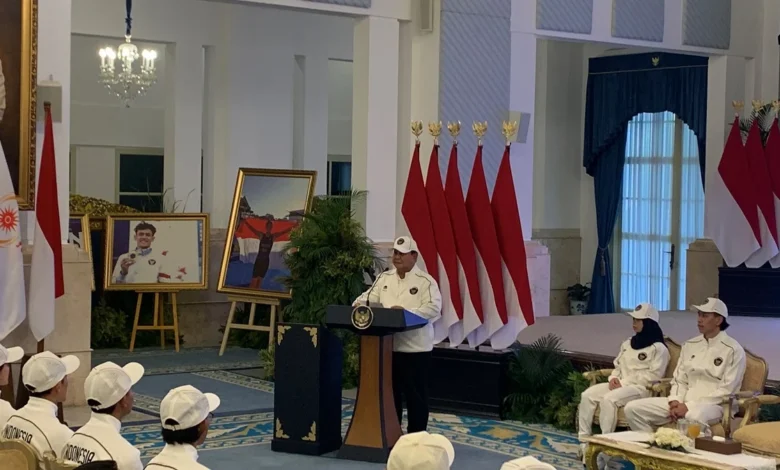
The Indonesian government has officially raised the stakes for the nation’s top athletes ahead of the 20th Asian Games, set to take place in Aichi-Nagoya, Japan, in 2026. During the official send-off ceremony held at the State Palace in Jakarta, President Prabowo Subianto announced a significant increase in financial incentives, confirming that gold medalists will receive a reward of IDR 3 billion. This figure marks a substantial leap from the traditional bonus structure applied to regional competitions, signaling a strategic shift in how the state rewards excellence on the international stage.
The ceremony, which took place on Wednesday, September 9, 2026, served as the formal farewell for 432 athletes who will represent the Red and White flag across various disciplines. By incentivizing high-level performance with such a substantial purse, the administration aims to elevate Indonesia’s competitiveness in a highly contested continental arena.
Financial Incentives as a Catalyst for Excellence
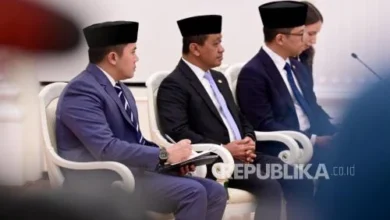
President Prabowo, during his address to the contingent, underscored the importance of valuing the sacrifices made by elite athletes. Referring to a consultation with the Minister of Youth and Sports, Erick Thohir, the President highlighted the distinction between the bonus tiers for multi-sport events. While a SEA Games gold medal traditionally commands a bonus of IDR 1 billion, the elevated prestige and difficulty of the Asian Games necessitated a threefold increase.
"I received a report from Mr. Erick, stating that for the SEA Games, a gold medal earns IDR 1 billion. However, for the Asian Games, it will be IDR 3 billion," President Prabowo stated. He emphasized that the government’s fiscal approach to sports should not be characterized by frugality when it comes to national pride. "We should not be stingy. If the performance is excellent, we must provide the appropriate recognition," he added.
Beyond the gold medalists, the administration has committed to a holistic support system. Athletes who secure silver and bronze medals will also receive increased financial rewards, along with promises of expedited career progression, particularly for those serving in the military, police, or civil service. This policy is designed to ensure that the transition from competitive sports to post-retirement life is secure and dignified.

Context and Significance of the 2026 Asian Games
The 2026 Asian Games, hosted by the Aichi Prefecture and the city of Nagoya in Japan, represent the second time Japan has hosted the event since 1994 in Hiroshima. The games are scheduled to run from September 19 to October 4, 2026. As one of the largest multi-sport events globally, the Asian Games serve as a critical barometer for Indonesia’s sports development programs, known as the "Indonesia Gold" initiative.
Indonesia’s performance in previous Asian Games has been a source of significant national pride, most notably during the 2018 games held in Jakarta and Palembang, where the nation achieved a historic haul of 31 gold medals. The 2026 contingent faces the challenge of replicating that success in a foreign environment, where the level of competition from nations like China, Japan, and South Korea remains exceptionally high.
The Role of the Ministry of Youth and Sports
Minister of Youth and Sports, Erick Thohir, has been instrumental in aligning the government’s fiscal policies with the long-term goals of the national sports roadmap. The "Indonesia Gold" (Indonesia Emas) roadmap is a strategic document aimed at identifying, nurturing, and training athletes from a young age to ensure consistent podium finishes in international events.
According to analysts within the sports industry, the decision to offer a IDR 3 billion bonus is not merely an act of generosity but a calculated investment in "soft power." In many Asian nations, sports success is viewed as an extension of national development and global standing. By providing clear financial incentives, the government is professionalizing the career path of an athlete, allowing them to focus entirely on training rather than financial instability.
Broader Economic and Social Implications
The decision to provide such substantial bonuses has triggered a discussion regarding the economic impact of sports funding. While critics often debate the allocation of state funds, supporters argue that the "multiplier effect" of high-level athletic success is profound. Successful athletes often become national icons, stimulating interest in health, physical fitness, and the broader sports economy, which includes infrastructure development, equipment manufacturing, and the sports tourism sector.
Moreover, the promise of "accelerated career paths" for medalists serves as a social incentive. By ensuring that athletes can transition into secure government roles, the state mitigates the risk of financial hardship post-retirement—a common issue for elite athletes worldwide. This structure encourages younger generations to pursue sports as a viable and sustainable profession.

Supporting the 432-Strong Contingent
The 432 athletes selected for the Aichi-Nagoya games represent the best of the nation’s talent across 41 sports disciplines. The training process leading up to this point has involved rigorous selection cycles, including domestic training camps and international test events. The Indonesian Olympic Committee (KOI) has worked in tandem with the Ministry of Youth and Sports to ensure that the logistics, medical support, and nutritional needs of the athletes are met to global standards.
President Prabowo’s message to the team was clear: they are carrying the weight of 287 million Indonesians. The psychological support provided by such high-level recognition from the Head of State is intended to boost morale as the athletes enter the final phase of their preparation.
Challenges and Future Outlook
Despite the excitement, the path to the podium in Japan will be arduous. The Aichi-Nagoya Games will feature advanced sports technology and high-performance requirements. Japan, as the host nation, is expected to leverage its home-field advantage, while regional powerhouses are likely to field expanded rosters.
Indonesia’s strategy for 2026 is centered on "targeted medal acquisition." Instead of spreading resources thinly, the government has focused on disciplines where Indonesia has a historical competitive advantage, such as badminton, weightlifting, sport climbing, and wushu. By concentrating investment in these "high-probability" sports, the government hopes to maximize the return on its financial incentives.
Conclusion
The announcement of the IDR 3 billion bonus for Asian Games gold medalists represents a watershed moment for Indonesian sports policy. It signals a shift toward a more professionalized, high-stakes approach to international competition. As the 2026 Asian Games draw near, all eyes will be on the Indonesian contingent to see if these financial incentives will translate into a record-breaking performance.
Ultimately, the initiative reflects a broader government mandate to prioritize human capital development. Whether through the lens of national identity or professional athletic growth, the commitment made at the State Palace sets a new benchmark for how Indonesia treats its sporting heroes. With the support of the state, the athletes now carry not just the hopes of their countrymen, but a concrete promise that their excellence will be met with commensurate reward.