Emirates Unveils Revolutionary U-Dream Headrest, Redefining Economy Class Comfort on Long-Haul Flights

Emirates has launched a groundbreaking innovation aimed at significantly enhancing the comfort of its economy class passengers, particularly on lengthy intercontinental journeys. The Dubai-based airline has introduced the U-Dream Headrest, a novel design that promises to revolutionize how passengers rest and sleep during flights. This development marks a substantial investment by Emirates in elevating the entire economy class travel experience, a segment often perceived as offering less personalized comfort compared to premium cabins.
The U-Dream Headrest, described as the world’s first of its kind, is being progressively integrated across Emirates’ fleet. The airline has confirmed that its new Airbus A350 aircraft will be fully equipped with this advanced headrest, and a significant portion of its Airbus A380 and Boeing 777 fleets will also receive the upgrade. This phased rollout is a strategic move to ensure a consistent and improved passenger experience across key long-haul routes, where passenger fatigue is a primary concern.
The Engineering Behind Enhanced Sleep
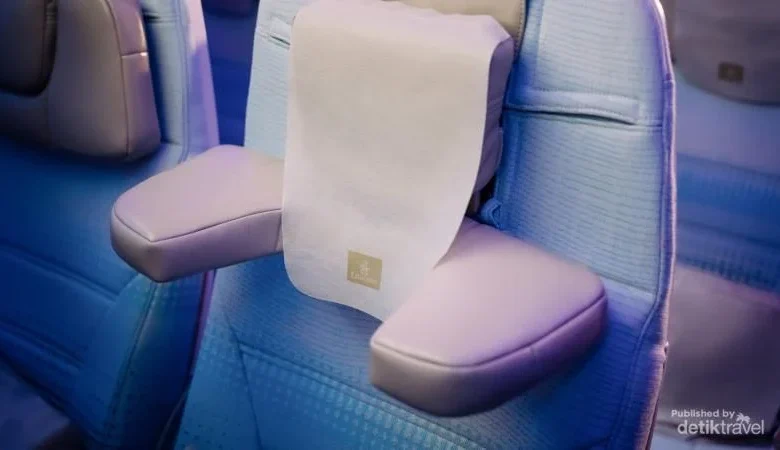
At its core, the U-Dream Headrest is engineered to provide optimal support for the head and neck, whether a passenger is attempting to sleep or simply relaxing. Unlike traditional headrests, the U-Dream features flexible "wings" on either side. These wings can be folded inwards, creating a secure cradle for the passenger’s head. This innovative design effectively prevents the head from lolling forward or sideways, a common discomfort that disrupts sleep on moving aircraft.
Further enhancing its ergonomic design, the headrest’s position is adjustable, allowing passengers to move it up and down, and tilt it to suit their individual height and posture. This personalized adjustability is crucial for accommodating a diverse range of passenger physiologies. Emirates has emphasized the rigorous safety standards applied to this new feature, noting that the ergonomic design has successfully passed safety assessments conducted by the European Union Aviation Safety Agency (EASA), a key regulatory body for aviation safety in Europe.
A Vision for Superior Economy Travel
Sir Tim Clark, President of Emirates Airline, articulated the airline’s commitment to passenger well-being, stating that the introduction of the U-Dream Headrest is a direct response to the need for improved comfort, especially for economy class travelers. "Emirates never ceases to innovate in delivering the best customer experience," Clark commented. "We have found ways to significantly improve the comfort of our economy class passengers, particularly those undertaking long-haul flights."
He further elaborated on the transformative potential of the U-Dream, asserting, "The U-Dream truly changes the experience of sleeping on board, offering full neck support. There is no longer a need for neck pillows. This is a testament to our commitment to our customers and further solidifies Emirates’ position as a carrier with the best economy class offering." This statement underscores Emirates’ strategic focus on differentiating its economy product in an increasingly competitive aviation market.
Passenger and Crew Reception
Initial feedback from passengers who have experienced the U-Dream Headrest has been overwhelmingly positive. Reports indicate that the headrest is intuitive and easy to adjust, contributing to a more restful journey. To ensure seamless integration and passenger assistance, Emirates cabin crew have undergone specific training to help passengers optimize their headrest settings. This proactive approach to customer service aims to maximize the benefit of the new feature for every traveler.
Maintenance and hygiene are also key considerations. The U-Dream Headrest is upholstered in a leather-like material designed for easy cleaning and is meticulously sanitized after every flight, adhering to the airline’s stringent health and safety protocols.
Strategic Fleet Integration and Future Rollout
The deployment of the U-Dream Headrest is a carefully planned initiative. Currently, three of Emirates’ Airbus A350 aircraft are equipped with the new headrests. The airline plans to complete the installation across its entire A350 fleet before the end of the current year. Beyond the A350, the U-Dream will be a standard feature on all 270 Boeing 777X aircraft ordered by Emirates, meaning they will be equipped from the moment they are delivered.
Furthermore, starting in 2027, the U-Dream Headrest will be incorporated into the ongoing cabin retrofit programs for existing Airbus A380 and Boeing 777 aircraft. This long-term strategy ensures that a substantial portion of Emirates’ wide-body fleet will eventually benefit from this enhanced comfort feature, reflecting a sustained commitment to improving the passenger experience across its network.
Context and Broader Implications in the Aviation Industry
The introduction of the U-Dream Headrest by Emirates is occurring within a broader trend of airlines seeking to enhance their economy class offerings. Faced with increasing competition and evolving passenger expectations, carriers are investing in cabin innovations to attract and retain customers. The economic realities of the airline industry mean that while premium cabins offer higher yields, a vast majority of passengers fly in economy. Therefore, improving this segment is crucial for market share and overall brand perception.
Emirates’ move can be seen as a strategic response to this competitive landscape. By focusing on a tangible improvement like sleep comfort, the airline aims to set a new benchmark for economy class travel. This innovation directly addresses a common pain point for long-haul travelers: the difficulty of getting adequate rest in a seated position. The elimination of the need for personal neck pillows, a ubiquitous travel accessory for long flights, highlights the integrated and comprehensive approach Emirates is taking.
The aviation industry has witnessed various attempts to improve economy class comfort over the years, from enhanced in-flight entertainment systems and improved catering to more ergonomically designed seats. However, innovations directly targeting sleep quality, such as the U-Dream Headrest, are less common and often more impactful for passenger satisfaction on extended journeys.
Supporting Data and Industry Trends
Data from aviation industry reports consistently shows that passenger satisfaction scores are heavily influenced by comfort levels, particularly on flights exceeding six hours. A 2023 survey by Skytrax, a leading aviation rating organization, indicated that over 60% of economy class passengers prioritize comfortable seating and the ability to rest as key factors in their overall flight experience. Furthermore, the rise of budget carriers has often led to a reduction in amenities and legroom in economy cabins, creating a demand for full-service carriers to differentiate themselves by offering superior comfort.
Emirates’ investment in the U-Dream Headrest aligns with this market demand. By focusing on a specific aspect of comfort that directly impacts rest, they are tapping into a critical need for long-haul travelers. The airline’s existing fleet of wide-body aircraft, which are inherently designed with more spacious cabins, wider aisles, and larger overhead bins compared to narrow-body aircraft, provides a solid foundation for this new comfort feature. These existing advantages, combined with the U-Dream Headrest, further strengthen Emirates’ proposition.
Competitive Landscape and Future Outlook
The implications of Emirates’ U-Dream Headrest extend beyond its own passengers. This innovation is likely to put pressure on other major airlines to re-evaluate their own economy class offerings. As Emirates continues to roll out this feature, competitors may feel compelled to introduce similar or alternative innovations to remain competitive. This could lead to a new wave of investment in economy class comfort across the industry, ultimately benefiting travelers worldwide.
The airline’s strategy also highlights a shift in focus from merely providing basic transportation to offering a more holistic travel experience, even in the most accessible cabin class. By blurring the lines between economy class and premium cabins in terms of comfort, Emirates is not only enhancing its brand image but also potentially influencing industry standards. The ongoing competition among airlines to attract passengers is likely to intensify, with comfort and innovative features becoming increasingly significant differentiators.
The successful implementation and reception of the U-Dream Headrest could set a precedent for future cabin design and passenger amenity development. It underscores the principle that even in a cost-sensitive market segment, investing in passenger well-being can yield significant returns in terms of customer loyalty and market positioning. Emirates’ commitment to this innovation signals a forward-looking approach, aiming to redefine expectations for long-haul economy travel in the years to come.