Robert Lewandowski Hails Spain’s 2026 World Cup Triumph and Predicts Future Dominance for La Furia Roja

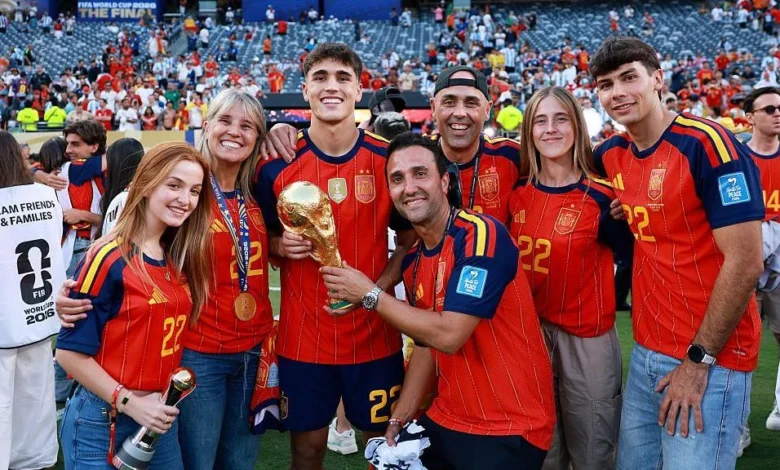
The global football landscape has been reshaped following the conclusion of the 2026 FIFA World Cup, where Spain ascended to the pinnacle of the sport by defeating Argentina 1-0 in a tense final at the MetLife Stadium in East Rutherford, New Jersey. Among the high-profile spectators witnessing this historic moment was Polish striking legend Robert Lewandowski, who expressed his profound admiration for the Spanish national team’s tactical discipline and technical superiority. Lewandowski, a two-time FIFA Best Men’s Player, suggested that the current Spanish squad, characterized by its youth and cohesion, possesses the necessary attributes to establish a long-term dynasty, potentially eyeing a successful title defense in the 2030 centenary tournament.
Spain’s victory marks their second World Cup title, following their maiden success in South Africa in 2010. By securing the 2026 trophy, La Furia Roja has successfully achieved the rare "double," holding both the European Championship (won in 2024) and the World Cup simultaneously. The final, while characterized by Lewandowski as a tactical battle rather than a high-scoring spectacle, saw Spain dominate possession and control the tempo against an Argentinian side that was looking to defend their 2022 title. The decisive moment arrived in extra time when Ferran Torres found the back of the net, sealing a victory that many analysts believe reflects the current shift in international football power dynamics.
Tactical Superiority and Match Analysis
In a post-match interview with ESPN Brasil, later cited by Spanish outlet AS, Lewandowski provided a detailed critique of the final. The match was played on a surface that Lewandowski described as "slow," a factor that he believes hindered the fluidity of the game. Despite these conditions, he noted that Spain’s ability to maintain control was the deciding factor. "The match was indeed not the most spectacular final. The pitch was slow, so it was not the best way to play a match," Lewandowski remarked. However, he was quick to emphasize that the scoreline did not fully reflect Spain’s dominance on the field.
According to Lewandowski, Spain appeared superior throughout the 120 minutes of play. "Spain looked superior and could have won the match earlier or with more goals. They dominated throughout the game and always had possession of the ball," the former Borussia Dortmund, Bayern Munich, and Barcelona star noted. Statistics from the final support this assessment, with Spain reportedly maintaining over 60% possession and limiting Argentina to sporadic counter-attacks. The defensive organization led by veteran presence and integrated with younger talents ensured that the Argentinian frontline, which had been prolific throughout the tournament, was kept largely at bay.
A Personal Connection to the Spanish Success
Lewandowski’s presence in the stands of the New Jersey stadium was not merely as a neutral observer of the sport. The 38-year-old striker, who has spent the latter stages of his illustrious career at FC Barcelona, admitted to having a strong emotional investment in the Spanish team. Sitting near members of the 2010 World Cup-winning generation, Lewandowski found himself cheering for his teammates and friends.
"I supported Spain because I spent several years in Barcelona and I have many friends there, so I really supported them," Lewandowski explained. He also addressed the inevitable comparison with Lionel Messi, his former rival in various league and international competitions. "From Argentina, I only supported Messi, but he won the previous World Cup, so that’s why I wanted Spain to win," he added, highlighting a sentiment shared by many who wished to see the emergence of a new champion after Argentina’s 2022 glory in Qatar.
The Evolution of La Furia Roja: From 2024 to 2026
Spain’s journey to the 2026 World Cup trophy is a testament to the successful transition of the squad under the management of Luis de la Fuente. The team that lifted the trophy in New Jersey is significantly younger than the one that struggled in the mid-2010s. The integration of generational talents like Lamine Yamal, who has become a focal point of the Spanish attack, has revitalized the national team’s philosophy. While the traditional "tiki-taka" remains the foundation, the current iteration of Spain is more direct and physically resilient.
The 2026 success follows a dominant run in the 2024 European Championship, where Spain defeated several top-tier nations to claim the continental crown. This period of success mirrors the 2008-2012 era when Spain won two Euros and one World Cup in succession. Lewandowski believes this is just the beginning for the current group. "They are a very young team and can still win another World Cup. I enjoyed Spain’s play and victory," he stated, pointing toward the 2030 tournament as a realistic goal for this maturing squad.
Chronology of the 2026 World Cup Final and Spain’s Path
The 2026 World Cup was the first of its kind, featuring an expanded format of 48 teams across three host nations: the United States, Canada, and Mexico. Spain’s path to the final was marked by consistency and a refusal to deviate from their tactical identity.
- Group Stage: Spain progressed comfortably, finishing top of their group with three wins, showcasing a high-scoring offense.
- Knockout Rounds: La Furia Roja navigated a difficult bracket, overcoming traditional powerhouses in the quarter-finals and semi-finals, relying on a blend of youth energy and veteran composure.
- The Final (MetLife Stadium):
- 0-90 Minutes: A tactical stalemate where Spain controlled the ball but struggled to break through Argentina’s disciplined low block.
- Extra Time: As fatigue set in, Spain’s depth proved crucial. Ferran Torres, capitalizing on a lapse in the Argentinian defense, scored the winning goal.
- Post-Match: Celebrations erupted in Madrid and across Spain, marking the country’s return to the summit of world football.
Supporting Data: The Impact of the 2026 Tournament
The 2026 FIFA World Cup broke numerous records, not only in terms of participating teams but also in viewership and attendance. The final in New Jersey saw a capacity crowd of over 82,000 spectators, with millions more watching globally. For Spain, the victory is a significant economic and cultural boost. The Royal Spanish Football Federation (RFEF) is expected to see a surge in commercial interest, further solidifying the country’s status as a premier footballing nation.
From a technical standpoint, Spain’s performance metrics throughout the tournament were peerless. They led the tournament in completed passes, progressive carries, and chances created. The emergence of Lamine Yamal as a world-class winger at such a young age has provided Spain with a "X-factor" that was arguably missing in previous iterations of the squad. Lewandowski’s observation about the "young team" is backed by the average age of the Spanish starting XI, which was among the lowest of the knockout stage participants.
Broader Implications and the Road to 2030
The victory of Spain over Argentina also signifies a symbolic passing of the torch. While Lionel Messi’s legacy remains untarnished as the hero of 2022, the 2026 tournament showcased a shift toward collective tactical systems over individual brilliance. Argentina’s valiant effort to defend their title fell just short, but their presence in the final for the second consecutive time cements their status as a modern powerhouse.
For the international football community, Spain’s success provides a blueprint for youth development. The synergy between the Spanish youth academies (La Masia, La Fabrica, etc.) and the national team has once again proven to be the gold standard. As Lewandowski noted, the prospect of Spain winning again in 2030 is not far-fetched. With the 2030 World Cup set to be hosted across multiple continents, including Spain itself as a co-host, the motivation for this squad to achieve a "three-peat" of major honors will be unprecedented.
Conclusion
Robert Lewandowski’s insights offer a unique perspective from a player who has competed at the highest levels of the game for nearly two decades. His endorsement of the Spanish project highlights the respect that La Furia Roja has earned from their peers. As the dust settles on the 2026 World Cup, the focus shifts to how this young Spanish team will handle the pressure of being defending champions. If Lewandowski’s predictions hold true, the football world may be entering a new "Era of Spain," characterized by technical excellence, tactical dominance, and a relentless pipeline of young talent. For now, Spain celebrates its second star, a triumph of philosophy and persistence on the world’s grandest stage.