Bank Indonesia Expands Cross-Border QRIS Payment Network to India Saudi Arabia and Hong Kong to Bolster Regional Financial Integration

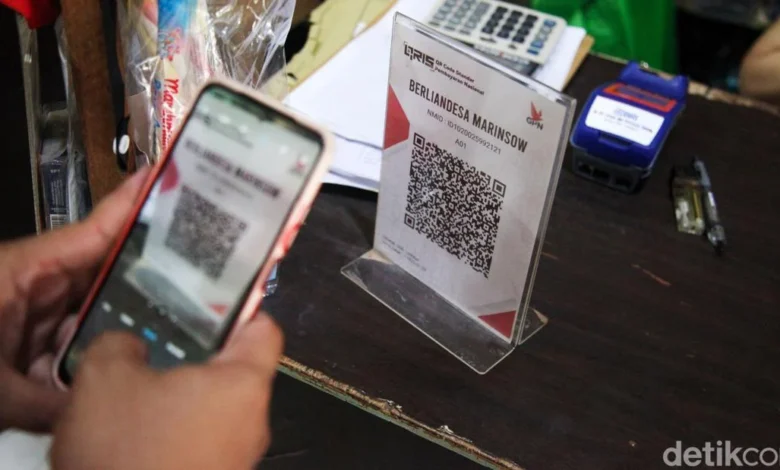
Bank Indonesia (BI) is actively accelerating its strategic roadmap to expand the Quick Response Code Indonesian Standard (QRIS) cross-border payment network, targeting key international markets including India, Saudi Arabia, and Hong Kong. This initiative represents a significant step in Indonesia’s ongoing efforts to enhance digital financial integration, reduce transaction costs for international travelers, and strengthen the domestic economy through seamless digital infrastructure. During a virtual press conference held on Wednesday, July 22, 2026, Bank Indonesia Deputy Governor Filianingsih Hendarta confirmed that the central bank is currently engaged in "deep discussions" with financial authorities in these jurisdictions to establish technical and regulatory frameworks for interoperable payment systems.
The expansion follows the successful implementation of QRIS linkages with several Asian neighbors, including Thailand, Malaysia, Singapore, Japan, South Korea, and China. By broadening this network to include major economic hubs and religious tourism destinations like Saudi Arabia, Bank Indonesia aims to provide Indonesian citizens and foreign visitors with a more efficient, transparent, and cost-effective method of conducting transactions without the need for physical currency exchange or traditional credit card intermediaries.
Strategic Roadmap and Current Progress
The push for cross-border QRIS is part of a broader vision established by Bank Indonesia under the Indonesia Payment System Blueprint 2025 and its subsequent extensions. The primary objective is to create a digital payment ecosystem that is not only robust domestically but also globally competitive. Deputy Governor Filianingsih Hendarta emphasized that while the ambition to expand is high, the timeline for implementation remains contingent on the readiness of partner nations.
"We are currently continuing discussions with India for cross-border payments, and we have also started in-depth discussions with Saudi Arabia and Hong Kong," Filianingsih stated. She noted that the implementation process is complex, requiring alignment across four critical pillars: regulation, infrastructure, industry readiness, and inter-authority coordination. Each country possesses a unique financial landscape, and ensuring that Indonesian QRIS standards can "talk" to India’s Unified Payments Interface (UPI) or Hong Kong’s Faster Payment System (FPS) requires meticulous technical mapping and legal synchronization.
In India, the potential for synergy is immense. India’s UPI is one of the world’s most advanced real-time payment systems, and a linkage with QRIS would facilitate seamless trade and tourism between two of the world’s most populous emerging economies. In Saudi Arabia, the focus is heavily geared toward the hundreds of thousands of Indonesian pilgrims who travel for Hajj and Umrah annually. A cross-border QRIS system would allow these pilgrims to pay for goods and services in the Kingdom using their Indonesian mobile banking or e-wallet apps, with transactions settled in local currencies at competitive exchange rates.
Performance Metrics and Economic Impact
The urgency to expand the network is supported by robust data from the second quarter of 2026. According to Bank Indonesia, the performance of existing cross-border QRIS implementations has shown a consistently positive growth trend. During Q2-2026, the net value of cross-border QRIS transactions reached Rp 1.52 trillion. This figure is a testament to the increasing adoption of digital payments by both Indonesians traveling abroad and foreign tourists visiting the archipelago.
A closer look at the data reveals a significant "inbound" dominance. Inbound transactions—where foreign visitors use their domestic payment apps to scan Indonesian QRIS codes—totaled Rp 1.85 trillion. Conversely, outbound transactions—Indonesians using QRIS at merchants abroad—stood at approximately Rp 330 billion. This discrepancy highlights the immense value of QRIS as a tool for capturing foreign tourist spending, particularly within the Micro, Small, and Medium Enterprise (MSME) sector.
"This condition reflects that cross-country QRIS indeed facilitates cross-border payment transactions," Filianingsih explained. "Beyond merely providing convenience, it also drives real economic growth through the tourism sector and MSMEs. When a tourist from Singapore or China can easily pay a local vendor in Bali or Yogyakarta using their phone, it removes the friction of currency conversion and encourages higher spending at the grassroots level."
The Role of Local Currency Settlement (LCS)
A fundamental component of the cross-border QRIS initiative is its integration with the Local Currency Settlement (LCS) framework. Traditionally, international transactions are routed through a global reserve currency, typically the U.S. Dollar. This process involves multiple conversion steps, leading to higher fees and exposure to exchange rate volatility.
By utilizing the LCS framework, QRIS transactions are settled directly between the Indonesian Rupiah (IDR) and the currency of the partner country (such as the Thai Baht, Malaysian Ringgit, or Singapore Dollar). This "de-dollarization" of retail transactions not only lowers costs for consumers but also contributes to the stability of the Rupiah by reducing the domestic demand for U.S. Dollars for small-scale international settlements. The expansion into India, Saudi Arabia, and Hong Kong will follow this same principle, further insulating the Indonesian economy from external global currency shocks.
Chronology of Cross-Border Payment Development
The journey toward a regional payment network began in earnest in 2022 during Indonesia’s G20 Presidency. At that time, five ASEAN central banks—Bank Indonesia, Bank Negara Malaysia, Bangko Sentral ng Pilipinas, Monetary Authority of Singapore, and Bank of Thailand—signed a Memorandum of Understanding (MoU) on Regional Payment Connectivity (RPC).
- Late 2022: Full implementation of QRIS-Thai QR linkage, allowing tourists between Indonesia and Thailand to scan and pay instantly.
- 2023: Launch of the QRIS-NETS linkage with Singapore and the expansion of cooperation with Malaysia.
- 2024-2025: Pilot projects and MoUs were signed with Japan (using JPQR) and South Korea. China also entered the fold, facilitating transactions for the large volume of Chinese tourists returning to Indonesia post-pandemic.
- Early 2026: Technical trials began with the Hong Kong Monetary Authority (HKMA) and the Reserve Bank of India (RBI).
- July 2026: Bank Indonesia officially announces "deep discussions" with Saudi Arabia, marking the first major push outside of the East Asian and ASEAN regions.
Stakeholder Reactions and Market Implications
The announcement has been met with optimism from various sectors of the Indonesian economy. The Indonesian Tourism Industry Board (GIPI) noted that the inclusion of Saudi Arabia is a "game-changer" for the travel industry. For years, Indonesian pilgrims have struggled with carrying large amounts of cash or dealing with high foreign transaction fees on credit cards. A direct digital link would simplify the logistics of the Hajj and Umrah, which are significant contributors to Indonesia’s outbound travel sector.
Financial technology (Fintech) players in Indonesia, such as GoPay, OVO, and Dana, have also expressed readiness to integrate these new corridors into their platforms. For these providers, cross-border QRIS represents an opportunity to increase user engagement and transaction volume. Industry analysts suggest that as the network grows, it will likely lead to a consolidation of digital wallet services, as consumers gravitate toward platforms that offer the widest range of international usability.
However, some experts caution that the "outbound" gap—where Indonesians spend less abroad via QRIS than foreigners spend in Indonesia—needs to be addressed through better consumer education. While the system is convenient, many Indonesian travelers are still accustomed to using cash or physical cards when traveling to India or Hong Kong. Increasing awareness of the exchange rate benefits of QRIS will be crucial for balancing the transaction flow.
Challenges to Implementation
Despite the momentum, several hurdles remain. The first is regulatory alignment. Each country has different Anti-Money Laundering (AML) and Counter-Terrorism Financing (CTF) protocols. Harmonizing these rules to ensure that a transaction in a Mumbai market complies with both Indian and Indonesian law is a significant legal undertaking.
The second challenge is infrastructure parity. While Indonesia has achieved high QRIS penetration, the merchant-side infrastructure in some parts of the partner countries may vary. In India, the UPI system is ubiquitous, making the technical merger relatively straightforward. However, in Saudi Arabia, the transition to a unified QR standard for small merchants is still an ongoing process, which may dictate the speed at which the QRIS linkage can be rolled out.
Finally, there is the issue of cybersecurity. As financial systems become more interconnected, the surface area for potential cyberattacks increases. Bank Indonesia has reiterated that data protection and transaction security are paramount, and any cross-border agreement includes stringent requirements for encrypted data transmission and fraud detection systems.
Future Outlook: A Global Digital Currency Vision
The expansion of QRIS to India, Saudi Arabia, and Hong Kong is more than just a convenience for tourists; it is a building block for a future where regional digital currencies and instant payment systems redefine global finance. As Indonesia continues to lead in the ASEAN payment space, its model of QR-based cross-border settlement is being watched by central banks worldwide as a viable alternative to traditional SWIFT-based retail settlements.
In the coming months, Bank Indonesia is expected to provide further updates on the technical trials with India and Hong Kong. If successful, these linkages could go live by late 2026 or early 2027, potentially bringing millions of new merchants into the Indonesian digital payment orbit. For the Indonesian economy, this means more than just ease of payment; it signifies a more resilient, integrated, and digitally sovereign financial future.
By fostering these international partnerships, Bank Indonesia is not only facilitating travel and trade but is also ensuring that the Indonesian Rupiah remains a relevant and powerful tool in the digital age. As Deputy Governor Filianingsih concluded, the goal is to create a "seamless, fast, and secure" experience that reflects Indonesia’s position as a leader in the global digital economy.