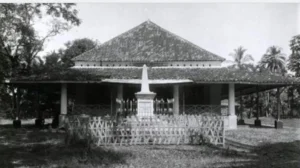
Jam Gadang, a towering clock monument in the heart of Bukittinggi, West Sumatra, stands as an enduring symbol of the city and a significant landmark of the Indonesian province. With a history stretching back decades, this iconic structure is more than just a timekeeping device; it is a repository of cultural heritage, architectural marvel, and intriguing historical anecdotes that continue to captivate visitors and locals alike. The construction of Jam Gadang commenced in 1926, an ambitious project spearheaded by architects Yazin and Sutan Gigi Ameh, marking a significant addition to Bukittinggi’s urban landscape.
A Gift from the Dutch Crown, A Testament to Dutch-Minangkabau Relations
The origins of Jam Gadang are deeply intertwined with the colonial era of Indonesia, specifically during the Dutch administration. While the original text mentions it as a gift from the Queen of the Netherlands to the Controleur (City Secretary), a deeper dive into the historical context reveals a more nuanced narrative. The construction of such a prominent public building often served multiple purposes for colonial powers, including asserting their presence and modernizing urban centers. The specific decision to erect a grand clock tower in Bukittinggi, then a significant administrative and commercial hub under Dutch rule, likely reflected a desire to imbue the city with a sense of order, progress, and Western architectural influence.
The groundbreaking ceremony for this significant edifice was marked by a symbolic gesture: the first stone was laid by the six-year-old eldest son of Rook Maker, the Dutch Resident of the time. This detail, while seemingly minor, underscores the Dutch administrative presence and the integration of local elites into the colonial structure, even in ceremonial capacities. The choice of Bukittinggi as the location for such a prominent landmark was strategic. The city, known for its strategic location in the highlands and its rich cultural heritage, was a burgeoning center for trade and administration. The clock tower, therefore, was intended to be a focal point, a symbol of modernity and Dutch authority, visible from afar and serving as a central gathering point.
Architectural Uniqueness and the Enigma of Roman Numeral Four
Beyond its historical significance, Jam Gadang is renowned for its distinctive architectural features and a peculiar detail that has fueled speculation for generations: the representation of the number four on its clock face. Typically, the Roman numeral for four is represented as "IV." However, on Jam Gadang’s clock, the numeral is rendered as "IIII." This deviation from the standard Roman numeral convention has become a subject of much discussion and intrigue.
Theories abound regarding this anomaly. Some suggest it was a deliberate artistic choice by the architects or clockmakers, perhaps influenced by aesthetic preferences or a regional interpretation of Roman numerals. Another popular theory posits that this unusual depiction was intended to ward off evil spirits. In many cultures, the number four is associated with ill fortune, and by altering its representation, it was believed that the clock tower, and by extension the city, could be protected from negative influences. While the exact reason remains shrouded in mystery, the "IIII" inscription adds a layer of mystique to Jam Gadang, making it a point of fascination for visitors and a topic of local folklore. This unique feature distinguishes Jam Gadang from many other clock towers around the world that adhere to the conventional "IV" representation.
The Heart of the Clock: A Mechanical Marvel Shared with Big Ben
Perhaps one of the most astonishing revelations about Jam Gadang is the origin and rarity of its mechanical heart. It is widely believed that the clock’s mechanism is one of only two in existence globally, with its twin residing within the iconic Big Ben clock tower in London, England. This claim, if accurate, places Jam Gadang in an elite category of historical timekeeping machinery. The mechanism, known as Brixlion, was reportedly crafted by a renowned nobleman named Forman.
The fact that Jam Gadang’s internal workings are believed to be identical to those of Big Ben is a testament to the sophisticated engineering of the era. These manual mechanisms require meticulous maintenance and skilled craftsmanship to keep them functioning accurately. The comparison to Big Ben, a globally recognized symbol of precision and British engineering, elevates Jam Gadang’s standing and highlights its historical and technological importance. The manual operation of such complex machinery also speaks to a bygone era of clockmaking, where intricate gears and weights were the pinnacle of temporal measurement. The continued functioning of these mechanisms for nearly a century is a remarkable feat of engineering and preservation.

Evolution and Resilience: A Timeline of Jam Gadang
The journey of Jam Gadang has been one of continuous presence and remarkable resilience, weathering the passage of time and various historical events. While the initial construction was completed in 1926, its history is punctuated by periods of restoration and adaptation.
- 1926: Construction of Jam Gadang is completed. The architectural design, a blend of Minangkabau elements with European influences, is a distinctive feature. The tower stands as a prominent landmark, symbolizing the city’s development under Dutch administration.
- Mid-20th Century: Following Indonesia’s independence, Jam Gadang continues to serve as a central point in Bukittinggi. Its role evolves from a symbol of colonial presence to a national icon representing local pride and heritage.
- Post-Independence Era: Various renovations and maintenance efforts are undertaken to preserve the clock tower. The unique Roman numeral "IIII" continues to be a point of discussion. The clock mechanism, believed to be a twin of Big Ben’s, requires regular servicing by skilled technicians.
- Late 20th and Early 21st Century: Jam Gadang becomes a major tourist attraction. Its presence is integrated into the city’s identity, appearing on postcards, souvenirs, and official city branding. The surrounding area develops into a vibrant public space.
- Ongoing: The clock tower remains operational, its chimes echoing through Bukittinggi. Efforts continue to maintain its structural integrity and the functionality of its historic mechanism, ensuring its legacy for future generations.
Enduring Symbolism and Economic Impact
Jam Gadang’s significance extends beyond its historical and architectural merits. It is deeply woven into the cultural fabric of Bukittinggi and West Sumatra. The tower is a constant presence, its chimes marking the passage of time and serving as a familiar soundscape for residents. For the local population, it represents continuity, heritage, and a tangible link to their past.
Economically, Jam Gadang is a vital engine for Bukittinggi’s tourism industry. The influx of domestic and international visitors drawn to its unique charm contributes significantly to the local economy through hospitality, retail, and transportation services. The area surrounding the clock tower is a hub of activity, with street vendors, restaurants, and shops catering to the tourist trade. Its image is a ubiquitous representation of Bukittinggi, making it instantly recognizable and a primary draw for visitors seeking to experience the cultural richness of West Sumatra.
Official Perspectives and Community Engagement
While the original text offers a brief historical overview, understanding official and community perspectives adds depth to the narrative. Local authorities in Bukittinggi consistently emphasize the importance of preserving Jam Gadang as a cultural heritage site. The city government, through its tourism and cultural departments, invests in its maintenance and promotion.
Statements from local cultural experts and historians often highlight the tower’s role in bridging past and present. They emphasize the importance of understanding its colonial origins while celebrating its transformation into a symbol of Indonesian identity and local pride. Community engagement often involves educational programs and cultural events held around Jam Gadang, further solidifying its place in the hearts of the people. The unique "IIII" inscription, for instance, is often presented as a point of local pride and a conversation starter, rather than a point of concern.
Broader Implications and Future Outlook
The enduring appeal of Jam Gadang lies in its multifaceted nature. It is a historical monument, an architectural marvel, a functioning timepiece, and a vibrant cultural icon. Its continued relevance underscores the importance of preserving historical landmarks that not only tell a story of the past but also contribute to the present and future identity of a place.
The comparison to Big Ben, while based on shared mechanical origins, also serves to place Jam Gadang on a global stage of historical horology. It invites further research into the shared history of clockmaking and its international dissemination. As Bukittinggi continues to develop, Jam Gadang remains a constant, a reminder of its rich heritage and a beacon for its future. The ongoing efforts to maintain its integrity and share its story ensure that this iconic clock tower will continue to stand tall, marking the passage of time and inspiring generations to come. The mysteries surrounding its unique Roman numeral and its mechanical kinship with a global icon only add to its allure, ensuring that Jam Gadang will remain a captivating destination and a cherished symbol for years to come.