IKA ITS Calls for Anti-Corruption Law Reform to Ensure Legal Certainty for State Professionals and Economic Growth

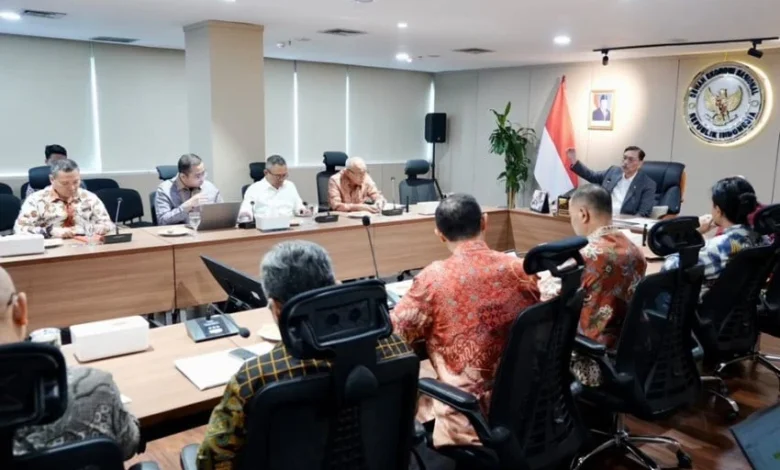
The Ikatan Alumni Institut Teknologi Sepuluh Nopember (IKA ITS), representing a significant coalition of national alumni associations, has formally proposed a comprehensive reform of the legal framework governing corruption eradication in Indonesia. The proposal, tabled during a high-level discussion at the National Economic Council (DEN) headquarters in Jakarta on Friday, November 6, 2026, seeks to balance stringent anti-graft enforcement with the necessity of providing legal protection and certainty for professionals engaged in public service and state-owned enterprises (SOEs).
The dialogue, led by Chairman of the National Economic Council (DEN) Luhut Binsar Pandjaitan, served as a forum for intellectual and professional leaders to address the chilling effect that current interpretations of the Law on the Eradication of Criminal Acts of Corruption (UU Tipikor) have had on national development. Attendees included representatives from the alumni associations of the Bandung Institute of Technology (IA ITB), the University of Indonesia (ILUNI UI), Gadjah Mada University (KAGAMA), Airlangga University (IKA UNAIR), and Padjadjaran University (IKA UNPAD).
The Core Conflict: Administrative Error vs. Criminal Intent
At the heart of the discourse is the ambiguity surrounding the definition of "state loss" (kerugian negara). According to Boy Robyanto, Vice Chairman of IKA ITS, the current legal landscape has created a climate of hesitation among BUMN executives and public sector decision-makers. The fear of being criminalized for business risks or minor administrative irregularities—which are often misclassified as criminal corruption—has led to a paralysis in strategic decision-making.
"The lack of clarity regarding the application of corruption provisions, especially concerning state losses, has created significant uncertainty," Robyanto stated during the meeting. "This condition forces professionals to adopt an overly defensive stance, which inherently stifles business initiatives, slows down public service delivery, and ultimately degrades the competitiveness of our state-owned enterprises on the global stage."
The discussion specifically targeted the transition of provisions from the old UU Tipikor to the new Criminal Code (KUHP), specifically Articles 603 and 604. Experts argue that without a rigid, statutory distinction between business judgment risks and malicious criminal acts, the justice system remains prone to subjective interpretation. This lack of clear boundary, they suggest, invites an environment where the absence of personal enrichment does not necessarily safeguard an individual from prosecution, provided a "state loss" or "corporate benefit" is identified by auditors.
Historical Context and International Standards
Indonesia’s commitment to combating corruption was solidified through the ratification of the United Nations Convention Against Corruption (UNCAC) via Law Number 7 of 2006. Nearly two decades later, stakeholders are questioning whether the domestic application of these principles has kept pace with international best practices.
The proposal by IKA ITS highlights that while UNCAC emphasizes the importance of integrity, it does not mandate the criminalization of legitimate business decisions that happen to result in financial fluctuations. In many jurisdictions, the "Business Judgment Rule" protects directors and officials from liability if they acted in good faith and with due care, even if the outcome was unfavorable. Indonesian law, however, has historically struggled to integrate this protection, often conflating economic loss with criminal intent.
Case Study: The Pelindo Precedents
To illustrate the urgency of the reform, Robyanto cited the legal challenges faced by Pelindo (the Indonesian Port Corporation) as a primary example of how the current interpretation of "state loss" can be problematic.
In the case of PT APBS, a subsidiary of Pelindo, harbor dredging operations were successfully completed, providing clear operational benefits to the port. However, legal scrutiny arose regarding the procurement process. While the courts determined that the individuals involved did not derive any personal financial gain, the process was deemed to have provided an "unfair advantage" to the corporation.
This creates a paradoxical legal reality: state officials are held criminally liable for actions that generate operational success for the state, simply because the procurement pathway did not align with a rigid, narrow interpretation of regulatory compliance. Critics argue that such precedents discourage state enterprises from undertaking necessary infrastructure projects, fearing that any future audit—conducted with the benefit of hindsight—could lead to a corruption investigation.
Chronology of Legislative Evolution
The call for reform comes at a critical juncture in Indonesian law. The legislative timeline reflects a country constantly adjusting its stance on corruption:
- 1999: Enactment of Law No. 31/1999 on the Eradication of Corruption, which laid the foundation for the current system.
- 2006: Indonesia ratifies the UNCAC, integrating international standards into its domestic legal framework.
- 2023: The passing of the new Criminal Code (KUHP), which incorporates anti-corruption provisions into the broader national code, raising questions about how these will be interpreted in the courts.
- 2026: The current push by academic and professional circles to introduce clear interpretive guidelines or secondary legislation to define the boundaries of "state loss" and "abuse of authority."
The Economic Impact: Why Reform Matters
The economic implications of this legal ambiguity are profound. SOEs are the engines of Indonesia’s infrastructure development, energy security, and logistics. If the leadership of these organizations is forced to prioritize "defensive compliance" over "strategic growth," the state loses its ability to respond to market volatility.
Data suggests that as the perception of risk in public procurement increases, the participation of private-sector partners in Public-Private Partnerships (PPP) decreases. Investors are wary of entering into contracts with state entities if those contracts can be easily reopened by law enforcement agencies under the guise of an audit finding years after the project’s completion.
Economists argue that by reforming the legal definitions to require "mens rea" (criminal intent) and excluding honest business errors, the government could unlock a significant volume of stalled project investments. The goal is not to weaken the fight against corruption, but to refine it so that it targets actual graft rather than operational management.
Official Responses and Future Outlook
Chairman of the DEN, Luhut Binsar Pandjaitan, acknowledged the validity of the concerns raised by the alumni representatives. The DEN has been tasked with ensuring that economic growth remains a priority alongside institutional integrity.
While the Ministry of Law and Human Rights and the Attorney General’s Office have yet to issue a formal policy shift, the discussion at the DEN signals a growing consensus within the current administration that the current "corruption-hunting" climate may be counter-productive to the government’s goal of achieving high economic growth.
The path forward, as suggested by the forum participants, involves a tripartite approach:
- Legislative Clarification: Introducing an addendum or a clearer explanatory memorandum for Articles 603 and 604 of the new KUHP.
- Regulatory Reform: Standardizing the definition of "state loss" across audit agencies (such as BPK and BPKP) to ensure consistency.
- Capacity Building: Training law enforcement and judicial officers to differentiate between administrative malpractice, civil breach of contract, and criminal corruption.
As Indonesia navigates its post-2026 economic agenda, the tension between legal enforcement and economic efficiency will remain a defining theme. For now, the push by IKA ITS and its partners serves as a formal notice that the professional community is ready to engage in a substantive overhaul of the rules governing their professional lives, aiming to foster an environment where integrity and efficiency can coexist.