NVIDIA GeForce RTX 5080 Disappears from Official US Marketplace as Stock Dries Up and Rumors of a 24GB Variant Surface

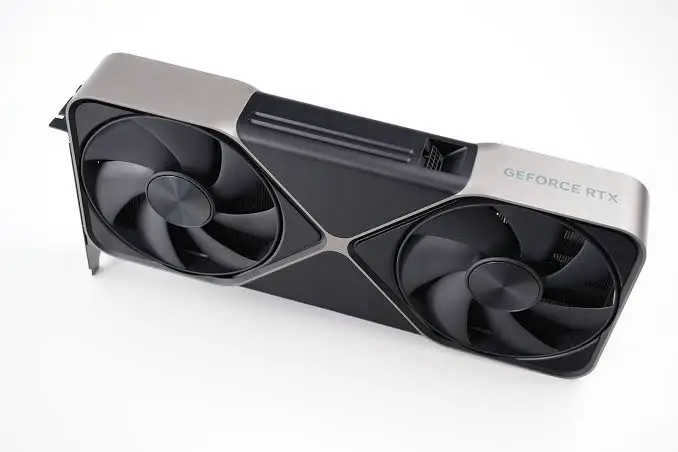
The global hardware landscape is experiencing yet another severe supply crunch within the high-end graphics card market, mirroring the severe shortages that previously crippled availability for NVIDIA’s flagship GeForce RTX 5090. Following in the footsteps of its ultra-enthusiast sibling, the GeForce RTX 5080 has begun vanishing from major retail channels across the United States. Most notably, the high-end GPU has been entirely removed from the official NVIDIA Marketplace in the US, signaling that manufacturer-direct allocations have been completely exhausted.
This sudden disappearance of the RTX 5080 from primary channels has sent shockwaves through the PC building community, driving aftermarket prices skyward. Compounding the supply anxiety are persistent industry rumors suggesting that NVIDIA is actively preparing a refreshed iteration of the card equipped with a massive 24GB VRAM buffer, slated for an impending release. As consumers grapple with dwindling inventory and hyper-inflated pricing, the tech industry is left to evaluate how these supply chain shifts will impact the broader consumer hardware ecosystem entering the final stretch of 2026.
The Disappearance from the NVIDIA Marketplace and US Retail Landscape
The first major warning sign of the mounting shortage became evident when product listings for the GeForce RTX 5080 were quietly scrubbed from the NVIDIA Marketplace US portal. Consumers attempting to source the card directly through official channels are now met with empty inventory slots. Furthermore, custom add-in board (AIB) partner variants manufactured by industry heavyweights such as ASUS, MSI, and Gigabyte are entirely absent from the platform.
At present, the GeForce RTX 5070 Ti occupies the position of the highest-tier graphics card currently listed on the official US marketplace, highlighting a significant vacuum at the very top of NVIDIA’s consumer lineup. This scenario closely mirrors the trajectory observed in October 2026, when the top-tier RTX 5090 suffered an identical fate, virtually evaporating from standard retail channels due to overwhelmingly high demand outstripping foundry output.
With official supply drying up, secondary and tertiary retailers have capitalized on the scarcity. While the baseline Manufacturer’s Suggested Retail Price (MSRP) for the GeForce RTX 5080 was originally established at a formidable $999 USD, current market realities look drastically different. In numerous prominent US-based hardware retailers and online marketplaces, remaining stock of the RTX 5080 is now commanding eye-watering prices exceeding $2,000 USD, effectively doubling the card’s original target cost.
A Comparative Look at Regional Availability: The Situation in Indonesia
While the North American market faces a near-total blackout of direct NVIDIA Marketplace availability, the ripple effects of the global shortage manifest differently in international regions. In Southeast Asia, specifically Indonesia, the GeForce RTX 5080 has managed to remain marginally visible across local e-commerce ecosystems, though buyers face severe financial premiums.
Recent market checks across prominent Indonesian digital storefronts such as Shopee and Blibli reveal that scattered units of the RTX 5080 are still lingering on virtual shelves. Base model iterations are currently listed starting at approximately IDR 34.9 million. However, these baseline offerings are the exception rather than the rule. The vast majority of active listings for premium custom-cooled variants hover heavily within the IDR 40 million to IDR 50 million price bracket, heavily dependent on the specific board partner, cooling solution, and factory overclock applied.
This data underscores that while inventory has not vanished entirely in Indonesia, procurement requires significant financial investment and exhaustive cross-shopping. Prospective Indonesian builders are forced to navigate volatile pricing structures, carefully comparing stock levels across competing domestic retailers to avoid predatory markups amidst an increasingly constrained global supply chain.
Industry Rumors Point to an Imminent 24GB RTX 5080 Variant
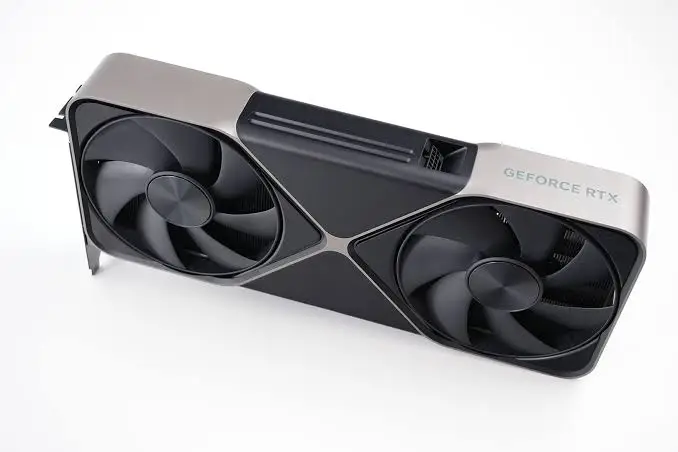
Amidst the chaos of disappearing inventory and exorbitant retail pricing, fresh supply chain intelligence indicates a strategic pivot by NVIDIA. Reports circulating within the hardware manufacturing sector suggest that the company is quietly developing and preparing to launch an upgraded iteration of the GeForce RTX 5080, featuring a doubled or substantially expanded VRAM configuration of 24GB.
The current standard iteration of the RTX 5080 relies on a 16GB GDDR7 memory subsystem. Introducing a 24GB variant would represent a massive 50 percent increase in framebuffer capacity, fundamentally altering the positioning of the card within the enthusiast stack. Industry insiders point toward a prospective launch window targeted for late December 2026 or early January 2027. Supporting this timeline are leaked distributor manifests suggesting that NVIDIA has nearly depleted its allocation of the original 16GB GPU silicon, with remaining global reserves projected to satisfy assembly lines for only roughly two more months.
The introduction of a 24GB memory buffer on the RTX 5080 architecture addresses mounting criticisms from professional creators and power users who view 16GB as an emerging bottleneck for extreme-resolution rendering and local computational workflows.
Analyzing the Implications of Expanded VRAM for Gaming and Local AI
The rumored pivot toward a 24GB VRAM configuration on a high-tier consumer card carries profound implications for both the gaming and artificial intelligence sectors. Over the past several hardware generations, the boundary between consumer gaming GPUs and entry-level workstation hardware has increasingly blurred, largely driven by the explosive democratization of generative artificial intelligence and large language models (LLMs) run locally on personal hardware.
For modern PC gaming, a 24GB VRAM buffer ensures absolute longevity. As developers increasingly adopt advanced ray tracing, path tracing, and uncompressed asset streaming, high-end resolutions such as 4K and multi-monitor setups frequently strain traditional 16GB limits. A higher memory pool eliminates potential stuttering issues tied to memory allocation bottlenecks in unoptimized titles.
More importantly, however, a 24GB VRAM configuration serves as a powerful catalyst for local AI deployment. In the current technological climate, enthusiasts, developers, and researchers frequently utilize desktop GPUs to run open-weight artificial intelligence models locally for privacy, latency, and cost-efficiency reasons. A 24GB memory footprint is widely considered the practical sweet spot for consumer hardware, allowing users to efficiently host and run quantized AI models scaling up to approximately 27 billion parameters without offloading computational tasks to system memory or cloud servers.
Despite these clear utility advantages, significant questions remain unanswered within the industry. Market analysts and hardware sleuths are currently debating whether this upcoming 24GB model will be formally branded under the anticipated "SUPER" moniker as part of a mid-generation refresh, or if it will be introduced as a completely standalone SKU with a unique internal GPU configuration. To date, NVIDIA has declined to issue any official confirmation or comment regarding the existence, naming convention, or pricing strategy of the rumored 24GB variant.
Broader Market Impact and Future Outlook for Consumer Hardware
The ongoing scarcity of the GeForce RTX 5080, compounded by the prior disappearance of the RTX 5090, highlights deep-seated vulnerabilities in the high-end semiconductor supply chain. High demand for advanced fabrication nodes at Taiwan Semiconductor Manufacturing Company (TSMC), combined with surging enterprise demand for silicon utilized in artificial intelligence data centers, continues to squeeze consumer-facing product allocations.
For the average consumer and PC enthusiast, the current market dynamic dictates a period of profound patience and fiscal caution. With primary retail channels devoid of stock and secondary markets demanding double the intended MSRP, purchasing a high-end NVIDIA GPU has become an exercise in extreme financial commitment.
As the industry looks ahead to the purported December 2026 or January 2027 arrival of the rumored 24GB RTX 5080 variant, market watchers will closely monitor whether this new product release serves to stabilize pricing, alleviate inventory pressures, or simply introduce a new tier of ultra-expensive hardware to an already overextended market. Until official statements are released by NVIDIA and production yields normalize across global manufacturing plants, high-end PC builders must navigate a turbulent marketplace defined by scarcity, inflated costs, and rapid generational evolution.