The Evolution of Erotic Cinema: A Comprehensive Analysis of 15 Definitive Films and Their Cultural Impact Throughout History

The intersection of sexuality and cinema has long been a focal point for artistic exploration, legal controversy, and commercial success, shaping the way audiences perceive the boundaries between art and provocation. Throughout the history of the medium, certain films have transcended the "erotic" label by integrating sophisticated narratives, psychological depth, and high-caliber performances, effectively moving adult-oriented content from the fringes of the industry into the mainstream critical spotlight. This analysis examines 15 seminal films that have defined the erotic genre, exploring their historical contexts, the technical mastery of their directors, and their lasting influence on global film culture.
The Architectural Foundation of Psychological Eroticism
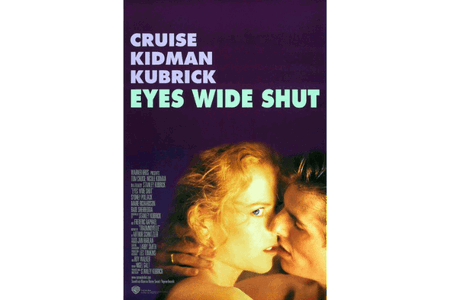
The late 20th century marked a significant shift in how high-budget studio films handled mature themes, with Stanley Kubrick’s final masterpiece, Eyes Wide Shut (1999), serving as a primary example. Starring the then-married couple Tom Cruise and Nicole Kidman, the film underwent a grueling 400-day production cycle, becoming the longest continuous film shoot in history. Adapted from Arthur Schnitzler’s 1926 novella Traumnovelle, the film transposed early 20th-century Vienna to a dreamlike 1990s New York.
Kubrick’s meticulous direction focused on the fragility of marriage and the hidden impulses of the subconscious. While the film was marketed heavily on its "masked orgy" sequence, critics eventually recognized it as a somber meditation on trust and the psychological distance between domestic life and sexual fantasy. The film’s release was preceded by Kubrick’s sudden death, adding a layer of posthumous mystique to its reception. It eventually grossed over $162 million worldwide, proving that high-concept erotic dramas could command significant box office power.
Aesthetic Mastery in Asian Cinema
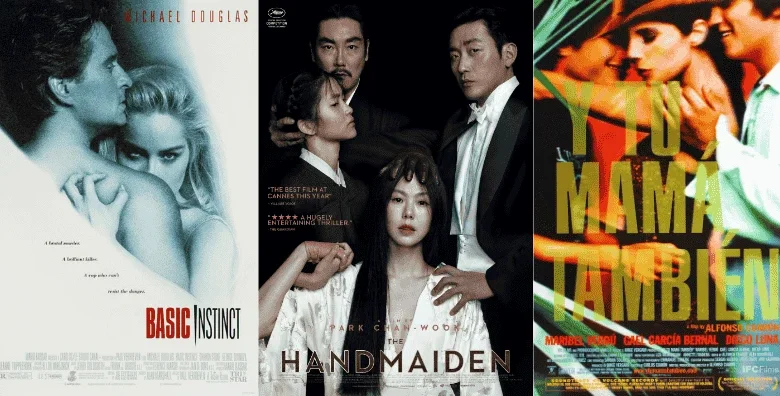
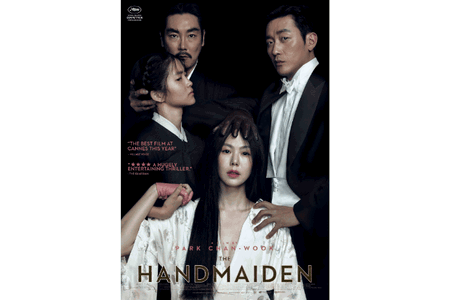
Asia has produced some of the most visually stunning and narratively complex erotic films of the modern era, often blending political history with personal intimacy. Park Chan-wook’s The Handmaiden (2016) is a landmark of South Korean cinema, inspired by Sarah Waters’ novel Fingersmith. By moving the setting from Victorian England to Korea under Japanese colonial rule, Park layered the erotic narrative with themes of national identity and class rebellion.
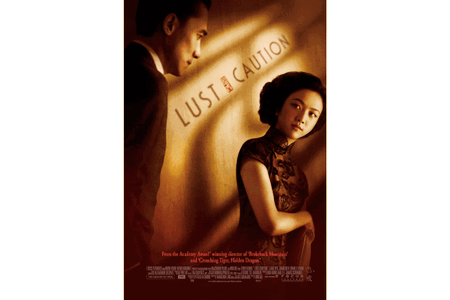
The film received universal acclaim for its three-part narrative structure and its "female gaze," winning the BAFTA for Best Film Not in the English Language. Similarly, Ang Lee’s Lust, Caution (2007) utilized the backdrop of the Japanese occupation of Shanghai to tell a harrowing story of espionage and obsession. The film’s explicit nature led to an NC-17 rating in the United States, yet it secured the Golden Lion at the Venice Film Festival, underscoring the director’s ability to balance graphic content with profound emotional stakes.
In the realm of pure aestheticism, Wong Kar-wai’s In the Mood for Love (2000) represents the "slow burn" of eroticism. While the film contains no explicit nudity, its atmosphere—defined by cramped hallways, lingering glances, and slow-motion sequences—is widely considered one of the most erotic experiences in cinema history. Tony Leung’s win for Best Actor at Cannes solidified the film’s status as a pinnacle of romantic tension.
The Controversy of Realism and Censorship
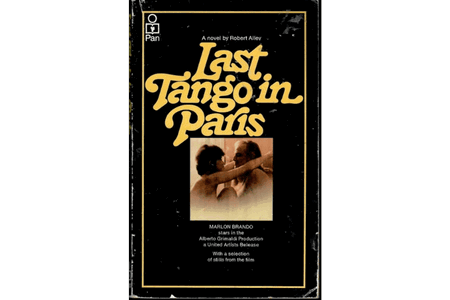
The 1970s saw a radical push for realism that often collided with international censorship boards. Bernardo Bertolucci’s Last Tango in Paris (1972) remains one of the most controversial films ever made. Starring Marlon Brando and Maria Schneider, the film explored the anonymous sexual encounters between a grieving American widower and a young French woman.
While praised for its raw performances, the film faced decades of legal battles and moral condemnation. In recent years, the film has been re-evaluated through the lens of ethics and consent, following revelations regarding the treatment of Schneider on set. Despite the controversy, its impact on the "X-rated" market was undeniable, as it became one of the highest-grossing films of 1973, proving that adult audiences were hungry for uncompromising realism.
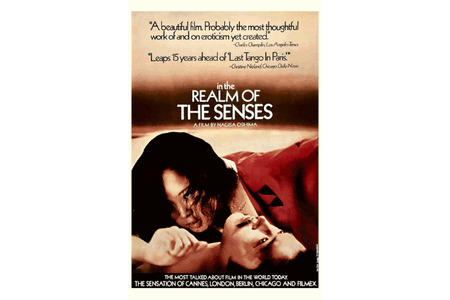
Nagisa Ōshima’s In the Realm of the Senses (1976) pushed these boundaries even further. Based on the true story of Sada Abe in 1930s Japan, the film featured unsimulated sexual acts, leading to its seizure by customs officials in various countries. Ōshima argued that the film was a political statement against the rising militarism of Japan, using sexual obsession as the ultimate form of anti-authoritarian rebellion.
The Neo-Noir and the Erotic Thriller Boom
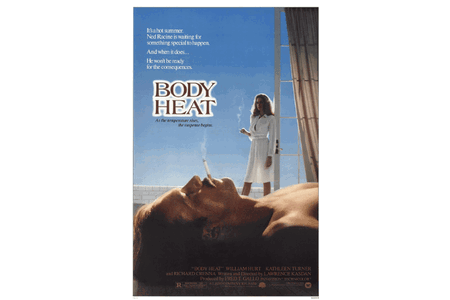
The 1980s and 1990s witnessed the rise of the "erotic thriller," a subgenre that combined the aesthetics of film noir with explicit sexual content. Lawrence Kasdan’s Body Heat (1981) revitalized the "femme fatale" archetype for a new generation. Starring Kathleen Turner and William Hurt, the film utilized the stifling heat of a Florida summer as a metaphor for the protagonists’ uncontrollable lust and murderous intent.
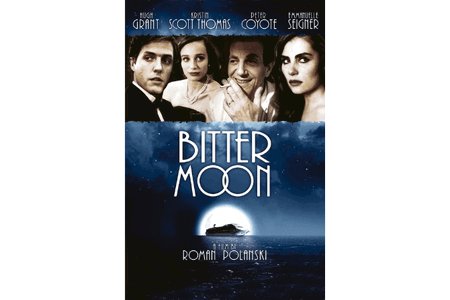
This trend reached its commercial zenith with Paul Verhoeven’s Basic Instinct (1992). The film, which follows a detective’s dangerous attraction to a novelist who may be a serial killer, became a global phenomenon, grossing $353 million. Sharon Stone’s performance redefined the power dynamics of erotic cinema, though the film faced significant protests from advocacy groups regarding its portrayal of LGBTQ+ characters. Verhoeven’s objective, often satirical lens challenged audiences to confront their own voyeurism.
Global Perspectives on Coming-of-Age and Identity
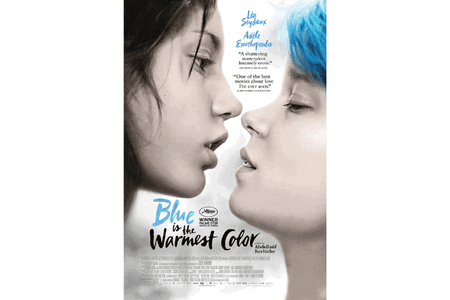
Erotic cinema has also served as a vehicle for exploring the complexities of youth and sexual awakening. Abdellatif Kechiche’s Blue Is the Warmest Colour (2013) made history at the Cannes Film Festival when the Palme d’Or was awarded not just to the director, but also to the two lead actresses, Léa Seydoux and Adèle Exarchopoulos. The film’s lengthy, graphic depictions of a lesbian relationship were balanced by a deeply human portrayal of the heartbreak that follows a first love.
In Mexico, Alfonso Cuarón’s Y tu Mamá También (2001) used a road trip involving two teenage boys and an older woman to provide a scathing critique of Mexican social and political structures. The film’s frankness regarding adolescent sexuality was matched by its innovative cinematography and narrative voiceovers, earning it an Academy Award nomination for Best Original Screenplay.
Power Dynamics and Subversion of the Norm
The exploration of BDSM and unconventional power structures has occasionally found its way into the mainstream, most notably with Steven Shainberg’s Secretary (2002). Rather than treating its subject matter as a fetish to be mocked, the film presented the relationship between a lawyer (James Spader) and his secretary (Maggie Gyllenhaal) as a profound form of emotional healing. It was praised for its wit and its refusal to judge its characters’ desires.
Similarly, Adrian Lyne’s Unfaithful (2002) examined the devastating consequences of infidelity within a seemingly perfect suburban marriage. Diane Lane’s performance, which earned her an Oscar nomination, was lauded for its nuanced portrayal of guilt, desire, and the physical toll of a secret life. Unlike many of its predecessors, Unfaithful focused heavily on the internal emotional landscape of the woman, rather than just the mechanics of the affair.
Commercial Risks and Cultural Legacy
The history of erotic cinema is also marked by high-profile risks that did not always satisfy critics. Andrew Bergman’s Striptease (1996) became a focal point of industry news when Demi Moore was paid a record-breaking $12.5 million for the lead role. While the film was a commercial success in some markets, it was panned by critics for failing to balance its dark comedy with its erotic elements.
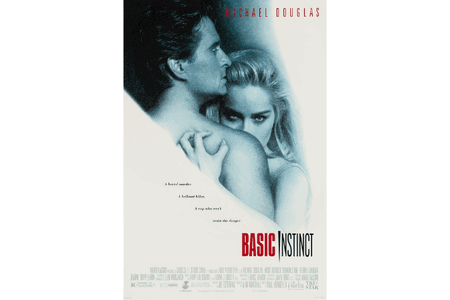
In contrast, films like Original Sin (2001), starring Angelina Jolie and Antonio Banderas, and Bitter Moon (1992), directed by Roman Polanski, have found a cult following. Bitter Moon, in particular, is noted for its pitch-black humor and its exploration of how obsession can lead to mutual destruction, a recurring theme in Polanski’s filmography.
Analysis of Broader Impacts and Industry Implications
The 15 films discussed represent a spectrum of artistic intent, ranging from high-brow philosophical inquiry to populist entertainment. The evolution of this genre reflects broader societal changes regarding sexual liberation, gender roles, and the limits of free speech.
Data from the last four decades suggests that while the "erotic thriller" as a dominant box office force peaked in the early 1990s, the elements of the genre have been absorbed into modern prestige television and independent cinema. The transition from the X rating to the NC-17 rating in the United States was largely driven by several of these films, as filmmakers fought to distinguish their artistic work from pornography.
Furthermore, the "Auteur" approach to eroticism—as seen in the works of Kubrick, Park, and Lee—has validated the genre in the eyes of international festivals. These films prove that sexuality, when handled with technical skill and narrative purpose, remains one of the most powerful tools available to a director for exploring the human condition. As streaming platforms continue to dominate the distribution landscape, the legacy of these theatrical milestones continues to influence how modern storytellers navigate the complexities of intimacy and desire on screen.
In conclusion, the films on this list are more than just "hot" or "provocative." They are historical markers that challenged the status quo, pushed the boundaries of what was permissible in public spaces, and provided a mirror for the evolving sexual politics of the modern world. Whether through the lens of a thriller, a period drama, or a coming-of-age story, they remain essential viewing for anyone seeking to understand the intersection of art, commerce, and the primal instincts of humanity.