Goa Lowo Trenggalek: Unveiling the Grandeur of Southeast Asia’s Largest Natural Cave System

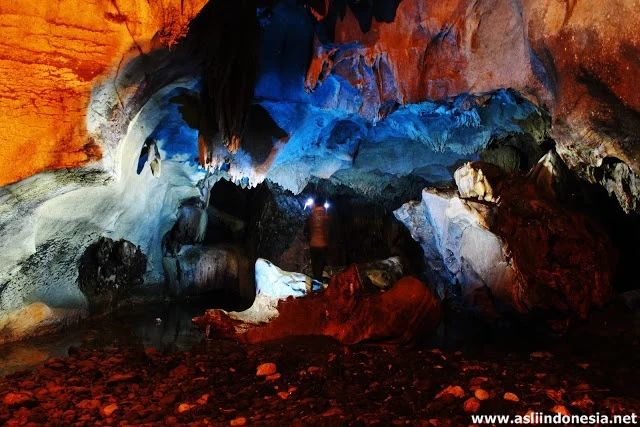
Deep within the lush, undulating landscapes of East Java, Indonesia, lies a subterranean wonder that has captivated geologists and tourists alike for nearly a century. Goa Lowo, known locally as the "Cave of Bats," serves as a testament to the region’s geological complexity and historical significance. Located in the village of Watuagung, within the Watulimo district of Trenggalek Regency, this expansive cavern complex is widely recognized as the largest and longest natural cave system in Southeast Asia. Its transformation from a mysterious, bat-inhabited grotto to a premier destination for ecotourism marks a significant chapter in the conservation and economic development of the region.
Historical Chronology and Discovery
The history of Goa Lowo is one of gradual transition from local lore to scientific interest. While the local population had been aware of the cave’s presence for generations—given its significance as a habitat for thousands of bats—it was not until 1931 that the site was formally documented and brought to the attention of the wider public. During the early 20th century, the Dutch colonial administration and local researchers began exploring the interiors of the karst formations scattered throughout the Trenggalek mountains.
It took several decades before the site was recognized for its potential as an educational and recreational landmark. Following years of surveys and safety assessments, the Indonesian government officially inaugurated Goa Lowo as a managed tourist site in 1984. This move was intended to preserve the cave’s delicate ecosystem while providing a sustainable revenue stream for the local community. Since then, the site has undergone multiple rounds of infrastructure improvements, including the installation of lighting systems and pathways, to allow visitors to safely navigate the subterranean terrain.
Geological Significance and Interior Architecture
Geologically, Goa Lowo is a karst formation, a landscape shaped by the dissolution of soluble rocks such as limestone, dolomite, and gypsum. The cave is characterized by an extensive network of chambers that stretch for approximately two kilometers. However, to maintain the safety of visitors and preserve the internal environment, only the first 850 meters are currently accessible to the general public. Beyond this point, the cave extends into a complex system of underground rivers and restricted galleries that require specialized caving equipment and expertise to explore.
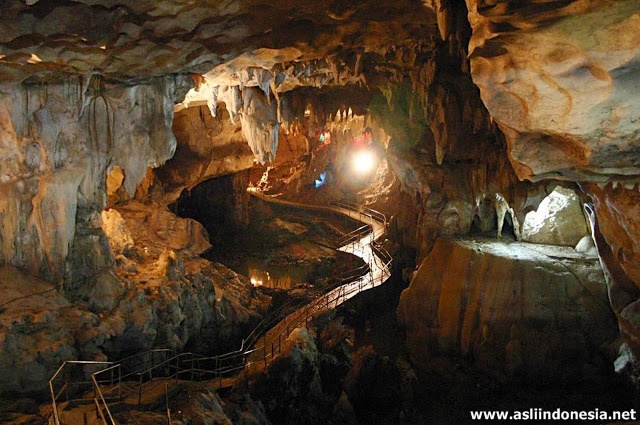
The interior of the cave is defined by its "living" formations. Unlike dead caves where the geological processes have ceased, the stalactites—mineral deposits hanging from the ceiling—and stalagmites—mounds rising from the floor—in Goa Lowo continue to grow at a slow, steady rate. This growth is driven by the constant percolation of calcium-rich groundwater through the limestone strata above. The presence of these active formations is a critical indicator of the cave’s environmental health, reflecting a stable climate and a consistent water cycle within the subterranean chamber.
Visitors often remark on the distinct, anthropomorphic shapes carved by nature over thousands of years. Among the most famous formations are those resembling a turtle, a lion, a cage, and a structure known as the "Tugu Buceng," a traditional Javanese ceremonial cone. These stone sculptures are not merely aesthetic; they provide a visual narrative of the cave’s formation, demonstrating how centuries of water erosion have meticulously shaped the limestone into complex, recognizable figures.
Economic Implications and Tourism Management
The designation of Goa Lowo as a primary tourist asset has had a measurable impact on the local economy of the Watulimo district. By implementing a tiered ticketing system—currently set at Rp20,000 for weekdays and Rp25,000 for weekends and public holidays—the local administration is able to fund the ongoing maintenance of the site. The revenue generated serves multiple purposes: it facilitates the employment of local guides, supports the upkeep of the surrounding infrastructure, and funds environmental monitoring efforts to ensure that the influx of tourists does not negatively impact the cave’s delicate microclimate.
Local officials have noted that the management of such a site requires a delicate balance between accessibility and conservation. Excessive foot traffic can lead to increased carbon dioxide levels and humidity fluctuations, which can damage the fragile stalactites. To mitigate these risks, the site’s management strictly enforces designated paths and regulates the number of visitors entering the cavern during peak hours. This proactive approach serves as a model for other tourist sites in Indonesia that are attempting to integrate conservationist principles into their business models.
Accessibility and Transportation Infrastructure
Accessing the remote beauty of the Watulimo district requires careful planning, as the region’s topography consists of hilly, winding roads. Visitors traveling from the center of Trenggalek city typically navigate a network of well-maintained asphalt roads that wind through the southern highlands.

There are three primary routes identified for travelers:
- The Bandung-Prigi Route: Covering approximately 35 kilometers, this is the most direct path and typically takes about 57 minutes under normal traffic conditions.
- The Boyolangu-Bandung Route: A slightly longer path at 35.7 kilometers, often used as an alternative during heavy traffic or maintenance work on the primary route.
- The Kimangun Sakoro-Bandung Route: The longest option at 37 kilometers, providing a scenic view of the surrounding countryside for those who are not strictly on a schedule.
Despite the relative quality of the roads, authorities caution that the terrain includes significant inclines, sharp descents, and narrow corridors. Travelers are advised to ensure their vehicles are in good mechanical condition before attempting the journey. The transition from the urban center of Trenggalek to the rural entrance of the Watuagung village provides a stark visual contrast, highlighting the isolation and natural grandeur that has kept the cave preserved for so long.
Challenges and Future Outlook
As the tourism sector in East Java continues to grow, the challenge for the management of Goa Lowo will be to scale operations without compromising the integrity of the cavern. Recent analytical reports on cave tourism suggest that sustainable management requires rigorous data collection regarding air quality, light pollution, and the integrity of the limestone surfaces.
There is significant interest among scientific communities to further explore the remaining 1.15 kilometers of the cave that remain off-limits to the public. These unexplored sections, which contain active underground rivers, are believed to hold important hydrological data that could help in mapping the broader water table of the Trenggalek region. Furthermore, the local government has expressed interest in collaborating with geological researchers to develop more educational programming, turning the site into a living laboratory for students and nature enthusiasts.
Conclusion
Goa Lowo remains one of the most significant natural landmarks in Indonesia. Its dual status as a protected geological wonder and a popular tourist destination reflects the broader trend of responsible ecotourism within the country. By respecting the physical limitations of the cave and fostering a culture of conservation among visitors, the stakeholders in Trenggalek are ensuring that the "Cave of Bats" will remain a source of wonder for generations to come. Whether one is drawn to the cave for its scientific significance, its striking geological formations, or the quiet beauty of the East Javanese countryside, the experience of descending into the depths of Goa Lowo is an encounter with the ancient, slow-moving history of the earth itself. As infrastructure continues to improve and awareness of the site grows, it is imperative that the focus remains on the preservation of its subterranean environment, ensuring that the legacy of this Southeast Asian landmark is not lost to the pressures of modern tourism.