Ro Khanna Calls for Fundamental Shift in U.S. Policy Toward Israel Ahead of Midterm Elections

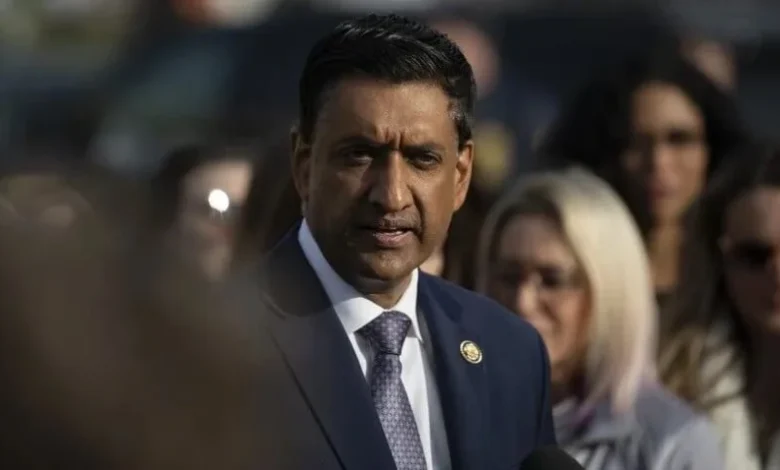
The political landscape surrounding U.S.-Israel relations is facing a potential watershed moment as Democratic Representative Ro Khanna of California has publicly demanded a radical reassessment of American foreign policy. Speaking to IHIP News in the final hours leading up to the U.S. midterm elections, Khanna outlined a series of aggressive policy proposals that, if adopted by a Democratic-controlled legislature, would represent a seismic departure from decades of traditional U.S. diplomatic support for Israel. These comments come at a time when the Democratic Party is grappling with internal divisions regarding the humanitarian crisis in Gaza and the broader implications of unconditional military and diplomatic support for the Israeli government.
The Policy Shift: From Strategic Alliance to Conditional Engagement
Representative Khanna’s declarations were unequivocal, signaling a growing frustration among progressive wings of the Democratic Party. Khanna explicitly used the term "genocide" to characterize the ongoing conflict, a label that remains highly contentious within the halls of Congress and the White House. His proposed agenda includes an immediate cessation of all military aid and the prohibition of the sale of offensive weaponry that could be utilized against civilian populations.
Beyond military restrictions, Khanna proposed a proactive diplomatic offensive. He suggested that a Democratic majority should prioritize the formal recognition of the State of Palestine within its first week of the new legislative session. This would include the establishment of diplomatic missions in Ramallah and East Jerusalem—a move that would fundamentally challenge the status quo and directly contradict the long-standing U.S. policy of maintaining a singular embassy in Tel Aviv or West Jerusalem. Furthermore, Khanna advocated for an end to the U.S. practice of shielding Israel from resolutions and censure within the United Nations Security Council, effectively removing the diplomatic "veto umbrella" that has protected Israel from international sanctions for decades.
Context and Chronology: A Changing Political Tide
To understand the weight of Khanna’s remarks, one must consider the historical context of U.S.-Israel relations. For over 75 years, the United States has served as Israel’s primary security guarantor, providing billions of dollars in annual military assistance. This relationship has historically enjoyed bipartisan support, rooted in shared strategic interests in the Middle East and historical ties.
However, the political climate has shifted significantly over the past decade. The 2023-2024 period, marked by the escalation of hostilities in Gaza, has accelerated this change.
- October 2023: The onset of the current conflict saw immediate and unified support from the U.S. government.
- Early 2024: As the humanitarian toll in Gaza climbed, segments of the Democratic Party, particularly younger voters and minority coalitions, began to voice opposition to the administration’s handling of the crisis.
- Mid-2024: Protests erupted on university campuses across the United States, creating friction within the Democratic establishment.
- November 2024: The midterm elections have now become a referendum not only on domestic economic issues but also on the moral standing of American foreign policy.
Data and Humanitarian Metrics
The urgency in Khanna’s rhetoric is mirrored by the scale of the humanitarian crisis. According to data provided by international aid organizations and the United Nations, the infrastructure of the Gaza Strip has faced near-total devastation. Estimates suggest that more than 40,000 Palestinians have been killed, with a significant majority being women and children. Furthermore, the displacement of nearly the entire population of the territory and the collapse of the medical system have led to acute food insecurity and the spread of preventable diseases.
From a fiscal perspective, U.S. military aid to Israel is substantial. The U.S. provides approximately $3.8 billion annually under a 10-year Memorandum of Understanding. Critics, including those aligned with Khanna’s viewpoint, argue that these funds—often allocated for interceptor missiles like the Iron Dome and high-precision munitions—effectively subsidize a military campaign that the International Court of Justice (ICJ) is currently scrutinizing for potential violations of international law.
The Domestic Front: Divergent Voter Priorities
While foreign policy occupies a central place in the discourse of high-ranking legislators like Khanna, the broader Democratic coalition remains focused on a diverse set of domestic challenges. This complexity was highlighted by Abul El-Sayed, a Democratic candidate for the Senate, who emphasized that the concerns of the younger generation are often more localized and immediate.
El-Sayed noted that issues such as the affordability of healthcare, the availability of affordable housing, and the rapid integration of artificial intelligence (AI) into the workforce are the primary drivers for voters in his constituency. This contrast highlights the "big tent" problem for the Democratic Party: balancing the ideological demands of the progressive wing regarding international human rights with the bread-and-butter economic anxieties of the average American voter. The internal debate over whether to prioritize international interventionism or domestic stabilization remains a defining characteristic of the current election cycle.
Reactions and Counter-Arguments
The reaction from the broader political establishment has been mixed. Supporters of the U.S.-Israel alliance argue that such drastic shifts in policy as proposed by Khanna would destabilize the Middle East, embolden non-state actors, and undermine a critical intelligence-sharing partner. Pro-Israel lobbying groups, such as AIPAC, maintain that the U.S. must continue to support Israel’s right to self-defense, particularly in the face of ongoing threats from regional adversaries.
Conversely, human rights organizations have praised the shift in rhetoric, arguing that the "special relationship" has for too long lacked accountability mechanisms. By introducing the prospect of withholding aid, legislators are attempting to leverage American financial power to enforce compliance with international humanitarian standards—a tactic that has been previously used against other allies but has been historically avoided in the case of Israel.
Implications for Future U.S. Governance
The implications of these statements extend far beyond the immediate electoral outcome. Should the Democratic Party adopt the platform outlined by Khanna, it would signal a profound realignment in U.S. foreign policy. This shift would likely face immense resistance from the bipartisan establishment, which remains deeply committed to the traditional defense partnership.
Moreover, the normalization of terms like "genocide" in legislative discourse regarding Israel marks a departure from the cautious, diplomatic language that has dominated Washington for decades. This shift reflects a broader generational change in how Americans view the Israeli-Palestinian conflict, moving away from a narrative of "security necessity" toward a framework of "human rights accountability."
If these proposals are translated into actual legislation, they could trigger a diplomatic crisis, potentially leading to a reassessment of Israel’s standing in global institutions and forcing other Western nations to reconsider their own stances on military exports. Conversely, if these calls are dismissed as mere political theater, the Democratic Party may face a persistent rift with its base, particularly among demographics that are increasingly unwilling to overlook the human cost of the conflict.
Conclusion: A Turning Point in Diplomatic Strategy
As the midterm election results are tallied, the influence of figures like Ro Khanna will be tested. Whether the party embraces a more assertive, rights-based foreign policy or maintains its historical adherence to traditional alliances remains to be seen. What is clear, however, is that the era of unconditional support for Israel as a non-negotiable tenet of American politics is officially under scrutiny.
The integration of humanitarian concerns into the core of legislative debate suggests that the next Congress will be tasked with reconciling the long-standing strategic imperatives of the United States with an evolving ethical framework that demands transparency and accountability in all foreign engagements. The road ahead involves not only the resolution of an active conflict but a fundamental renegotiation of the role the United States intends to play in international affairs during the 21st century. As voters head to the polls, the choice between these competing visions of American influence will undoubtedly shape the trajectory of global diplomacy for years to come.