President Prabowo Subianto Establishes PT Danantara Sumberdaya Indonesia to Implement One-Gate Export System and Combat Under-Invoicing Practices

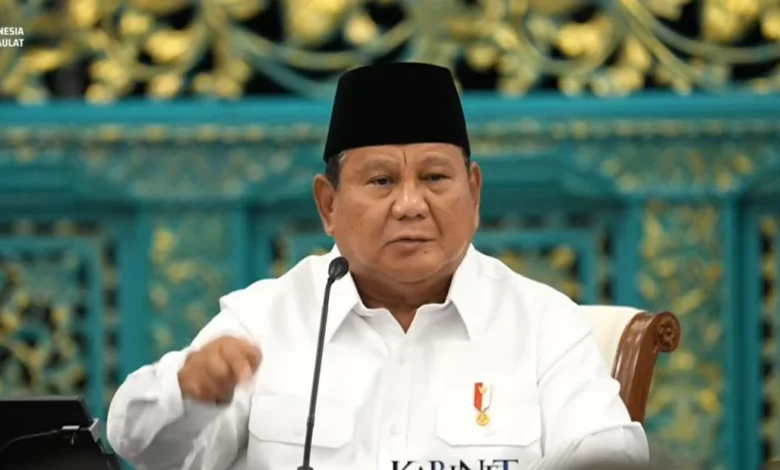
In a decisive move aimed at securing Indonesia’s economic sovereignty and plugging significant fiscal leakages, President Prabowo Subianto has officially announced the formation of a centralized export management entity, PT Danantara Sumberdaya Indonesia (DSI). This state-owned enterprise is designed to act as a "one-gate" portal for the country’s vast array of strategic commodity exports, ranging from mineral resources like nickel and coal to agricultural staples such as palm oil and rubber. The initiative was unveiled during a Plenary Cabinet Session held at the State Palace in Jakarta on Monday, July 20, 2026, marking a pivotal shift in how Southeast Asia’s largest economy manages its natural wealth and international trade reporting.
The establishment of PT Danantara Sumberdaya Indonesia is the culmination of high-level deliberations involving the Financial System Stability Committee (KSSK) and the National Economic Council (DEN). President Prabowo emphasized that the primary objective of this structural overhaul is to eliminate the pervasive practice of under-invoicing—a fraudulent tactic where exporters report the value of goods significantly lower than the actual transaction price to evade taxes, royalties, and mandatory foreign exchange repatriations. By centralizing the oversight of these transactions through a single state-governed entity, the administration intends to ensure that the full value of Indonesia’s resources is accounted for within the national treasury.
A High-Level Economic Consensus
The decision to move toward a one-gate export system was not made in isolation. President Prabowo revealed that he convened the nation’s top economic minds to diagnose the severity of capital flight and trade discrepancies. The meeting at the Merdeka Palace included the full roster of the KSSK: Minister of Finance Purbaya Yudhi Sadewa, Governor of Bank Indonesia (BI) Perry Warjiyo, Chairperson of the Board of Commissioners of the Financial Services Authority (OJK) Friderica Widyasari Dewi, and Chairperson of the Board of Commissioners of the Indonesia Deposit Insurance Corporation (LPS) Anggito Abimanyu.
Also playing a critical role in the formulation of this policy was the National Economic Council (DEN), led by veteran statesman Luhut B. Pandjaitan. The presence of these figures underscores the gravity of the "leakage" problem that has long plagued the Indonesian economy. During the cabinet session, the President recounted his direct inquiry to his advisors regarding the outflow of hundreds of billions of dollars in national wealth. The consensus among the economic team was unanimous: the current trajectory of unregulated, multi-channel reporting was unsustainable and detrimental to the nation’s long-term fiscal health.
The Menace of Under-Invoicing and Capital Flight
Under-invoicing has been identified as a primary mechanism for illicit financial flows out of Indonesia. In practice, an exporter might sell a shipment of nickel ore or crude palm oil to a foreign buyer at market rates but document the sale at a fraction of that price on official customs and tax forms. The difference is often stashed in offshore accounts, bypassing the Indonesian banking system and depriving the state of essential revenue.
President Prabowo highlighted that this practice essentially robs the Indonesian people of their constitutional rights to the nation’s natural wealth. "I asked them all, do we want to continue this flow of hundreds of billions of dollars abroad? Our wealth, from our resources. Do we want to continue it?" the President stated. The response from the economic council was a firm rejection of the status quo, leading to the proposal of the one-gate system via PT Danantara Sumberdaya Indonesia.
By funneling all strategic exports through DSI, the government can implement a real-time verification process. This system will compare declared export values against global market benchmarks, ensuring that the prices recorded match the actual value of the commodities leaving Indonesian ports. This transparency is expected to significantly boost the country’s Tax-to-GDP ratio, which has historically lagged behind regional peers.
Strategic Commodities Under One-Gate Management
The mandate for PT Danantara Sumberdaya Indonesia is expansive, covering the pillars of the Indonesian export economy. President Prabowo was explicit in listing the commodities that would fall under this new regulatory umbrella. These include:
- Nickel and Minerals: As a global leader in nickel reserves, Indonesia views this mineral as the backbone of its electric vehicle (EV) battery ambitions. Centralized management ensures that downstreaming (hilirisasi) policies are strictly enforced.
- Coal and Energy: Despite the global energy transition, coal remains a massive revenue generator for Indonesia. DSI will oversee large-scale shipments to ensure compliance with domestic market obligations (DMO) and fair pricing.
- Palm Oil (CPO): As the world’s largest producer, Indonesia’s palm oil exports are often subject to price volatility and complex international trade disputes. A single gate allows for better price discovery and policy synchronization.
- Rubber and Agricultural Goods: Ensuring that smallholder farmers and large estates alike benefit from accurate price reporting.
- Gold and Precious Metals: Highly susceptible to smuggling and misreporting, the gold trade will see heightened scrutiny under the DSI framework.
The President invoked Article 33 of the 1945 Constitution, which mandates that the earth, water, and the natural resources contained therein must be controlled by the state and used for the greatest prosperity of the people. The DSI is the institutional embodiment of this constitutional mandate in the 21st-century global trade environment.
Chronology of the Policy Shift
The road to PT Danantara Sumberdaya Indonesia began shortly after President Prabowo took office, as his administration identified "economic leakage" as a top-tier threat to his ambitious growth targets.
- Phase 1: Data Auditing (Early 2025 – Late 2025): The Ministry of Finance and Bank Indonesia conducted a comprehensive audit of trade data discrepancies, comparing Indonesian export records with the import records of major trading partners like China, the European Union, and the United States. The "gap" revealed billions of dollars in unaccounted-for trade value.
- Phase 2: The Consultative Period (Early 2026): Meetings were held between the DEN and major State-Owned Enterprises (BUMN) to discuss the feasibility of a super-holding or a centralized clearinghouse for exports.
- Phase 3: Legal Foundation (Mid-2026): Drafting of the regulatory framework that empowers PT Danantara Sumberdaya Indonesia not just as a manager, but as a mandatory intermediary for strategic commodity trade.
- Phase 4: Formal Announcement (July 20, 2026): The Plenary Cabinet Session serves as the official launch of the entity and the one-gate policy.
Supporting Data and Economic Implications
Independent economic analysts and international organizations like the Global Financial Integrity (GFI) have long pointed to trade misinvoicing as a major hurdle for developing economies. In previous years, estimates suggested that Indonesia lost between 5% to 10% of its total trade value to misinvoicing annually. With total exports often exceeding $250 billion, the potential recovery of $12 billion to $25 billion per year could fund massive infrastructure projects, social safety nets, or the ongoing development of the new capital city, Nusantara.
Furthermore, the "One-Gate" system is expected to strengthen the Indonesian Rupiah. By ensuring that export proceeds are accurately reported and channeled through the domestic banking system, Bank Indonesia will have a more robust supply of foreign exchange reserves. This provides a natural hedge against global economic volatility and reduces the need for aggressive interest rate hikes to defend the currency.
Industry and Stakeholder Reactions
While the government maintains a unified front, the reaction from the private sector is a mix of cautious optimism and concern over bureaucratic hurdles. Domestic mining giants and plantation conglomerates have expressed the need for a streamlined process that does not add "red tape" to the already complex logistics of international shipping.
"The key will be the efficiency of PT Danantara Sumberdaya Indonesia," said an industry representative from the Indonesian Mining Association (IMA). "If DSI acts as a digital, high-speed clearinghouse that verifies prices without delaying shipments, it will be a net positive for the industry by leveling the playing field. However, if it becomes a bottleneck, it could affect our competitiveness in the global market."
From an international perspective, trading partners are watching closely. The one-gate system must navigate World Trade Organization (WTO) regulations regarding state-trading enterprises. The Indonesian government has signaled that DSI is a transparency and fiscal measure, rather than a restrictive trade barrier, which may help in mitigating potential trade disputes.
Analysis of Long-term Impacts
The creation of PT Danantara Sumberdaya Indonesia represents a significant consolidation of economic power. It moves Indonesia away from a fragmented, liberalized export model toward a more "state-led" or "guided" economic approach. This strategy mirrors successful models seen in other resource-rich or strategically managed economies, such as Singapore’s Temasek or Norway’s management of its petroleum wealth, albeit with a specific focus on trade integrity.
The success of this initiative will depend on three critical factors:
- Technological Integration: DSI must employ advanced blockchain or AI-driven tracking systems to monitor commodity prices and vessel movements in real-time.
- Integrity and Oversight: As a single gate for billions of dollars, DSI itself must be beyond reproach. Strong anti-corruption measures and independent audits will be necessary to ensure the entity does not become a site for the very rent-seeking behavior it is meant to stop.
- Global Market Alignment: The entity must remain sensitive to global market dynamics. If DSI-mandated prices diverge too sharply from actual global demand-supply realities, it could inadvertently discourage foreign investment in the upstream sectors.
Conclusion and Future Outlook
President Prabowo’s establishment of PT Danantara Sumberdaya Indonesia is a bold attempt to reclaim the "missing" wealth of the nation. By addressing the root causes of under-invoicing and capital flight, the administration is betting that a more controlled and transparent export gate will provide the fiscal firepower needed to propel Indonesia into the ranks of the world’s top five economies.
As the system rolls out over the coming months, the focus will shift from the halls of the State Palace to the ports and trading desks where Indonesia’s wealth meets the world. The "One-Gate" policy is not merely a technical change in export procedure; it is a statement of intent that Indonesia intends to exercise full authority over its natural endowments, ensuring that the "earth, water, and wealth" of the country truly serve the interests of its citizens. The eyes of the global economic community remain fixed on Jakarta to see how this ambitious transformation of the Indonesian trade landscape unfolds.