The Iconic Black Leather Jacket of Nvidia CEO Jensen Huang Sparks Fashion Phenomenon Across South Korea

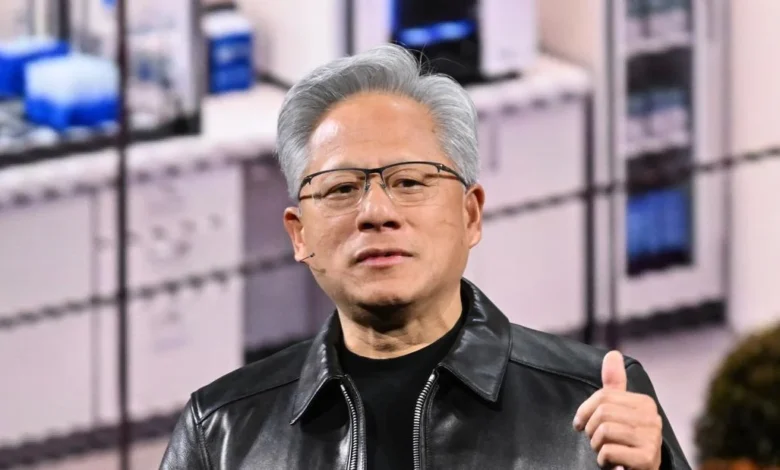
Jensen Huang, the visionary co-founder and chief executive officer of semiconductor giant Nvidia, has cultivated a distinct personal brand that extends far beyond his achievements in the artificial intelligence sector. For more than two decades, Huang has maintained an instantly recognizable visual identity characterized by a simple yet striking ensemble: a black leather jacket, a dark t-shirt, and classic denim jeans. This minimalist uniform, originally
adopted to streamline his daily decision-making process, has unexpectedly transcended corporate boardrooms to become a burgeoning cultural and fashion trend, most notably in South Korea following a high-profile public appearance by the tech executive.
The intersection of technology leadership, personal branding, and consumer behavior has rarely been more visible than in the wake of Huang’s recent engagements. While the 63-year-old billionaire executive has occasionally dominated global headlines for complex personal developments—including intense media scrutiny surrounding allegations involving Alice Huang, an individual alleged to have ties to foreign intelligence networks—it is his sartorial consistency that has firmly captured the imagination of the public and the retail market alike.
The Origins and Philosophy of a Silicon Valley Uniform
The genesis of Huang’s signature wardrobe traces back approximately twenty years, during a period when Nvidia was steadily cementing its position as a cornerstone of the graphics processing unit (GPU) market before eventually transforming into the undisputed engine of the global artificial intelligence boom. In a corporate profile published in 2023, an Nvidia spokesperson elucidated the reasoning behind the executive’s unchanging attire. According to company representatives, Huang deliberately chose this consistent look to eliminate decision fatigue, minimizing the cognitive energy expended on routine daily choices such as what to wear.
This strategy mirrors the psychological frameworks employed by other legendary figures in the technology industry. Much like Apple co-founder Steve Jobs famously standardized his appearance with a black Issey Miyake turtleneck, Levi’s jeans, and New Balance sneakers, or Meta CEO Mark Zuckerberg became synonymous with simple grey hoodies and plain t-shirts, Huang’s uniform serves a functional purpose. It creates an enduring visual anchor, allowing the wearer to project consistency, focus, and unwavering dedication to their core mission.
Despite the apparent simplicity of the outfit, Huang’s wardrobe is not entirely devoid of curation. The executive has previously acknowledged that his family plays a significant role in his aesthetic choices. Both his wife and his daughter, Madison Huang, have actively participated in selecting his garments. Notably, Madison brings a sophisticated understanding of the high-fashion industry to the family dynamic, having previously gained professional experience working with luxury conglomerate LVMH affiliates. This blend of pragmatic utility and subtle high-fashion endorsement has elevated Huang’s leather jackets from standard outerwear to iconic Silicon Valley artifacts.
The South Korean Style Phenomenon and Consumer Surge
The cultural resonance of Huang’s signature look reached a fever pitch during his official visit to South Korea in early June. As one of the primary architects of the modern AI revolution—supplying the crucial hardware that powers advanced machine learning models worldwide—Huang commands immense reverence among South Korea’s tech-savvy population, corporate leaders, and retail consumers.
When Huang disembarked in Seoul sporting his trademark black leather jacket, the reaction was immediate and measurable. The public fascination quickly translated into digital search behavior and e-commerce trends. According to data aggregated by Google Trends, online search queries utilizing the keywords "leather jacket" experienced an unprecedented surge of up to 130 percent on the exact day of Huang’s arrival in the country.
E-commerce platforms across South Korea rapidly adapted to the sudden spike in consumer demand. Third-party vendors and domestic online marketplaces began populating their search algorithms and product listings with specific terms such as "Jensen Huang Jacket." Retail analysts noted that young professionals and tech enthusiasts rushed to emulate the billionaire’s look, viewing the attire not merely as outerwear, but as a symbolic manifestation of modern technological success, innovation, and understated luxury.
This consumer phenomenon underscores the profound influence that contemporary tech titans hold over global pop culture. While fashion trends are traditionally dictated by legacy design houses during seasonal fashion weeks in Paris, Milan, New York, and London, figures like Jensen Huang increasingly wield the power to dictate mainstream sartorial movements through spontaneous public appearances and televised keynote addresses.
Strategic Implications for Personal Branding in the Tech Sector
The transformation of Jensen Huang’s workwear into a consumer trend highlights a broader evolution in how corporate leadership is perceived and marketed in the twenty-first century. In an era where corporate executives are scrutinized as closely as Hollywood celebrities or political figures, personal branding has become an invaluable asset for multinational corporations.
From an analytical perspective, Huang’s consistent aesthetic provides several distinct advantages for Nvidia as a corporate entity:
- Brand Alignment and Memorability: Just as Nvidia’s graphics cards and CUDA software ecosystems have become ubiquitous infrastructure for artificial intelligence development, Huang’s visual consistency anchors the company’s public image in steadfast reliability and pioneering vision.
- Accessibility and Authenticity: Unlike executives who favor traditional, heavily tailored bespoke suits, Huang’s casual yet sharp attire bridges the gap between executive leadership and the developer community. It projects an image of a hands-on engineer and innovator rather than a distant corporate bureaucrat.
- Media Salience: In a crowded media landscape, distinct visual markers ensure immediate recognition. Whenever Huang takes the stage at global technology conferences—such as Nvidia’s GPU Technology Conference (GTC)—his attire instantly frames him as the central narrative figure of the event.
Furthermore, the economic implications of the "Jensen Huang effect" on retail markets demonstrate the tangible power of influencer economics when applied to industrial leaders. While traditional influencers rely on sponsored content and curated photo shoots, Huang’s influence is entirely organic, stemming directly from his professional authority and authenticity.
Broader Context and Future Outlook
As Nvidia continues to navigate its unprecedented growth phase, driven by insatiable global demand for enterprise artificial intelligence hardware, the spotlight on its leadership remains intense. Huang’s ability to effortlessly command attention—whether discussing complex semiconductor architectures or inadvertently sparking an international fashion trend—illustrates his unique positioning at the crossroads of technology and contemporary culture.
The sudden craze for leather jackets in South Korea serves as a fascinating case study in modern consumer psychology. It demonstrates that as technology increasingly dictates the rhythm of daily life, the symbols associated with its creators carry immense cultural currency. Whether the trend will endure as a seasonal anomaly or cement itself as a staple of contemporary urban menswear remains to be seen. However, it is abundantly clear that Jensen Huang has secured his place not only in the annals of computing history but also within the global lexicon of style.
Related posts: