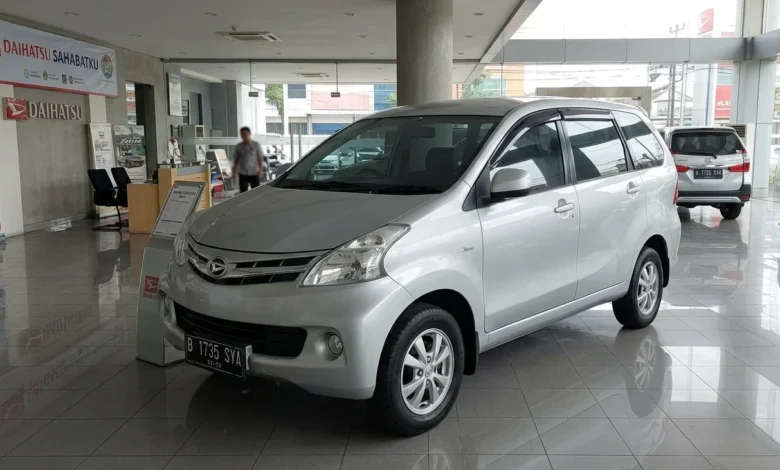
The landscape of the Indonesian used car market remains highly dynamic, with a persistent demand for vehicles that offer a balance between mechanical durability, fuel efficiency, and maintenance accessibility. For many consumers, the 4-cylinder engine configuration remains the gold standard for daily transportation. Unlike 3-cylinder engines, which are often favored for their compact dimensions and lower manufacturing costs, the 4-cylinder layout is widely regarded for its inherent smoothness, reduced vibration, and superior power delivery, making it the preferred choice for both urban commuters and families.
Currently, budget-conscious buyers in Indonesia are finding a wealth of options in the sub-100 million rupiah price bracket. These vehicles, ranging from agile city cars to versatile Multi-Purpose Vehicles (MPVs), provide a cost-effective entry point into car ownership. However, navigating this market requires a discerning eye, as the performance and longevity of these vehicles are heavily dependent on their historical maintenance and operational conditions.
The Engineering Superiority of 4-Cylinder Engines
The 4-cylinder engine operates on a principle of sequential combustion across four cylinders, which allows for a more balanced harmonic frequency compared to engines with fewer cylinders. This configuration minimizes the need for complex counter-balancing shafts to offset vibrations, resulting in a quieter and more refined driving experience. Historically, the 4-cylinder engine has been the backbone of the automotive industry’s mass-market strategy, appearing in everything from entry-level hatchbacks to premium sedans.
In the context of the secondary market, the prevalence of 4-cylinder engines means that spare parts are widely available, and most independent workshops possess the technical expertise to service them. This lowers the total cost of ownership (TCO) significantly compared to more complex powertrain configurations.
Comprehensive Selection: Best 4-Cylinder Candidates Under 100 Million
Market data indicates that several models consistently hold their value while providing reliable service. Below is an analysis of seven notable vehicles that represent the best value-for-money in the current used car sector.
1. Honda Brio Satya (2013-2016)
The first-generation Honda Brio Satya changed the dynamics of the Indonesian Low Cost Green Car (LCGC) segment upon its introduction. Utilizing a refined 1.2-liter i-VTEC 4-cylinder engine, the Brio is lauded for its punchy acceleration and fuel economy. For prospective buyers, units from 2013 to 2016 currently trade between 75 million and 95 million rupiah.
- Performance context: The Brio is often cited for its best-in-class handling. However, prospective owners should verify the integrity of the Electronic Power Steering (EPS) system and the CV-joint components, which can wear out after a decade of city driving.
2. Toyota Avanza (2008-2014)
Known colloquially as "the car of a million people," the Toyota Avanza remains a dominant force in the secondary market. The 1.3-liter and 1.5-liter 4-cylinder engines (K3-VE and 3SZ-VE) are virtually indestructible if oil changes are performed on schedule. With prices ranging from 65 million to 95 million rupiah, it remains the primary choice for families.
- Key Advantage: The Rear-Wheel Drive (RWD) layout provides superior traction on steep inclines compared to modern Front-Wheel Drive (FWD) competitors, a critical factor for families living in hilly regions.
3. Daihatsu Xenia (2008-2014)
Sharing the same platform as the Avanza, the Xenia offers an identical mechanical architecture but often at a slightly lower price point. Its appeal lies in its simplicity. With minimal electronic aids, the Xenia is easy to diagnose and repair. The market for 2008-2014 models is robust, with units priced between 65 million and 95 million rupiah.
- Maintenance perspective: Mechanics often praise the Xenia for its "no-frills" engineering, noting that its radiator and cooling system are robust enough to withstand the tropical climate of Indonesia.
4. Toyota Calya and 5. Daihatsu Sigra (2016-2019)
As newer entrants to the market, the Calya and Sigra siblings represent the modern evolution of the LCGC segment. Equipped with a 1.2-liter 3NR-VE 4-cylinder engine, these vehicles prioritize fuel efficiency. With prices hovering between 80 million and 100 million rupiah, they offer a younger model year compared to the Avanza or Xenia.
- Analysis: These models utilize a drive-by-wire system and advanced sensors to optimize fuel injection. While more efficient, they require higher quality fuel to prevent carbon buildup in the intake manifold.
6. Nissan Grand Livina (2010-2014)
The Grand Livina is distinct in this list for its sedan-like driving dynamics. Its low center of gravity and monocoque chassis make it exceptionally stable at high speeds. Priced between 70 million and 95 million rupiah, it is a favorite for those who prioritize passenger comfort over the ruggedness of an RWD MPV.
- Technical note: Potential buyers must inspect the Continuously Variable Transmission (CVT) or the 4-speed automatic gearbox. Nissan’s suspension system is more sophisticated than its competitors, but it requires more frequent bushing replacements.
7. Suzuki Ertiga (2012-2015)
The introduction of the first-generation Suzuki Ertiga in 2012 shifted market expectations for comfort in the entry-level MPV segment. Using the 1.4-liter K14B engine, the Ertiga is noted for its smooth power delivery and cabin quietness. Currently valued at 80 million to 100 million rupiah, it represents a premium alternative to the Avanza/Xenia.
Market Chronology and Economic Implications
The popularity of these vehicles is not accidental; it is the result of a decade-long cycle of automotive development in Indonesia. Between 2008 and 2016, the automotive industry experienced rapid growth, leading to a surplus of reliable vehicles that have now matured into the secondary market.
Industry analysts observe that the current high interest in these specific models is driven by inflationary pressures on new vehicle prices. As the price of new cars has risen, middle-income families have pivoted toward pre-owned vehicles that maintain "utility-first" features. The 4-cylinder engine serves as the anchor of this trend, providing a perceived reliability that newer, smaller 3-cylinder engines have yet to fully prove in the long-term, high-mileage Indonesian climate.
Strategic Advice for Used Car Procurement
Purchasing a used vehicle is an exercise in risk management. Experts recommend a structured approach to ensure the investment does not become a financial liability.
- Professional Inspection: Utilize third-party inspection services, such as MoInspeksi. These services utilize specialized scanners to check the Engine Control Unit (ECU) for hidden fault codes that a quick test drive might not reveal.
- Evaluating the "Cost of Repair" vs. "Purchase Price": A 70 million rupiah vehicle that requires a 15 million rupiah transmission overhaul is less economical than a 90 million rupiah vehicle in pristine condition. Always set aside 10-15% of the purchase budget for immediate post-purchase maintenance, including timing belt/chain checks, fluid flushes, and tire replacement.
- Documentation Integrity: In the Indonesian market, verifying the authenticity of the BPKB (Vehicle Ownership Document) and STNK (Vehicle Registration) is paramount. Cross-referencing the chassis and engine numbers with the official police database is a non-negotiable step to avoid purchasing stolen or illegally modified units.
- Test Drive Protocols: During a test drive, focus on the "cold start" behavior of the engine. A 4-cylinder engine should idle steadily within seconds of starting. Any erratic fluctuations in RPM or audible tapping sounds from the valve train are red flags indicating poor maintenance.
Broader Impact of the Secondary Car Market
The thriving used car market serves as a vital economic valve. It allows for the continued circulation of affordable transport for small businesses and families, effectively supporting the informal economy. Furthermore, the longevity of these 4-cylinder engines contributes to sustainability by extending the lifecycle of manufactured goods, thereby reducing the environmental impact associated with constant vehicle replacement.
As the industry moves toward electrification, the demand for traditional internal combustion engine (ICE) vehicles—particularly those with proven 4-cylinder reliability—is expected to remain steady for at least the next decade. For the average Indonesian driver, the focus remains on finding a vehicle that can endure the rigors of daily traffic, maintain its value, and remain serviceable through a vast network of local mechanics. By prioritizing models with solid track records and adhering to strict inspection protocols, buyers can secure reliable, long-term transportation within the 100 million rupiah threshold.