Navigating the Power Dynamics of Tehran: Who Truly Holds the Reins in Iran Amidst Global Tensions

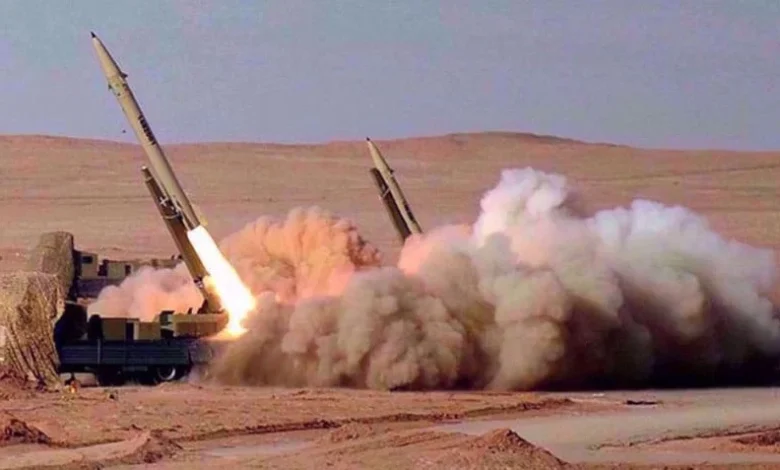
The ongoing diplomatic maneuvers aimed at forestalling a full-scale regional conflict between Iran and the United States have brought the internal governance structure of the Islamic Republic under intense global scrutiny. As negotiations reach a critical impasse, the question of where authority truly resides in Tehran has shifted from an academic inquiry to a matter of immediate geopolitical consequence. President Masoud Pezeshkian, a reformist figure navigating a volatile political landscape, recently disclosed that his administration has been granted "specific authorization" by Supreme Leader Mojtaba Khamenei to engage in direct talks with Washington. However, the lack of clarity regarding the scope of this mandate, coupled with vocal opposition from hardline factions within the Iranian establishment, underscores the fragmented nature of power in a country bracing for the potential of an expanded war.
A Turning Point in Regional Stability
The current urgency for dialogue follows the catastrophic events of February 28, a date that serves as a permanent scar on the Iranian political map. A coordinated series of air strikes by the United States and Israel resulted in the death of the long-standing Supreme Leader, Ali Khamenei, along with a significant portion of the country’s military and political leadership. This vacuum of power, occurring during an active conflict, forced a rapid succession and a restructuring of the nation’s security apparatus.
The subsequent elevation of Mojtaba Khamenei to the position of Supreme Leader marked a decisive turn toward a more security-centric governance model. Since taking office, the new Supreme Leader has increasingly relied on the support of the Islamic Revolutionary Guard Corps (IRGC) and veteran intelligence officials, signaling that the civil administration, represented by President Pezeshkian, operates under strict oversight.
The Role of the IRGC in Post-War Diplomacy
The influence of the IRGC has surged in the wake of the February 28 strikes. Observers and analysts now argue that any diplomatic resolution—whether regarding nuclear enrichment, sanctions relief, or regional de-escalation—is effectively dead on arrival if it fails to secure the explicit endorsement of the military-security complex. Sina Toossi, a senior fellow at the Center for International Policy, emphasizes that the current negotiation landscape is significantly more complex than the 2015 Joint Comprehensive Plan of Action (JCPOA).
"The scope of these talks is far wider than just the nuclear portfolio," Toossi notes. "We are discussing the fundamental architecture of security in the Persian Gulf, the operational status of the Strait of Hormuz, and the establishment of guarantees to prevent future kinetic military exchanges."
The military establishment’s perspective is currently anchored in a seven-point proposal submitted by Tehran to international mediators, including Qatar and Pakistan. This proposal demands a cessation of all US military operations in the region and the lifting of maritime blockades. Within the Iranian state apparatus, this plan is not viewed as a mere bargaining chip, but as a non-negotiable security threshold dictated by the Supreme National Security Council (SNSC).
Structural Authority and the SNSC
While the office of the Supreme Leader holds the ultimate veto power over national policy, the day-to-day execution of state decisions is channeled through the SNSC. This council is the engine room of Iranian policy, comprising the heads of the three branches of government, the chief of the armed forces, and high-ranking security officials.
Despite the constitutional mandate that the President chairs the SNSC, the functional power within the council has been consolidated in the position of the Secretary. Since August, this critical role has been held by Mohsen Rezaei, a former Commander-in-Chief of the IRGC. Rezaei’s appointment represents a significant pivot; he is not a career diplomat but a military strategist with deep institutional ties to the security apparatus. His presence ensures that the IRGC’s strategic priorities remain at the forefront of every diplomatic communication dispatched by the Iranian government.
Chronology of Escalation: February 2025 to Present
The current state of affairs is the culmination of a rapid, often unpredictable, series of escalations that have fundamentally altered the regional status quo:
- February 28, 2025: A series of precision strikes attributed to US and Israeli forces target major command centers in Tehran, leading to the death of Ali Khamenei and several key IRGC commanders.
- Early March 2025: A period of unprecedented internal volatility occurs, culminating in the formal succession of Mojtaba Khamenei as Supreme Leader.
- Late March 2025: The government of Masoud Pezeshkian begins back-channel communications with Washington via Omani and Qatari mediators to prevent a total collapse of regional stability.
- April 2025: The Supreme Leader initiates a series of meetings with high-ranking military commanders, including Ahmad Vahidi, to formalize a "defensive-offensive" doctrine.
- Current Status: The administration continues to advocate for a ceasefire, while simultaneously reinforcing the military’s mandate to respond to threats without geographic limitations.
Strategic Doctrine: The "Unlimited Response"
The directives issued by the office of the new Supreme Leader have left little room for misinterpretation. In recent briefings with military commanders, Mojtaba Khamenei has explicitly ordered that the Iranian armed forces must be prepared to respond to any act of aggression "immediately and without geographic constraints." This doctrine implies that any future US or Israeli strike on Iranian soil could trigger a retaliatory response targeting military assets across the entire Middle East, including those in host nations that facilitate US operations.
This stance creates a paradox for the Pezeshkian administration. While the President is tasked with the diplomatic heavy lifting to secure economic relief and avoid total war, he must do so under the shadow of a military doctrine that actively threatens to expand the conflict. The hardline factions within the Iranian parliament and the IRGC use this doctrine to keep the administration on a short leash, frequently criticizing any move toward dialogue as a sign of weakness.
The Economic and Regional Stakes
The implications of this power structure are far-reaching. The international community, particularly the United States and the European Union, is currently evaluating whether any deal signed by Pezeshkian will hold weight if the IRGC decides to pivot toward a more aggressive posture.
The economic data remains bleak. Iran’s currency has faced sustained pressure due to the uncertainty surrounding potential new sanctions and the disruption of oil exports through the Strait of Hormuz. As one of the world’s most critical maritime chokepoints, the Strait remains a central factor in the ongoing negotiations. Any agreement that does not address the security of these waters is viewed as insufficient by the global markets, yet any Iranian concession on maritime control is viewed as a surrender of sovereignty by the hardliners.
Fact-Based Implications for Global Security
The reality of Iranian governance is that it operates as a "multi-actor" system rather than a centralized one. While the Supreme Leader remains the final arbiter, his power is mediated by a complex network of stakeholders who often have competing interests.
- Diplomatic Fragility: The "specific authorization" granted to Pezeshkian is fragile. It can be revoked or narrowed by the Supreme Leader at any time, particularly if the military establishment perceives a shift in the balance of power.
- Military-Diplomatic Coupling: Negotiations are now inherently linked to military preparedness. Any diplomatic breakthrough will likely be accompanied by a military "de-escalation" period that will be strictly monitored by the IRGC.
- The "Succession" Factor: The transition to Mojtaba Khamenei is still in its infancy. Internal struggles for influence among the IRGC commanders, political elites, and the clergy are likely to continue, creating periods of inconsistency in Iran’s international signaling.
Conclusion
As the world watches the unfolding situation in Tehran, it is clear that the "moderate" image projected by the Pezeshkian administration is but one layer of a much deeper, more complex, and heavily securitized political reality. The true levers of power in Iran are currently held by a coalition of military and intelligence leaders who view diplomacy as a tactical necessity rather than a strategic goal. Whether this configuration can withstand the pressures of a potential war, or whether it will eventually lead to a further hardening of the regime’s stance, remains the central question for regional stability. For now, the world must look past the presidential office to the halls of the Supreme National Security Council and the command centers of the IRGC to understand the true direction of the Islamic Republic’s future.