TECNO MEGABOOK K14S Launches in Indonesia: A Return to Comprehensive Connectivity with High-End Processing Power

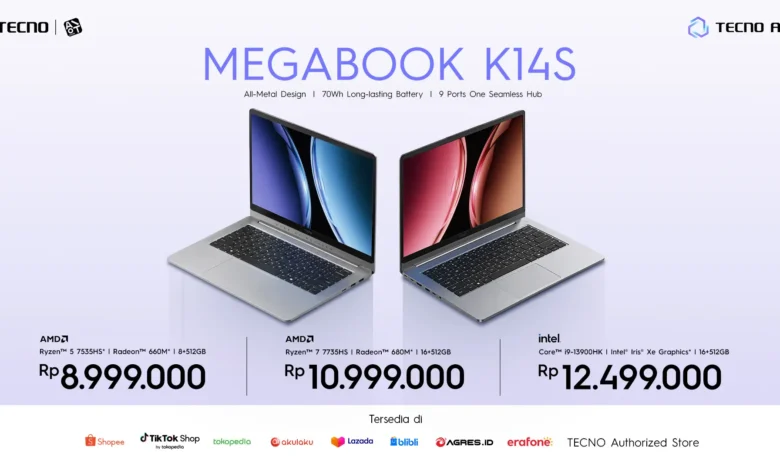
Jakarta, Indonesia – [Date of Publication] – TECNO, a brand increasingly recognized for its innovative mobile and computing solutions, has officially launched its latest laptop, the MEGABOOK K14S, in the Indonesian market. This new 14-inch device aims to carve out a niche by offering a compelling blend of powerful processing options, including up to an Intel Core i9-13900HK, and a surprisingly comprehensive suite of nine built-in ports, a feature that has become increasingly rare in the modern era of ultrathin laptops. The launch signifies TECNO’s continued commitment to expanding its product portfolio and catering to a diverse range of consumer needs in one of Southeast Asia’s largest technology markets.
The MEGABOOK K14S arrives at a time when the laptop market is broadly segmented. On one hand, there’s a strong trend towards ultra-portability, characterized by sleek, lightweight designs that often sacrifice physical connectivity for thinner chassis. On the other hand, a significant user base, particularly professionals and power users, still values robust connectivity for seamless integration with peripherals, external displays, and wired networks. TECNO’s strategy with the K14S appears to be directly addressing this latter segment, offering a device that doesn’t compromise on the ports needed for productivity and versatility.
A Spectrum of Processing Power for Diverse Needs
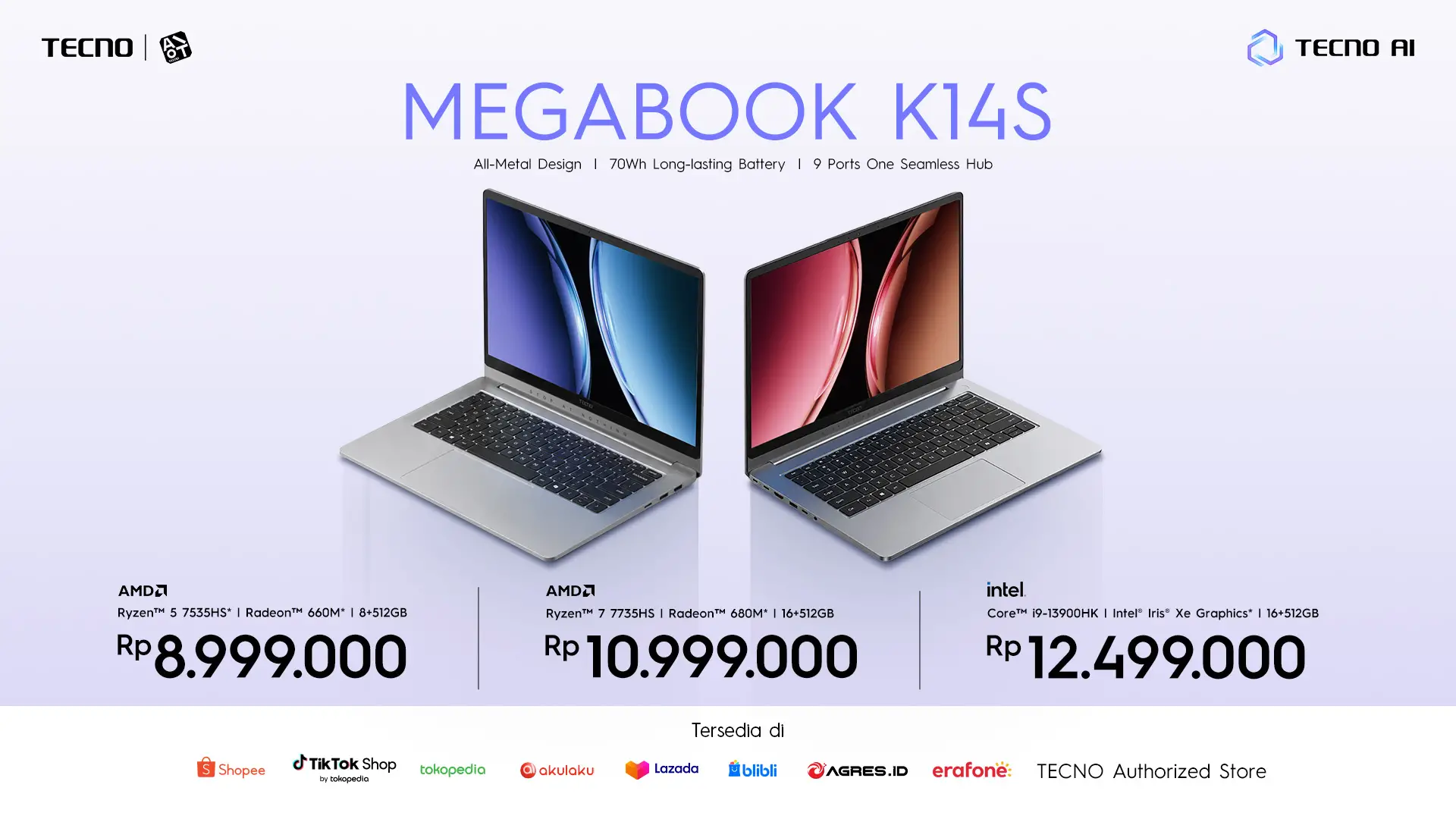
TECNO has equipped the MEGABOOK K14S with three distinct processor options, demonstrating a strategy to appeal to users with varying performance requirements and budget considerations. The lineup includes configurations powered by AMD Ryzen processors: the Ryzen 5 7535HS and the more potent Ryzen 7 7735HS. These AMD variants are integrated with Radeon graphics, providing capable performance for everyday tasks, multimedia consumption, and light creative workloads.
For users demanding the absolute peak of mobile processing power, the flagship variant of the MEGABOOK K14S boasts the formidable Intel Core i9-13900HK processor. This high-end Intel chip, part of the 13th Generation "Raptor Lake" mobile architecture, offers a significant leap in performance, capable of handling demanding applications, complex multitasking, video editing, and even some gaming. The Intel variant is paired with Intel Iris Xe Graphics, which, while integrated, offers respectable graphical performance for its class.
Complementing these powerful processors is a robust memory and storage configuration. All variants of the MEGABOOK K14S are equipped with NVMe PCIe 3.0 SSDs, offering fast boot times and application loading. Storage options go up to 1TB, providing ample space for operating systems, software, and user data. Memory configurations include up to 32GB of RAM. Notably, the AMD variants utilize LPDDR5 RAM, known for its power efficiency and speed, while the Intel variants employ DDR4 RAM. This choice of RAM technology is often influenced by the specific platform architecture and power delivery considerations for each processor family.
Design Philosophy: Slim Form Meets Extensive Connectivity
Despite its emphasis on connectivity, TECNO has managed to maintain a relatively sleek and portable design for the MEGABOOK K14S. The laptop features a 14-inch display with a standard 16:9 aspect ratio and a Full HD (1920×1080) resolution. While the refresh rate is capped at 60Hz, which is standard for many productivity-focused laptops, the display offers a brightness of 300 nits, ensuring reasonable visibility in various indoor lighting conditions. A practical design element highlighted by TECNO is the screen’s ability to open a full 180 degrees, facilitating easier collaboration and presentation sharing.
The chassis is constructed from aluminum, contributing to a premium feel and durability. It measures approximately 18mm in thickness and weighs around 1.4 kg, positioning it as a reasonably portable option for users who need to carry their device regularly. The ability to open the laptop with a single finger is another user-centric design touch aimed at enhancing everyday convenience.
The Connectivity Cornerstone: Nine Ports in a Modern Laptop
The defining feature of the TECNO MEGABOOK K14S is its extensive array of nine built-in ports. This is a significant differentiator in today’s market, where many manufacturers opt for a minimalist approach, often relying on USB-C hubs or dongles. The comprehensive port selection includes:
- USB-C Full Featured: This versatile port supports data transfer, display output, and power delivery, offering significant flexibility.
- USB-C Charging (AMD variants only): Dedicated charging via USB-C on AMD models adds another layer of convenience.
- HDMI 1.4: For connecting to external displays and projectors, supporting up to 4K resolution at 30Hz.
- RJ45 Ethernet: A crucial port for stable and high-speed wired network connections, essential for many professional environments.
- USB 3.2 Gen1: Offering data transfer speeds of up to 5Gbps.
- USB 3.2 Gen2: Providing faster data transfer speeds of up to 10Gbps.
- TF Card Reader: Convenient for photographers and videographers who frequently transfer media from microSD cards.
- 3.5mm Audio Jack: A standard port for headphones and microphones.
- Kensington Lock Slot: For physical security in public or shared workspaces.
This generous port selection eliminates the need for most users to carry separate dongles or docking stations, streamlining workflows and ensuring compatibility with a wide range of accessories and legacy devices. This focus on connectivity is likely to resonate with professionals, content creators, and students who frequently connect to multiple peripherals, external monitors, or wired networks.
Performance and Endurance: Cooling, Battery, and Audio-Visual Features

To ensure sustained performance, especially with the higher-end processors, the MEGABOOK K14S incorporates an advanced cooling system. This includes large fans and multiple ventilation channels designed to dissipate heat effectively, preventing thermal throttling and maintaining optimal operating temperatures during demanding tasks.
Powering the device is a substantial 70Wh battery, which TECNO claims can deliver up to 17.5 hours of usage on a single charge. This impressive battery life, if achieved in real-world scenarios, would make the K14S a capable companion for a full workday or extended travel. The laptop also supports 65W fast charging via a Type-C GaN adapter, allowing users to quickly replenish the battery when needed.
The audio-visual experience is also considered. The MEGABOOK K14S features Dual Mic AI ENC (Environment Noise Cancellation) technology, designed to improve voice clarity during online meetings and calls by reducing background noise. For immersive audio, it is equipped with 2W stereo speakers enhanced by DTS Immersive Sound. A 720p HD webcam provides video conferencing capabilities.
Further enhancing user convenience and security, the laptop includes a fingerprint sensor integrated into the power button for quick and secure login. It also features a physical privacy camera shutter, offering peace of mind regarding webcam security. The keyboard is backlit with four levels of brightness, improving usability in low-light conditions. The MEGABOOK K14S runs on Windows 11 Home and is available in a single color option: Space Grey.
Seamless Ecosystem Integration and Connectivity Standards
Beyond its hardware, TECNO has integrated features to enhance the user experience, particularly for those within the TECNO ecosystem. The "OneLeap" feature facilitates effortless file transfers between TECNO smartphones and the MEGABOOK K14S. Additionally, the TECNO PC Manager application serves as a central hub for monitoring the laptop’s health, optimizing performance, and troubleshooting issues.
In terms of wireless connectivity, the MEGABOOK K14S supports Wi-Fi 6, ensuring faster and more stable wireless internet connections, and Bluetooth 5.4, offering improved performance and energy efficiency for connecting wireless peripherals.
Pricing and Market Positioning
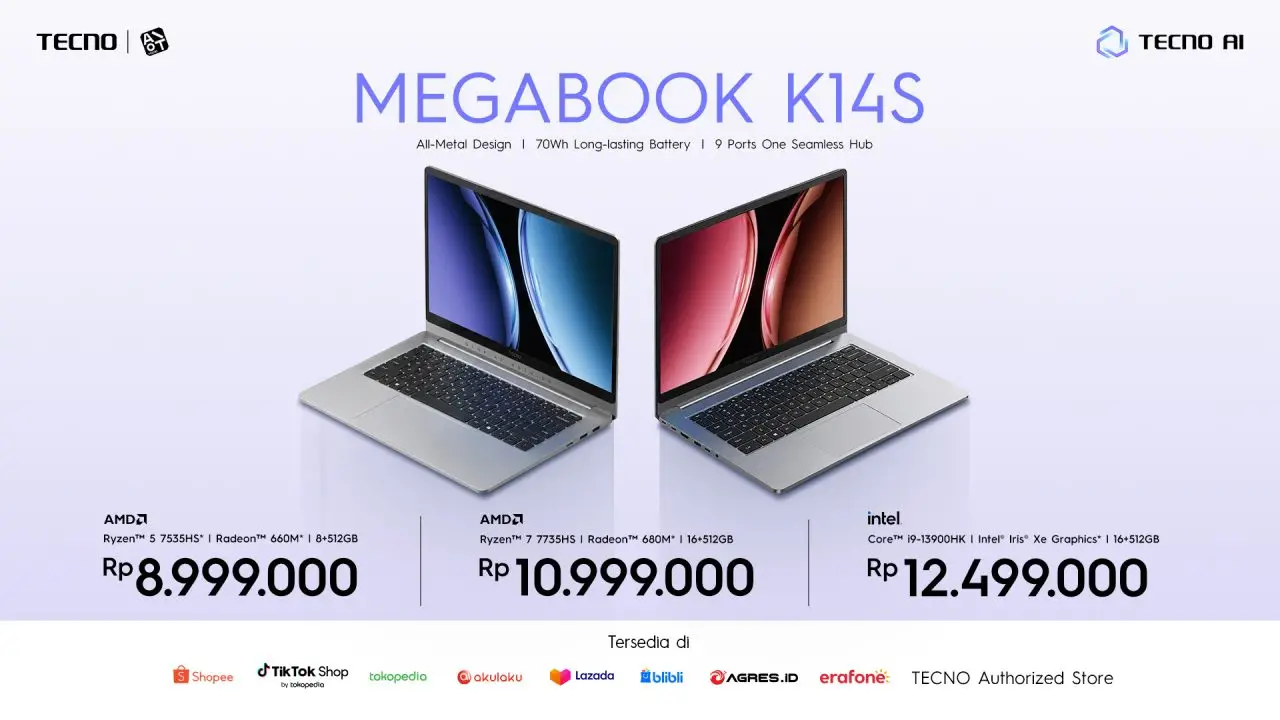
TECNO has priced the MEGABOOK K14S competitively across its different configurations:
- AMD Ryzen 5 7535HS: With 8GB RAM and 512GB SSD, priced at Rp8,999,000.
- AMD Ryzen 7 7735HS: With 16GB RAM and 512GB SSD, priced at Rp10,999,000.
- Intel Core i9-13900HK: With 16GB RAM and 512GB SSD, priced at Rp12,499,000.
These price points place the MEGABOOK K14S in the mid-range to upper-mid-range segment of the Indonesian laptop market. The inclusion of a Core i9 processor at this price point, coupled with the extensive port selection, presents a compelling value proposition for users who prioritize performance and connectivity over extreme thinness.
The launch of the MEGABOOK K14S is a strategic move by TECNO to capture a segment of the market that might feel underserved by the current trend of port-limited ultrabooks. By offering a device that balances powerful internals with robust physical connectivity, TECNO is signaling its intent to be a significant player in the Indonesian laptop landscape, appealing to both everyday users and professionals who demand more from their computing devices. The question posed by the manufacturer – whether a laptop with comprehensive connectivity is still more appealing than a thinner design with fewer ports – highlights a key debate within the consumer electronics industry and TECNO’s deliberate choice to side with the former for this particular product.