Changan Introduces Revolutionary REEV Technology to Indonesia, Bridging the Gap in Electric Vehicle Adoption

Jakarta – Changan, a prominent Chinese automotive manufacturer, is poised to introduce a groundbreaking vehicle technology to the Indonesian market that addresses a significant hurdle in the widespread adoption of electric vehicles (EVs): range anxiety. The company plans to launch its Range Extended Electric Vehicle (REEV) technology, a system that combines the benefits of electric propulsion with the extended reach of a gasoline generator, filling a void currently unoccupied by other automakers in Indonesia.
Setiawan Surya, CEO of Changan Indonesia, confirmed the company’s strategic move during a recent visit to the detikcom offices in Jakarta. He elaborated that the REEV is fundamentally an electric vehicle, but with the crucial addition of a gasoline engine that functions solely as a generator. This innovative approach aims to provide consumers with the 100% electric driving experience they desire, without the inherent limitations of pure battery-electric vehicles (BEVs) in terms of travel distance and charging infrastructure availability.
"For short distances, the vehicle operates 100% on battery power, meaning the gasoline engine remains inactive. The engine only activates as a generator when the driving range exceeds the battery’s capacity," Surya explained. This distinction is critical. Unlike plug-in hybrid electric vehicles (PHEVs) where the gasoline engine can directly power the wheels, in a REEV, the engine’s sole purpose is to replenish the battery’s charge. This ensures that the driver consistently experiences the smooth, quiet, and emissions-free operation characteristic of electric vehicles, even during longer journeys.
Addressing Consumer Concerns: The REEV Solution
The introduction of REEV technology is a calculated response to the reservations many Indonesian consumers hold regarding battery-electric vehicles. While the allure of zero tailpipe emissions and reduced running costs is undeniable, concerns about the limited availability of charging stations (SPKLU – Stasiun Pengisian Kendaraan Listrik Umum) and the time required for charging, especially for long-distance travel, remain significant deterrents.
"There are still segments of the population who perceive EVs as primarily for urban use," Surya noted. "For those planning trips outside the city, there’s a lingering worry about where to recharge. Questions arise about the availability of charging points, whether they will be fully functional, and the potential for queues. REEV technology is designed to alleviate these concerns. It serves as a transitional solution, offering consumers greater flexibility and peace of mind."
He provided a practical example: "Imagine a trip from Jakarta to Semarang, a distance of approximately 400 kilometers. If the car’s electric range is 170 kilometers, the generator will activate once that limit is reached. If a charging station is encountered along the way, the driver can choose to recharge. Alternatively, if time is a constraint, they can utilize the gasoline generator’s power to continue the journey and then recharge at their destination." This dual-mode operation effectively extends the vehicle’s overall range, making it a more practical option for a wider array of driving scenarios.
The Changan Deepal SO5 REEV: A Potential Candidate
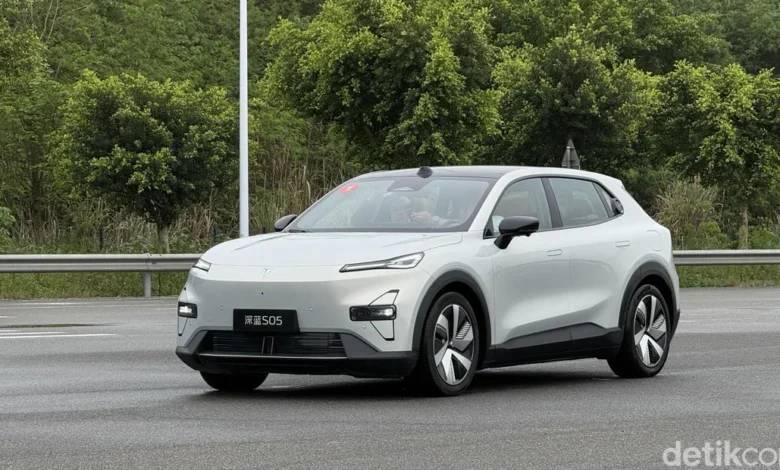
While specific models were not officially confirmed for the Indonesian launch, industry speculation points towards the Changan Deepal SO5 REEV as a likely contender. This model has already garnered attention in the Chinese market for its sophisticated REEV system.
In China, the Deepal SO5 REEV is powered by a 1.5-liter engine that acts as a generator, producing 72 kW (approximately 97 horsepower). This system works in conjunction with a rear-mounted electric motor delivering 160 kW (around 215 horsepower) and 320 Nm of torque. The energy is stored in a 27.28 kWh lithium iron phosphate (LFP) battery pack.
The specifications for the Chinese market are impressive. The Deepal SO5 REEV boasts a pure electric driving range of 200 kilometers (based on the CLTC standard). When combined with the gasoline generator, its comprehensive range extends to an impressive 1,234 kilometers (also CLTC). The vehicle is capable of reaching a top speed of 175 km/h and can accelerate from 0 to 100 km/h in a brisk 7.9 seconds. Furthermore, its fast-charging capabilities allow the battery to be replenished from 30% to 80% in just 20 minutes, a significant advantage for travelers needing quick top-ups.
The Broader Context of EV Adoption in Indonesia
Indonesia has set ambitious targets for EV adoption. The government aims to have 2 million electric motorcycles and 400,000 electric cars on the road by 2025, and 13 million electric motorcycles and 2.2 million electric cars by 2030. These targets are supported by various incentives, including tax breaks and the development of charging infrastructure.
However, the reality on the ground presents a more complex picture. The aforementioned challenges of charging infrastructure and range anxiety are not unique to Indonesia; they are global concerns that automakers are actively working to address. Pure BEVs, while offering the ultimate in zero-emission driving, require a robust and ubiquitous charging network, which is still under development in many regions, including Indonesia.
The introduction of REEV technology by Changan represents a strategic and pragmatic approach to accelerating EV adoption in such a context. By offering a "bridging" technology, Changan can attract a broader customer base who may not yet be ready to commit to a pure BEV. This can help to familiarize consumers with electric driving and gradually shift preferences towards more sustainable mobility solutions.
Analysis of Implications
Changan’s foray into the Indonesian market with REEV technology carries several significant implications:
- Accelerated EV Market Growth: By addressing a key consumer pain point, Changan’s REEVs could stimulate greater interest and demand for electrified vehicles, potentially leading to a faster overall growth trajectory for the EV market in Indonesia.
- Increased Competition: The introduction of a novel technology like REEV is likely to spur competition among other automotive players, potentially encouraging them to explore similar or alternative solutions to meet evolving consumer needs.
- Phased Transition to Electrification: REEVs can act as a stepping stone for consumers transitioning from internal combustion engine (ICE) vehicles to full electrification. This gradual exposure can build consumer confidence and familiarity with EV technology.
- Infrastructure Development Synergy: While REEVs reduce reliance on public charging infrastructure for daily operation, the availability of charging points still enhances their appeal and allows for optimal battery management. This could indirectly encourage further investment and development of charging networks.
- Technological Diversification: The Indonesian automotive landscape, while growing in electrification, has largely been dominated by conventional ICE vehicles and a nascent BEV segment. The introduction of REEVs adds a new dimension of technological diversity, offering consumers more choices.
Future Outlook and Consumer Choice
The success of Changan’s REEV strategy in Indonesia will hinge on several factors, including competitive pricing, product reliability, effective marketing that clearly communicates the technology’s benefits, and the continued development of charging infrastructure. As Indonesia continues its push towards a greener automotive future, innovative solutions like REEVs are likely to play a crucial role in making electric mobility accessible and practical for a wider segment of the population. The move by Changan signals a sophisticated understanding of the local market’s unique challenges and opportunities, positioning them as a potential key player in shaping Indonesia’s electric vehicle landscape.
Related posts: