What Is LIMS and How Does the Technology Allegedly Used to Wiretap President Prabowo Work?

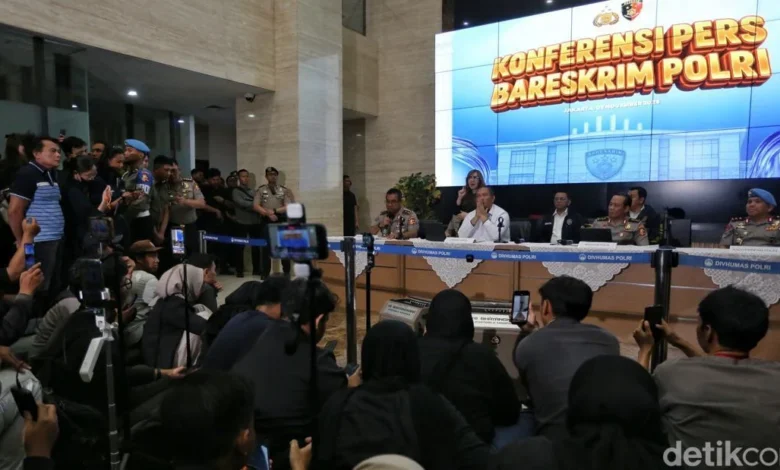
The recent revelation by the Indonesian National Police’s Criminal Investigation Agency (Bareskrim Polri) regarding the illicit wiretapping of President Prabowo Subianto has cast a spotlight on the controversial use of the Lawful Interception Management System (LIMS). This sophisticated technology, originally designed as a vital tool for law enforcement agencies to combat terrorism, organized crime, and national security threats, has been thrust into the center of a major political scandal. Investigations suggest that the system was circumvented, allowing for the unauthorized surveillance of high-ranking state officials, political figures, journalists, and activists between 2025 and 2026.
As the Bareskrim continues its probe into the unauthorized use of this infrastructure, the case has raised urgent questions regarding the intersection of surveillance technology, digital privacy, and the integrity of democratic institutions. To understand the gravity of the situation, it is essential to examine both the technical architecture of LIMS and the unfolding chronology of this unprecedented breach of state security.
Understanding the Architecture of LIMS
Lawful Interception Management System (LIMS) represents the technical backbone of state-sanctioned surveillance. At its core, LIMS is not a piece of spyware installed on individual devices; rather, it is a server-side framework that integrates directly with telecommunications infrastructure. According to the European Telecommunications Standards Institute (ETSI), which sets the global benchmarks for such systems, LIMS acts as the bridge between mobile network operators and law enforcement authorities.
The system is designed to facilitate the legal collection of communications data, ensuring that when a warrant is issued, the relevant provider can "hand over" the necessary traffic to the authorities. In a functional LIMS architecture, the process is bifurcated into two specific data streams:
- Content of Communication (CC): This includes the actual audio of voice calls, the text of SMS messages, and, depending on the network capabilities, the content of data-based messaging services.
- Intercept-Related Information (IRI): This is arguably more powerful for intelligence gathering. IRI includes metadata such as the identity of the parties involved, time stamps, duration of connections, and, crucially, geolocation data. This information allows intelligence officers to map out an individual’s social network and physical movements over time.
Because LIMS operates at the network level—often inside the core of the service provider’s infrastructure—it allows for the interception of traffic without the target ever knowing. Unlike consumer-grade spyware, which might be detected by antivirus software or unusual battery drainage, LIMS-based interception remains invisible to the user. The communication passes through the network provider, is copied by the LIMS server, and is diverted to a monitoring facility simultaneously, leaving no trace on the user’s mobile device.
The Chronology of the Scandal
The breach, which was formally disclosed by Kabareskrim Polri Komjen Asep Safrudin on November 3, 2026, details a period of systemic abuse. According to investigators, the unauthorized surveillance began in early 2025 and persisted for nearly two years.
- Early 2025: The initiation of the illicit surveillance operation. Investigators believe that high-ranking individuals began inserting specific telephone numbers into the LIMS server without the required judicial oversight or verified case documentation.
- October 30, 2026: The turning point. A whistleblower within the security apparatus filed an official police report, triggering an internal investigation. This report alleged that internal protocols for "lawful" interception were entirely ignored.
- Early November 2026: Bareskrim launched a massive forensic operation. During this period, three high-profile figures were named as suspects: former National Police Chief Listyo Sigit Prabowo, Ahrie Sonta Nasution, and Eko Hadi Santoso.
- Mid-November 2026: Evidence collection intensified. The police confiscated 11 mobile phones, an iPad, and four flash drives. Simultaneously, investigators uncovered evidence that the perpetrators had attempted to scrub the server logs and destroy evidence of the wiretapping activity.
The Mechanism of Abuse: Bypassing the Law
The central allegation in this case is that the suspects bypassed the "Lawful" aspect of the Lawful Interception Management System. Under Indonesian law, any request for wiretapping must be predicated on a formal investigation, a signed request from a lead investigator, and a verified report (Laporan Polisi).
In this instance, Bareskrim investigators found that numbers—including that of the President—were manually entered into the system. There was no corresponding criminal file, no legal basis for the interception, and no administrative approval. This "bypass" effectively turned a tool intended for protecting the state into a weapon for private or unauthorized political intelligence gathering.
The scope of the surveillance was extensive. It was not limited to the President; it reportedly encompassed a wide cross-section of influential figures in Indonesian society. By monitoring journalists, NGO leaders, and business moguls, the perpetrators created a comprehensive database of private communications, which could be used for blackmail, political maneuvering, or the suppression of dissent.
Implications for National Security and Privacy
The fact that the President of the Republic could be wiretapped via his own nation’s infrastructure is a catastrophic failure of security. It highlights the inherent danger of centralizing surveillance power without robust, independent oversight.
1. Erosion of Trust in Digital Infrastructure
When a tool meant for law enforcement is turned against the executive branch, it creates a crisis of confidence. Telecommunications companies, which are mandated by law to provide access to their networks for LIMS, are now under pressure to prove that their systems are secure from internal corruption.
2. The Danger of "Black Box" Surveillance
The LIMS scandal serves as a cautionary tale for countries globally. When surveillance systems function as "black boxes"—where the technical execution is hidden from public or judicial scrutiny—they are prone to "function creep." What begins as a tool to fight terrorism can quickly evolve into a tool for domestic political control.
3. The Need for Auditable Oversight
Legal experts argue that the Indonesian government must now implement a "triple-lock" system for any future use of LIMS. This would require, at a minimum:
- Judicial Approval: A warrant issued by a court, not just a police administrator.
- Independent Audit: A non-police agency, such as a specialized data protection commission or an ombudsman, must hold the digital "keys" to the LIMS logs.
- Transparency Reporting: Periodic, de-identified public reports on how many wiretaps were conducted and for what specific purposes.
Official Responses and Legal Status
As of the latest reports, the three suspects remain in custody, awaiting formal indictment. The legal process is expected to be lengthy, as the prosecution must prove not only the illegal access to the system but also the intent behind the widespread surveillance.
The defense teams for the accused have maintained that the operations were part of a broader intelligence effort, though they have yet to provide the necessary documentation to justify the inclusion of the President’s phone number in the system. The government, meanwhile, has moved to secure all LIMS servers across the country, conducting a massive security audit to ensure that no "ghost" accounts or unauthorized entries remain.
Broader Impact on the Political Landscape
The discovery of this surveillance ring has caused a political earthquake. It has forced a reconfiguration of how the executive office communicates, with many officials now turning to end-to-end encrypted messaging apps and hardware-level secure communications to avoid the vulnerability of the national network.
The scandal also raises questions about the legislative framework governing intelligence. With the current laws appearing to provide too much discretion to law enforcement administrators, the Parliament is likely to face calls for a comprehensive revision of the Law on Electronic Information and Transactions (UU ITE) and related security statutes.
Ultimately, the LIMS scandal is a stark reminder that in the digital age, the greatest threat to national security may not be external, but rather the subversion of the very systems meant to protect it. As the trial proceeds, the Indonesian public will be watching closely to see whether the rule of law can be restored, or if the shadows cast by this wiretapping network will linger over the current administration’s tenure. The case remains one of the most significant challenges to the integrity of the Indonesian state in the post-reform era.
Related posts: