The paddock of the 2026 MotoGP season has become increasingly tense as the championship battle reaches its boiling point, with the latest controversy centering on the tactical maneuvers of Aprilia Racing and a biting critique from Ducati Lenovo’s Marc Marquez. Following the Malaysian Grand Prix at the Sepang International Circuit, a war of words has erupted between Aprilia Racing CEO Massimo Rivola and the multi-time world champion, bringing the ethics of "team orders" and the influence of familial ties in professional racing under intense scrutiny.
The discourse began following the Sprint Race on October 31, 2026. Marc Marquez, who has been in peak form throughout the 2026 season, took aim at the collaborative tactics employed by Aprilia’s satellite outfit, the SuperFile Trackhouse MotoGP Team. Marquez’s comments targeted the performance of Ai Ogura, who appeared to be acting as a tactical buffer for Marco Bezzecchi, an Aprilia factory rider struggling to maintain his position in the overall standings.
The Anatomy of the Sepang Controversy
During the Sprint Race in Malaysia, the dynamics on the track were clear to observers and competitors alike. Ai Ogura, while riding for the satellite Trackhouse squad, held a defensive line that significantly impeded Marc Marquez’s pursuit of the leaders. While such maneuvers are common in team sports, the frustration was palpable in the post-race interviews.
Marquez, finishing second in the sprint, was vocal about his dissatisfaction with the obstruction. He stated that Ogura’s attempt to stay ahead of him was motivated purely by the desire to prevent Marquez from securing a podium position, noting that the Japanese rider’s defensive driving ultimately risked the points tally for his own team’s factory affiliate. Marquez’s critique was interpreted by many as an indictment of the "artificial" nature of these team orders, suggesting that such tactics undermine the pure competitive spirit of MotoGP.
"Ogura tried to remain in front of me because he knew that failing to do so would result in the loss of a podium position," Marquez stated during the media debrief. "He could not sustain that pace indefinitely between myself and Bezzecchi, and his defensive posture was clearly designed to disrupt my momentum. It is a tactical play, but one that complicates the race for everyone involved."
Massimo Rivola’s Rebuttal
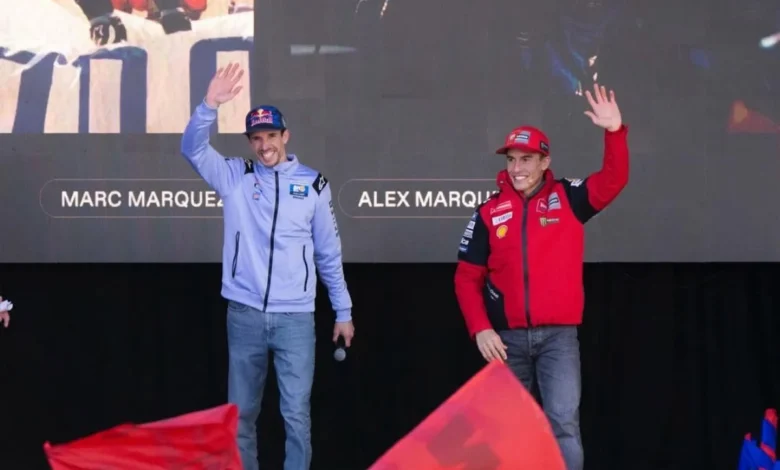
The response from Aprilia’s leadership was swift and sharp. Massimo Rivola, the CEO of Aprilia Racing, did not take the criticism lightly. Known for his tactical acumen and often outspoken nature, Rivola dismissed Marquez’s remarks as hypocritical. In an industry where manufacturer alliances often dictate the outcome of races, Rivola shifted the focus toward the Gresini and Ducati ecosystems, specifically highlighting the relationship between Marc Marquez and his brother, Alex Marquez.
"What Marquez has to say on the matter does not hold much weight for me, quite frankly," Rivola stated in an interview following the event. "It is curious to hear him speak on the integrity of team tactics when one considers the internal dynamics at play within his own circle. It is well known that they have been practicing their own version of ‘team orders’ at home, leveraging familial bonds to protect their collective interests on the track."
Rivola’s counter-argument touches upon a long-standing observation in the paddock: the influence of the Marquez brothers. Throughout their careers, the proximity of the two siblings on the grid has often resulted in non-aggressive racing behaviors between them, which critics have frequently labeled as a "brotherly shield." By bringing this to the forefront, Rivola effectively neutralized the moral high ground Marquez attempted to claim.

The Evolution of Team Orders in MotoGP
To understand the current volatility, one must look at the broader context of the 2026 season. MotoGP has undergone a significant shift in recent years, with manufacturer alliances becoming more rigid. The "factory vs. satellite" dynamic has evolved, where satellite teams are no longer just independent entities but crucial components of a manufacturer’s championship strategy.
In 2026, the density of the field has reached an all-time high. With the top five riders separated by mere fractions of a second in qualifying, every single point matters. Team orders—instructions from a team principal to a rider to favor a teammate—have become a standard, albeit controversial, part of the sport. While the FIM (Fédération Internationale de Motocyclisme) and Dorna Sports generally allow team strategy, the line between "strategy" and "impediment" is often blurred.
The Aprilia incident is not an isolated event. Earlier in the 2026 season, at the Mandalika Grand Prix, Aprilia showcased a masterclass in coordinated riding, with four Aprilia-affiliated bikes dominating the top positions. This display of strength was hailed as a tactical triumph by Rivola, yet it also raised concerns among rivals about the potential for "team-based grid blocking."
Fact-Based Analysis: Implications for the Championship
The war of words between Rivola and Marquez is a symptom of a larger struggle for dominance in the 2026 season. With Ducati currently holding a formidable lead in the Constructors’ Championship, other manufacturers, including Aprilia, are under immense pressure to optimize every possible variable.
From an analytical standpoint, the implications are threefold:
- Psychological Warfare: The public nature of these disputes is designed to unsettle opponents. By questioning the ethics of the Marquez brothers, Rivola is attempting to put the Ducati camp on the defensive, forcing them to justify their own track behaviors.
- Regulatory Scrutiny: The constant back-and-forth regarding team tactics will likely put pressure on race directors to monitor "blocking" more closely. If the complaints persist, the FIM may be forced to introduce stricter guidelines regarding the behavior of satellite riders during the final laps of a race.
- Brand Perception: For Aprilia, the strategy is a double-edged sword. While it may secure the necessary points for a championship push, it risks alienating fans who prefer to see unbridled, individualistic racing. Conversely, Marquez’s vocal opposition reinforces his image as a "pure racer," which continues to be a major selling point for his personal brand and his sponsors.
A Chronology of Tension
- October 15, 2026: Aprilia Racing demonstrates unprecedented synchronization at the Mandalika Grand Prix, with four bikes controlling the pace. This event sets the stage for future allegations of team-led race management.
- October 31, 2026: During the Sprint Race in Sepang, Ai Ogura engages in high-intensity defensive maneuvers against Marc Marquez.
- October 31, 2026 (Evening): Marc Marquez publicly criticizes the tactical interference of satellite riders in the post-race press conference.
- November 4, 2026: Massimo Rivola issues a formal retort, dismissing Marquez’s complaints and highlighting the role of family dynamics in the Ducati camp.
The Road Ahead
As the 2026 season approaches its final rounds, the friction between the manufacturers is expected to intensify. The battle for the rider’s title is as tight as it has been in the last decade, and the role of "teammates"—regardless of whether they are in the factory garage or a satellite team—will be the deciding factor.
For Marc Marquez, the objective remains clear: secure the championship while navigating a field that is increasingly working in tandem against him. For Massimo Rivola and Aprilia, the goal is to prove that their technical prowess is matched by their strategic intelligence, even if it means weathering the storm of public criticism.
The reality of modern MotoGP is that it has become as much a game of chess as it is a test of physical courage. The exchange between Rivola and Marquez serves as a stark reminder that in the high-stakes environment of elite motorsport, the boundaries between sport, family, and corporate strategy are perpetually fluid. Whether these tactics will lead to a championship victory remains to be seen, but one thing is certain: the rivalry between the two camps is now a defining narrative of the 2026 season.
As fans and analysts look toward the remaining races, the focus will inevitably be on how these "alliances" manifest on the track. Will the riders continue to follow the orders of their respective manufacturers, or will the pressure of the championship lead to a breakdown in these tactical pacts? The answer will likely define the legacy of the 2026 MotoGP world champion. The sport remains a spectacle of speed, but the off-track maneuvering has proven to be just as critical to the final results as the throttle inputs on the tarmac.