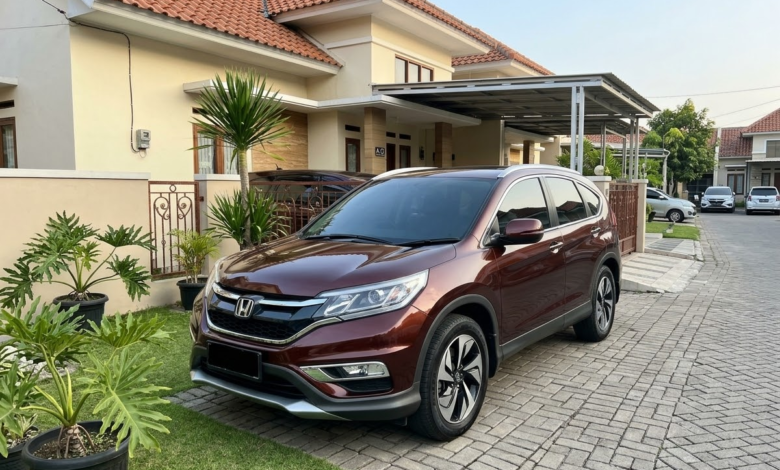
The fourth-generation Honda CR-V, particularly the 2015 facelift model equipped with the 2.4-liter i-VTEC engine, continues to occupy a significant position within the secondary automotive market. As prospective buyers increasingly look toward reliable, high-performance family vehicles that avoid the complexities of modern turbocharged powertrains, the 2015 CR-V stands out as a sophisticated choice. While the automotive landscape has shifted toward smaller displacement engines and CVT gearboxes, the 2015 CR-V 2.4L remains a preferred option for those who prioritize mechanical durability, linear power delivery, and an established reputation for long-term reliability.
The Evolution and Chronology of the Fourth Generation
The fourth-generation CR-V (codenamed RM) was introduced globally in 2011, serving as a pivotal iteration in Honda’s SUV lineage. By 2015, Honda released a significant mid-cycle refresh that aimed to address consumer feedback regarding interior refinement and exterior aesthetics. This facelift introduced a more aggressive front fascia, featuring a revised grille and bumper design, along with updated headlight clusters that integrated daytime running lights.
Beyond the cosmetic adjustments, the 2015 update was crucial for the model’s longevity. It refined the chassis dynamics and significantly improved cabin noise, vibration, and harshness (NVH) levels. For the 2.4L variant, this model year represented the pinnacle of the naturally aspirated era before Honda transitioned to the 1.5L VTEC Turbo engines found in the fifth and sixth generations. Consequently, the 2015 model has become a "sweet spot" for enthusiasts of traditional engineering.
Technical Specifications and Powertrain Dynamics
The centerpiece of the 2015 Honda CR-V 2.4L is its K24Z7 engine. This 2,354cc, 16-valve, DOHC i-VTEC power unit was engineered to provide a balance between robust urban performance and highway cruising capability. It produces approximately 190 horsepower at 7,000 rpm and 222 Nm of torque at 4,400 rpm.
Unlike modern CVTs (Continuously Variable Transmissions) that characterize contemporary SUVs, the 2015 model utilizes a 5-speed automatic transmission. This conventional torque-converter automatic is widely regarded by automotive technicians for its predictable shift patterns and lower long-term maintenance costs. The mechanical connection between the engine and the wheels provides a more direct driving feel, which remains a primary driver for demand in the used car sector.
In terms of dimensions, the vehicle measures 4,582 mm in length, 1,820 mm in width, and 1,685 mm in height. Its wheelbase of 2,620 mm ensures a spacious interior cabin, a hallmark of the CR-V line. The suspension system, comprised of MacPherson struts in the front and a multi-link setup in the rear, is tuned specifically for passenger comfort rather than aggressive cornering, reinforcing its identity as a family-oriented premium urban cruiser.
Market Analysis: Why the 2015 Model Remains Relevant
The sustained interest in the 2015 CR-V 2.4L can be attributed to several macroeconomic and consumer behavioral factors. First, the "Turbo-phobia" prevalent in emerging markets has led many second-hand buyers to shy away from high-pressure forced induction engines, fearing higher maintenance costs and potential reliability issues as vehicles age. The naturally aspirated 2.4L engine is viewed as a "bulletproof" alternative, capable of exceeding 200,000 kilometers with standard preventative maintenance.
Second, the depreciation curve of the CR-V has leveled out, making it an attractive value proposition. Compared to newer SUVs that suffer from rapid initial depreciation, the 2015 CR-V offers a stable investment for families needing a reliable secondary vehicle. Market data indicates that high-trim 2.4L units maintain higher resale values than their 2.0L counterparts, driven by the perceived necessity of the larger engine for highway travel and full-passenger load scenarios.
Safety and Feature Integration
By 2015 standards, the Honda CR-V was at the forefront of safety technology. The 2.4L variant typically included dual front airbags, side airbags, and side curtain airbags with a rollover sensor. Active safety features, such as Vehicle Stability Assist (VSA) with Traction Control, Anti-lock Braking System (ABS), and Electronic Brake-force Distribution (EBD), were standard.
Inside the cabin, the 2015 model introduced a more modern infotainment experience compared to its predecessors. Features such as a seven-inch touchscreen display, Bluetooth connectivity, and dual-zone automatic climate control were instrumental in keeping the model competitive against newer market entrants. The interior ergonomics—specifically the low floor and wide-opening rear doors—have been consistently praised for their contribution to ease of access, a critical factor for families with small children or elderly passengers.
Economic and Environmental Considerations
While the 2.4L engine offers superior performance, it is important to address its fuel consumption profile. In urban environments, the fuel efficiency of this engine is lower than that of modern direct-injection or turbocharged engines, typically averaging 8 to 10 kilometers per liter. On the highway, this figure improves significantly. For the average buyer, this is a calculated trade-off: higher fuel consumption in exchange for reduced complexity and lower maintenance overheads.
From an environmental standpoint, the 2015 CR-V adheres to older emission standards (typically Euro 4). While this does not impact its legality on the road, it is a point of consideration for buyers living in regions with tightening emission regulations or restricted access zones for older internal combustion vehicles.
Maintenance and Ownership Advice
Industry experts advise that when considering a 2015 Honda CR-V 2.4L, the history of the transmission fluid and the condition of the suspension bushings should be the top priorities during inspection. Because the vehicle is now approximately nine to ten years old, rubber components, including engine mounts and suspension bushings, are likely approaching the end of their design life.
Replacement of these parts is considered standard wear-and-tear maintenance rather than a failure of engineering. Furthermore, the K24 engine is sensitive to oil quality; therefore, prospective buyers should verify that the previous owner adhered to the recommended maintenance schedule. When properly maintained, these engines are frequently cited in industry reports as among the most reliable power plants Honda has ever mass-produced.
The Broader Impact on the Used SUV Segment
The enduring popularity of the 2015 Honda CR-V serves as a case study for the "right-sizing" of vehicles. It highlights a consumer segment that prioritizes space, comfort, and reliability over the latest technological gadgets or extreme fuel economy figures. As manufacturers continue to push for smaller, electrified, or turbocharged engines, the 2.4L CR-V represents a final chapter of a specific type of automotive engineering that many consumers are actively seeking to preserve.
In conclusion, the 2015 Honda CR-V 2.4L is more than just a used car; it is a benchmark of a successful product life cycle. Its combination of a powerful, reliable engine, a spacious and ergonomic interior, and a timeless design allows it to compete effectively even against much newer vehicles. For the pragmatic buyer, the vehicle offers a balance of safety, utility, and performance that is increasingly rare in the modern, feature-saturated automotive market. As long as spare parts remain readily available and the engine continues to prove its reliability, the 2015 CR-V will likely remain a fixture on the road and a top contender in the used car listings for years to come.